
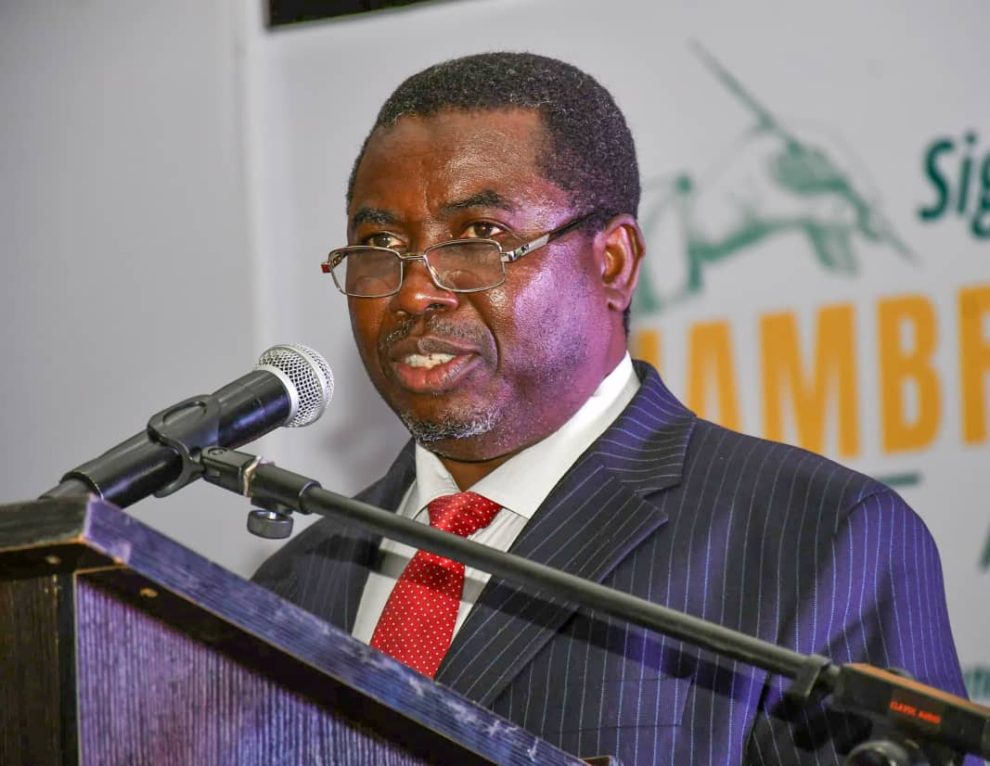

A prominent legal scholar has mounted a robust defense of Nigeria’s electoral chairman, Professor Joash Amupitan, following a series of highly publicised attacks on his integrity by a former federal minister.
Dr. John Mahwel, an alumnus and lecturer at the University of Jos, described allegations made by the former Minister of Youth and Sports, Solomon Dalung, as “false, misleading, and unacceptable.”
The dispute has its roots in the University of Jos Faculty of Law, where both men were once colleagues. In a detailed rebuttal, Dr. Mahwel argued that the claims against the Independent National Electoral Commission (INEC) chairman were a distortion of his academic record and a “politicisation” of institutional history.
The 2009 ‘Result Manipulation’ Row
Central to the controversy are claims that Professor Amupitan was involved in academic misconduct during the 2009 academic session. However, Dr. Mahwel—who was a student at the time and later a colleague—offered a different account:
- Administrative Lapses: Dr. Mahwel claimed that while discrepancies in grades did occur, they were traced to administrative staff, not the teaching faculty.
- The ‘Integrity’ Reversal: He argued that it was actually under Professor Amupitan’s leadership as dean that these errors were uncovered. He noted that the professor initiated an internal probe that led to the reversal of improperly awarded grades.
- The ‘Police Chief’ Claim: Dr. Mahwel also refuted allegations that a high-ranking police officer graduated with a disputed result in that set, stating that no such individual existed in the class of 2009.
Analysis: A Battle for the Moral High Ground
This is a rare and deeply personal glimpse into the past of Nigeria’s most powerful electoral official. In the Nigerian political arena, character assassination is a common tool, and by targeting Professor Amupitan’s academic “home,” his critics are attempting to strike at the very foundation of his credibility as a Senior Advocate of Nigeria (SAN).
For Solomon Dalung, a politician known for his outspoken and often populist style, the attacks appear to be part of a broader dissatisfaction with the current electoral leadership. However, for Professor Amupitan, having a PhD-holding former student and colleague “set the record straight” is a significant strategic win. It shifts the narrative from one of “corruption” to one of “institutional reform”—portraying the INEC chairman as a man who has been cleaning up systems long before he took the helm at the electoral commission.
A Warning on Politicisation
Dr. Mahwel cautioned that unverified claims could mislead the public and “undermine confidence” in key national institutions at a critical time for the country.
He argued that the timeline of the allegations did not support claims of personal victimization against Mr. Dalung, noting that academic decisions in Nigerian universities are collective processes rather than the whim of a single dean.
The INEC chairman has yet to issue a personal statement on the matter, choosing to let his professional record and his supporters do the talking.


Add Comment