
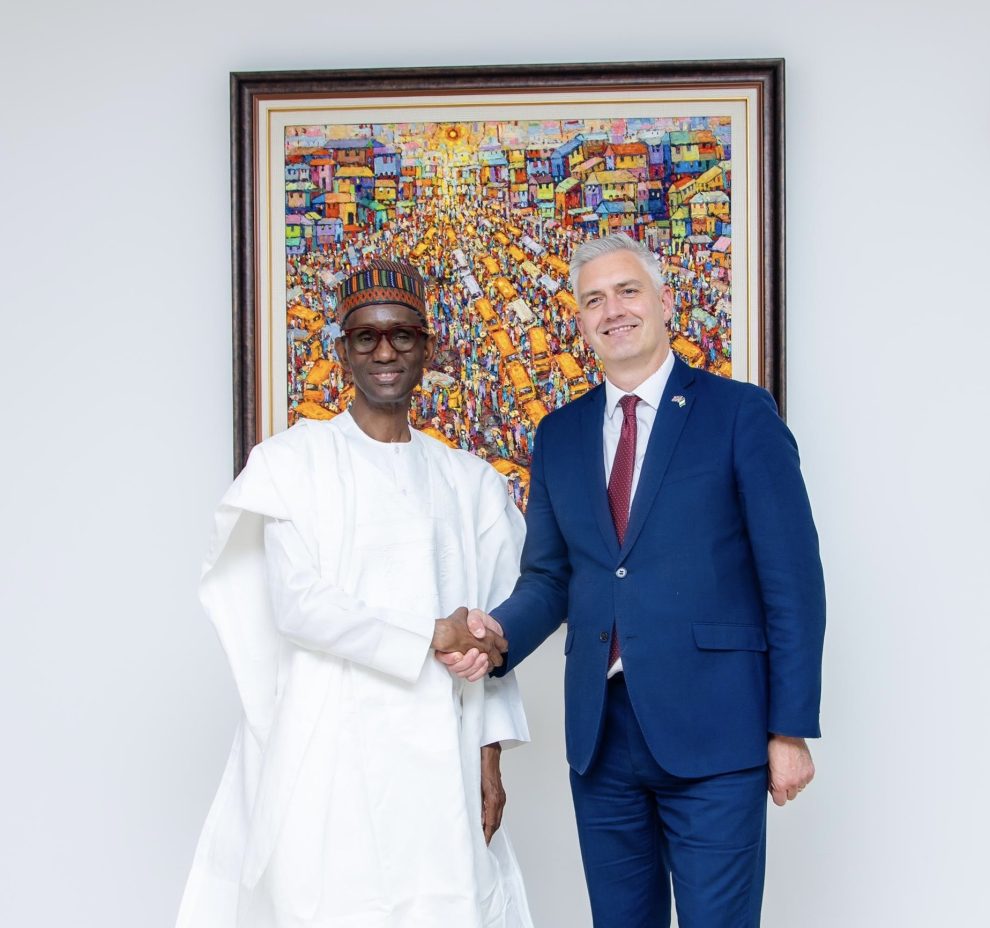

ABUJA, Nigeria — The United Kingdom’s newly appointed Special Envoy for Freedom of Religion or Belief has concluded a high-stakes diplomatic sweep of Nigeria, designating the country as the absolute priority nation under London’s revised global human rights strategy.
David Smith MP concluded his intensive three-day investigative tour of the capital on Thursday, 21 May 2026, holding closed-door security briefings with Nigeria’s defence chiefs, state governors, and top Islamic and Christian clerics.
Under the UK’s recently implemented Freedom of Religion or Belief (FoRB) strategy, the visit represents the first significant operational deployment. It directly expands upon the diplomatic momentum created by President Bola Ahmed Tinubu’s historic state visit to London in March, during which a bilateral summit with His Majesty King Charles III elevated interfaith stability to a key pillar of the UK-Nigeria Strategic Partnership.
High-Level Security and Interfaith Audits
Mr. Smith’s itinerary focused heavily on the intersection where religious friction directly fuels regional insurgencies and banditry across Nigeria’s volatile Middle Belt and northern states.
The envoy held critical strategy sessions with the National Security Adviser, Nuhu Ribadu, and the Minister of Information and National Orientation, Mohammed Idris, to assess how state institutions police hate speech and protect minority faith communities.
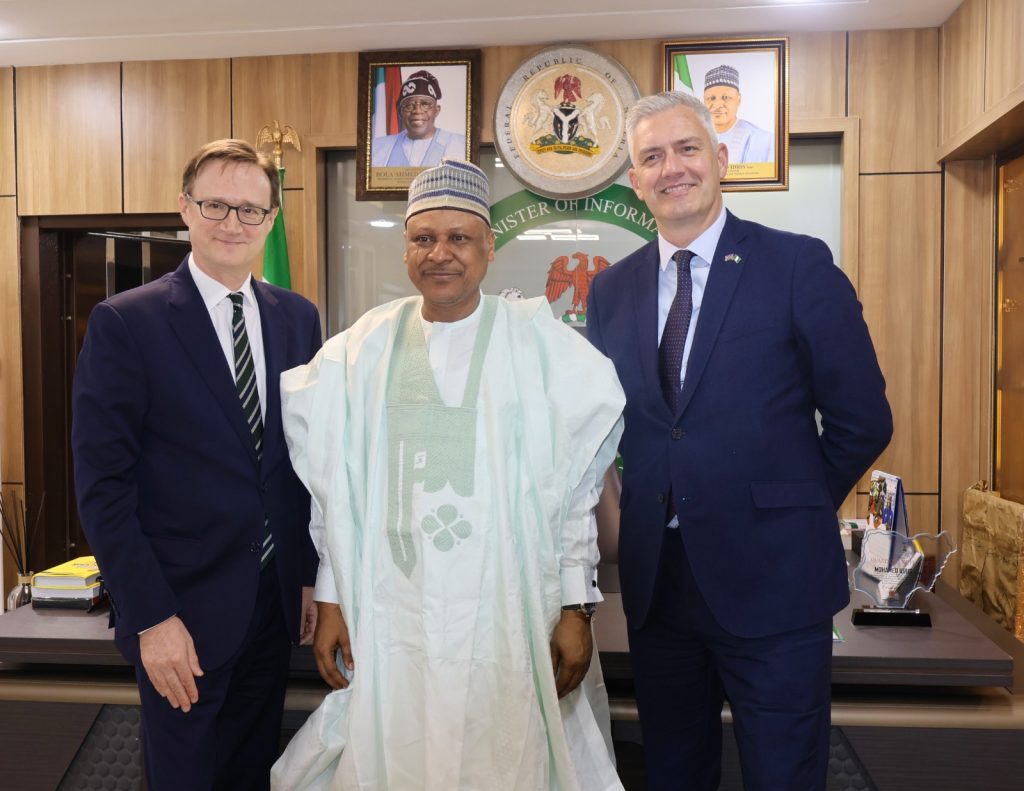
To bridge the country’s deep ethno-religious divides, the British lawmaker convened a rare joint session with the co-chairs of the Nigeria Inter-Religious Council (NIREC):
- The Christian Plenipotentiary: Archbishop Daniel Okoh, the President of the Christian Association of Nigeria (CAN).
- The Islamic Plenipotentiary: His Royal Highness the Sultan of Sokoto, Muhammadu Sa’ad Abubakar III, the leader of the National Supreme Council for Islamic Affairs.
The diplomatic delegation also pivoted to sub-national flashpoints, holding data-sharing talks with Plateau State Governor Caleb Mutfwang, whose territory has historically borne the brunt of deadly agrarian and sectarian communal clashes.
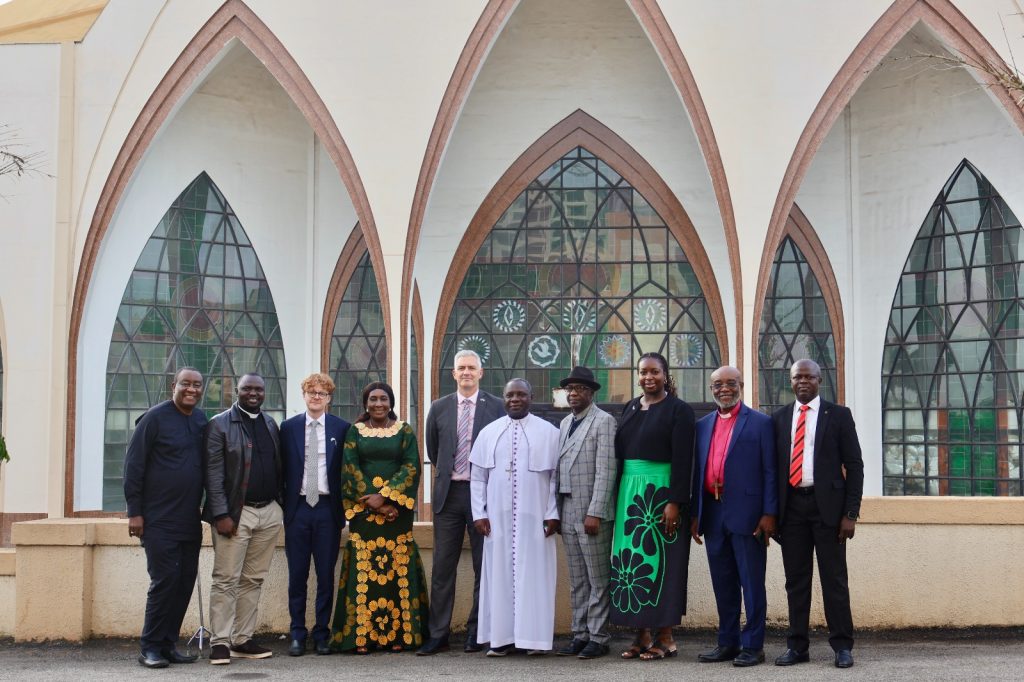
The £38m SPRiNG Counter-Conflict Programme
A central objective of the diplomatic mission was to audit the performance of British taxpayers’ money currently deployed on the ground to mitigate rural warfare.
Mr. Smith led a comprehensive roundtable review with local coordinators of the Strengthening Peace and Resilience in Nigeria (SPRiNG) initiative. The massive £38 million UK government-funded conflict-resolution apparatus operates directly across the high-risk frontline states of Kaduna, Katsina, Benue, and Plateau.
The envoy met with the Institute for Peace and Conflict Resolution alongside the National Human Rights Commission to verify that British aid is effectively strengthening local judicial infrastructure and providing rapid-response protection to vulnerable farming communities targeted by extremist militias.
A Call for Grassroots Coexistence
Despite the overarching shadow of regional insecurity, Mr Smith emphasized that the ultimate solution to Nigeria’s stability must be organic and “Nigerian-led,” rather than micro-managed by foreign powers.
Reflecting on a field visit to an inclusive parish in Abuja led by Father Emmanuel Unamba—where Christian and Muslim families live side by side—the envoy noted that everyday citizens are outstepping political actors in fabricating sustainable peace.
“Peaceful coexistence is something people build every day through leadership, dialogue, and shared responsibility,” Mr Smith stated before departing Abuja. He urged national leaders to institutionalize the grassroots tolerance visible in the capital across all 36 states, promising to extend the strategic dialogue with Nigerian delegates at Westminster in the coming months.


Add Comment