
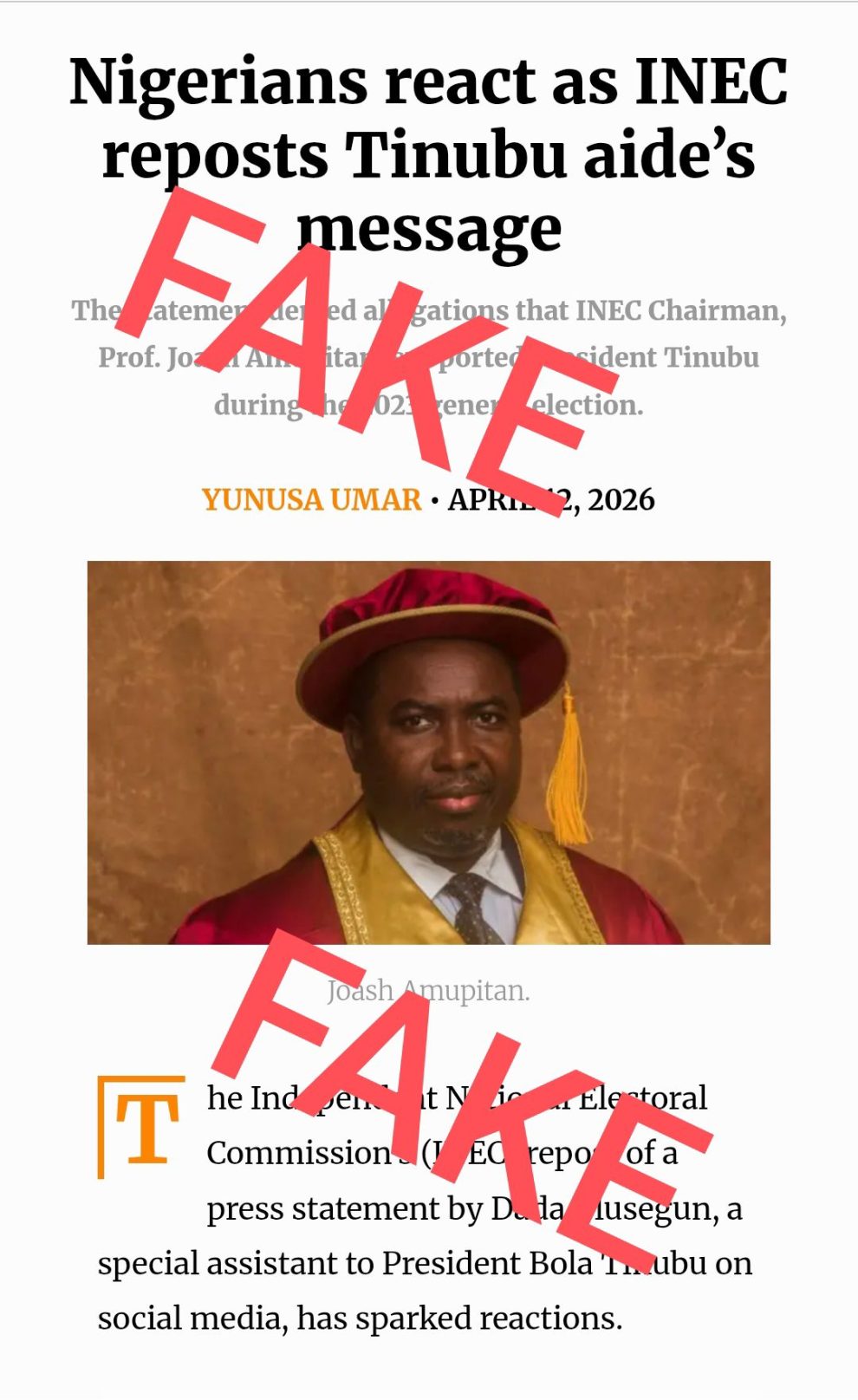

Nigeria’s electoral umpire has issued an urgent rebuttal following accusations that it “reposted” content from a presidential aide, a move that sparked an online outcry over the commission’s independence.
The Independent National Electoral Commission (INEC) described a report by the Peoples Gazette—which alleged the commission had amplified a message from an aide to President Bola Tinubu—as “fake, misleading, and a misrepresentation of facts.”
The row erupted after social media users pointed out similarities between an official INEC statement and posts shared by partisan figures. However, the commission insists that any circulation of its press releases outside of official channels is entirely independent of its control.
‘Non-Partisan’ Amplification
In its statement, INEC clarified that its recent social media activity was intended solely to “amplify accurate information” regarding internal commission matters. It strongly rejected any suggestion that its actions signaled an alignment with the presidency or any political officeholder.
“The Commission remains strictly non-partisan,” the statement read, as it urged the public to disregard “misleading interpretations” of its digital footprint.
Analysis: The Neutrality Trap
In the highly charged atmosphere of Nigerian politics, even a “repost” or a “like” can be weaponised as evidence of bias. For INEC, which is already under intense scrutiny over its handling of opposition party crises, the Peoples Gazette report hit a particularly sensitive nerve.
The challenge for the commission in 2026 is the “echo chamber” effect of social media. When a government official shares an INEC statement before the commission’s own handles do—or vice versa—it creates a perception of coordination that is difficult to shake. By issuing this rebuttal, the commission is attempting to re-establish a “firewall” between its institutional voice and the political machinery of the state.
A Warning on Misinformation
The electoral body has called on Nigerians to rely exclusively on its verified institutional channels, warning that “partisan fabrications” are being designed to stir public distrust.
As the country moves closer to major off-cycle elections, the battle for the “narrative” is proving to be as significant as the battle for the ballot box. This latest clarification serves as a reminder that in the age of deepfakes and rapid-fire reposting, the electoral umpire’s most valuable currency remains its perceived neutrality.




Add Comment