


ABUJA, Nigeria — Nigeria and Canada have committed to a major expansion of bilateral cooperation across a series of critical industrial and tech sectors, including nuclear technology, artificial intelligence, and regional intelligence sharing.
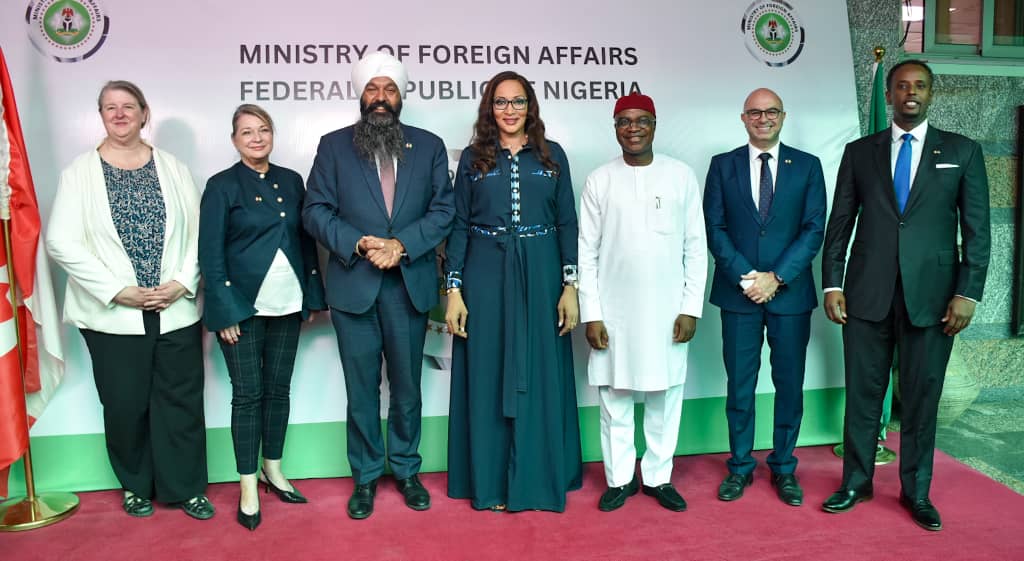
The agreements were reached on Thursday, 21 May 2026, during an official diplomatic session at Tafawa Balewa House in Abuja, where Nigeria’s Minister of Foreign Affairs, Ambassador Bianca Odumegwu-Ojukwu, hosted Canada’s Secretary of State for International Development, Randeep Sarai. The high-level talks focused on aligning Canada’s international development funding with Nigeria’s ongoing domestic economic reforms.
In a press statement released after the meeting, Ministry of Foreign Affairs Spokesperson Kimiebi Ebienfa emphasized that the session reaffirmed the commitment of both nations to maintain high-level engagements. The ministry stated that this diplomatic reset is specifically aimed at driving mutual economic prosperity, reinforcing regional stability, and creating new sustainable development opportunities across West Africa.
Fintech and Nuclear Energy on the Table
The diplomatic dialogue serves as a significant marker for Ambassador Odumegwu-Ojukwu’s economic diplomacy agenda, which seeks to attract foreign direct investment into high-growth, non-oil sectors.
Nigeria’s rapidly developing fintech, digital innovation, solid minerals, and creative industries present enormous opportunities that the foreign minister urged Canadian corporate actors to seize.
According to the official communiqué, the strategic roadmap covers several sophisticated technologies and trade corridors:
- Advanced Energy Solutions: Moving beyond traditional oil and gas to explore joint initiatives in renewable energy frameworks and nuclear technology.
- Digital Infrastructure: Collaborative investments in artificial intelligence, secure data infrastructure, and cross-continental educational exchanges.
- Trade Protection Agreements: Fast-tracking the full implementation of the Foreign Investment Promotion and Protection Agreement (FIPA) alongside the Bilateral Air Services Agreement (BASA) to boost commercial aviation and cross-border investment safety.
Countering Regional Extremism
Beyond trade and investment frameworks, the bilateral talks turned heavily toward deteriorating security architectures within the West African sub-region.
Ambassador Odumegwu-Ojukwu underscored the urgent necessity for enhanced tactical collaboration with international partners, explicitly demanding stronger intelligence sharing and joint counter-terrorism efforts. She noted that persistent insecurity and violent extremism by roving insurgent networks continue to pose severe existential challenges to economic stability, regional trade routes, and rural livelihoods.
In response, Secretary Sarai acknowledged Nigeria’s vital geopolitical importance on the African continent. The Canadian envoy pledged Ottawa’s technical support for defense frameworks and law enforcement cooperation, while simultaneously driving development initiatives focused on climate resilience and youth empowerment.
Leveraging the Diaspora Corridor
A major anchor for the strengthening alliance is the massive socio-economic influence of the vibrant Nigerian diaspora community currently residing in Canada.
Secretary Sarai emphasized that the diaspora has transitioned into a powerful human capital bridge, driving innovation and corporate synergy between both nations.
To better protect this corridor, the two diplomats debated concrete strategies to upgrade migration management. By tightening cooperation between respective immigration and law enforcement agencies, Ottawa and Abuja hope to eliminate human trafficking and facilitate smoother, legitimate travel frameworks for business executives, academics, and tourists moving between the two Commonwealth nations.




Add Comment