
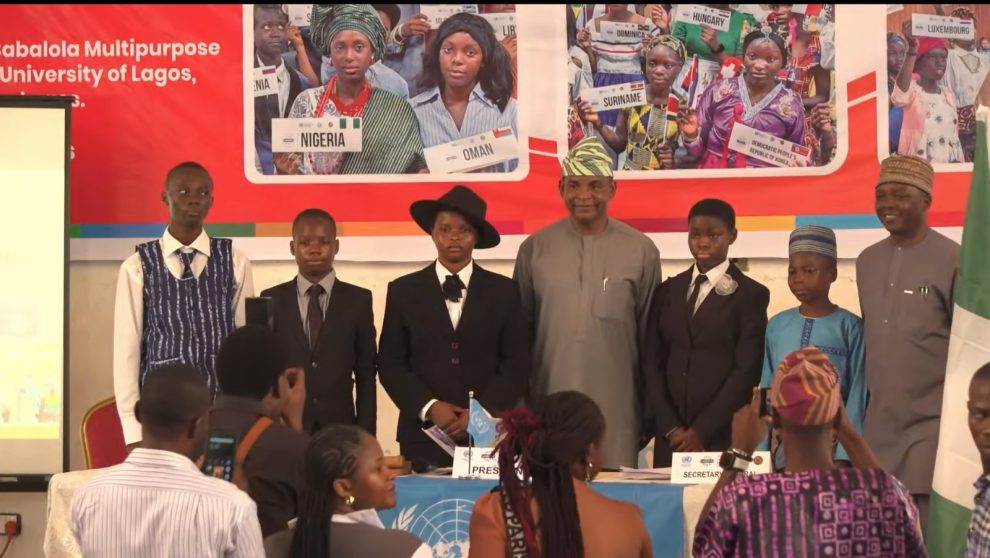

The head of the United Nations and senior Nigerian officials have issued a rallying cry to secondary school students in Lagos, calling on them to lead a digital transformation of the classroom to combat inequality.
At the opening of the Seventh Session of the Lagos Secondary Schools Model United Nations (LASSMUN) on Friday, UN Secretary-General António Guterres told delegates that their “energy and determination” were essential to solving the world’s most pressing crises.
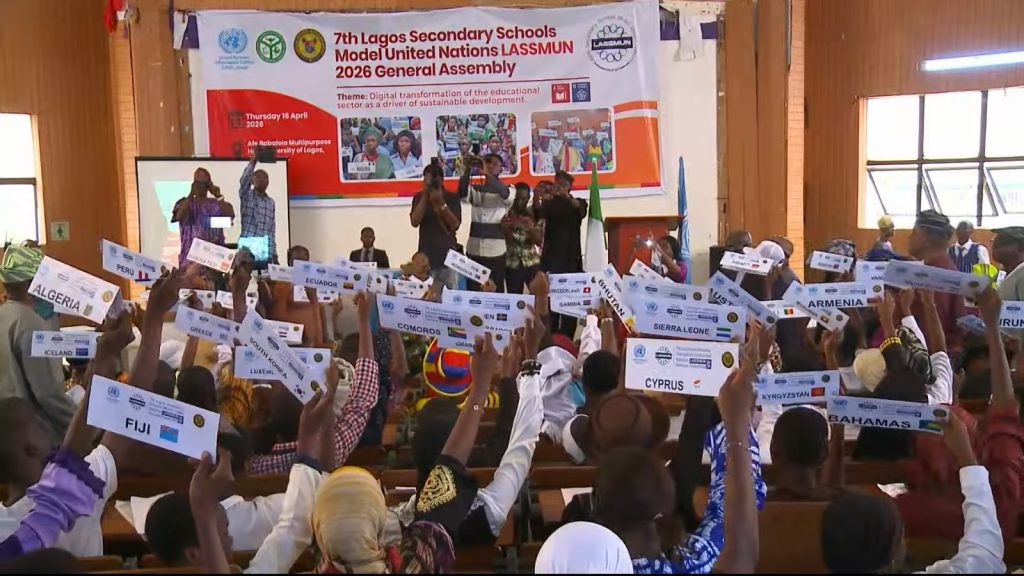
The conference, themed around using digital technology as a driver for sustainable development, brought together hundreds of students from across Nigeria’s commercial capital to simulate the high-stakes negotiations of global governance.
‘Technology Without Equity is Injustice’
While the atmosphere was celebratory, the student leaders at the heart of the assembly delivered a sobering message about the “digital divide” currently affecting millions of learners in the developing world.
Praise Oyekunbi, the conference Secretary-General and a student at Babs Fafunwa Millennium Senior Secondary School, warned that digital transformation is about “resilience,” not just hardware. “Technology without equity is not progress; it is injustice,” she told the assembly, noting that cloud-based learning must become a “gateway to opportunity” for children currently excluded from physical schools.
Key Themes from the 2026 Assembly:
- Resilience: Using tech to preserve learning during climate-related disasters like floods.
- Ethics: Developing critical thinking to separate evidence from misinformation in a polarised digital era.
- Inclusion: Ensuring that digital tools reach the most vulnerable students, not just those in urban hubs.
Analysis: Reimagining the Classroom
For many Lagos students, the COVID-19 lockdowns were a wake-up call to the fragility of traditional schooling. Since then, the Lagos State Government has aggressively pursued a “tech-first” agenda. However, as Prof. Efosa Osaghae of the Nigerian Institute of International Affairs (NIIA) noted, this is more than a technological shift—it is a “fundamental reimagining” of education.
The challenge for Lagos—and indeed for the UN—is that infrastructure often lags behind ambition. While student delegates are debating “cloud-based continuity” in air-conditioned halls, thousands of their peers across the region still struggle with erratic power and high data costs. LASSMUN serves as a vital bridge, turning these systemic frustrations into “diplomatic” solutions that these students may one day implement as the nation’s future leaders.
Grooming ‘Global Citizens’
The Lagos State Commissioner for Basic and Secondary Education, Mr Jamiu Tolani Alli-Balogun, described the event as a “practical platform” for grooming articulate and globally aware citizens. He reaffirmed the state’s commitment to values-based learning that prepares students for the 21st-century job market.
Ronald Kayanja, Director of the UN Information Centre (UNIC) in Abuja, reminded the youth that they are “present-day stakeholders.” He urged them to rely on facts and credible sources, skills he described as “increasingly vital” in an age of rampant misinformation.
As the delegates head into committee sessions to debate climate action and human rights, the message from Lagos is clear: the next generation is no longer waiting for a seat at the table—they are building their own digital one.



Add Comment