
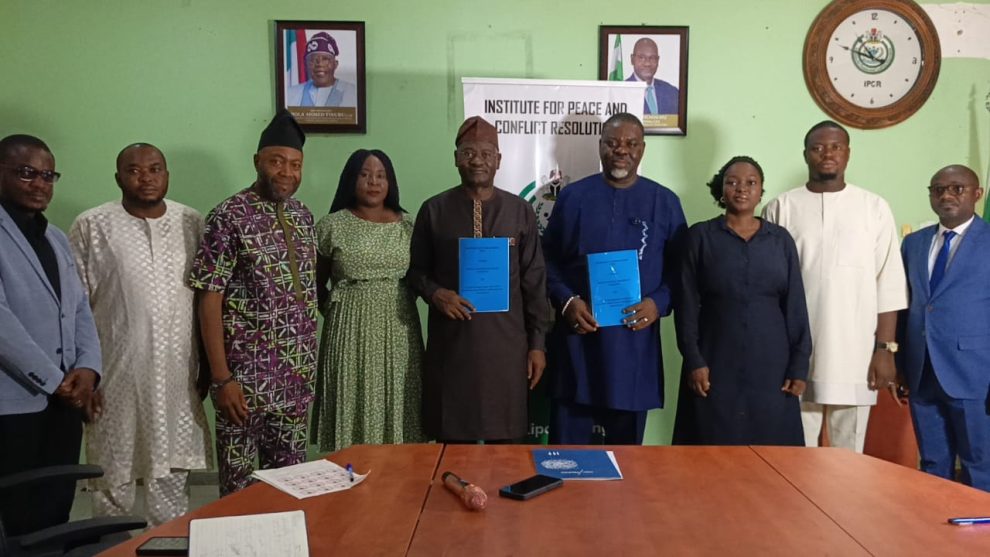

Nigeria’s state-run peace agency has entered into a strategic partnership with five non-governmental organisations (NGOs), as it warns that the country’s security challenges are rapidly “evolving and mutating.”
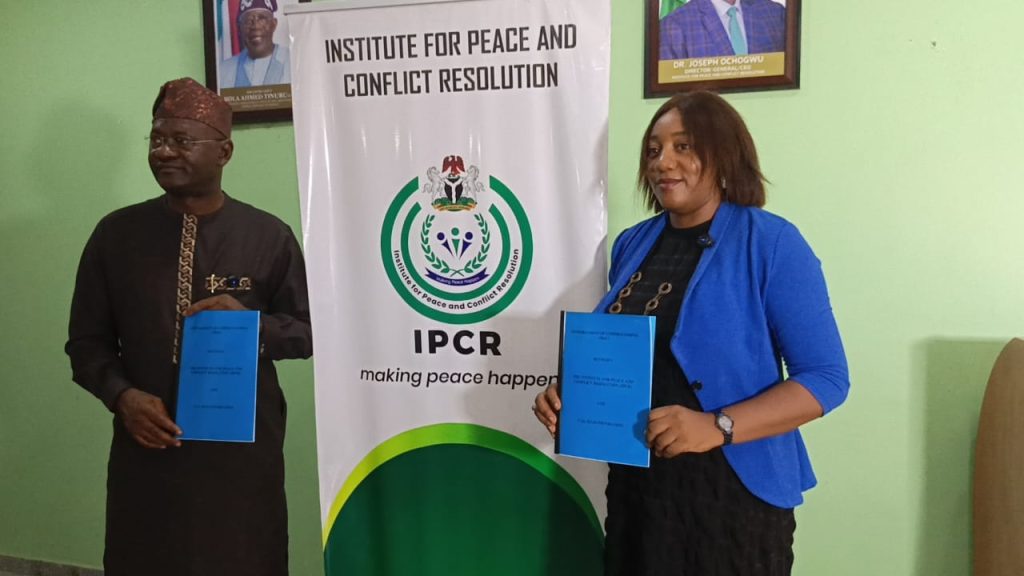
The Institute for Peace and Conflict Resolution (IPCR) signed a series of Memoranda of Understanding (MoUs) in Abuja on Tuesday, marking a significant shift toward a “multi-stakeholder” approach to national security. The Director-General of the institute, Joseph Ochogwu, told delegates that traditional interventions must now be supported by evidence-based research and local community action.
The deal brings together experts in Alternative Dispute Resolution (ADR), women’s empowerment, and youth mental health to address the root causes of instability across the federation.
Beyond ‘Formalities’
Speaking at the signing ceremony, Mr. Ochogwu issued a blunt challenge to the new partners, insisting that the agreements must go beyond “mere formalities” on paper.
“We do not just believe in signing MoUs; we believe in activating the spirit behind them,” he said. “Conflicts and social problems are constantly evolving… this demands critical thinking and forward-looking strategies.”
The IPCR, which serves as the primary advisory body to the Nigerian government on conflict matters, says it will now leverage the “comparative strengths” of the private sector and civil society to deliver what it calls “practical collaboration.”
The New ‘Peace Coalition’
The five organisations joining the federal initiative cover a broad spectrum of social and legal interventions:
- The 3C’s Met International Institute: Specialists in mediation and negotiation aimed at resolving workplace and family disputes before they escalate.
- Peace Education and Practice Network (PEPNET): Focused on integrating conflict resolution skills directly into the Nigerian school curriculum.
- Esteemed Hub Foundation: A group tackling the intersection of mental health, climate change, and youth resilience.
- Carl-Maji Foundation & ICAWSI: Two organisations dedicated to the economic empowerment and protection of women and children in conflict-affected rural areas.
Analysis: A Grassroots Firewall
For years, Nigeria’s response to conflict has been criticised for being overly “kinetic”—relying heavily on military and police action. By formalising these ties with civil society, the IPCR is attempting to build a “civilian firewall.”
The focus on Alternative Dispute Resolution (ADR) and Peace Education suggests that the government is increasingly aware that the battle for stability cannot be won on the battlefield alone. However, the real test will be funding. Many Nigerian NGOs operate on shoestring budgets, and while the IPCR provides the “policy umbrella,” the success of these MoUs will depend on whether the state can provide the logistical support needed to reach the country’s most volatile “frontline” communities.
A Continental Vision
Mr. Ochogwu noted that the IPCR’s work extends beyond Nigeria’s borders, aiming to provide a blueprint for peacebuilding across the African continent.
As West Africa continues to grapple with a wave of regional instability, the Abuja “multi-stakeholder” model is being watched closely by international observers as a potential path toward sustainable, community-led development.


Add Comment