
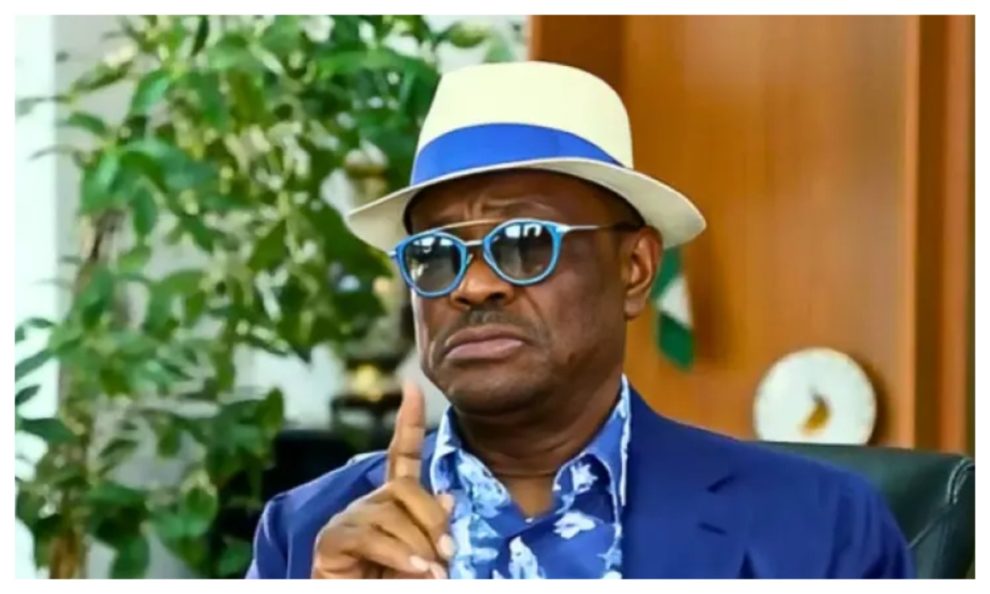

The Minister of Nigeria’s Federal Capital Territory (FCT), Nyesom Wike, has challenged the opposition African Democratic Congress (ADC) to prove it was blocked from using a landmark venue for its national convention.
The ADC had claimed that the authorities “frustrated” its preparations for Tuesday’s summit by ignoring requests to use either Eagle Square or the National Stadium Velodrome. However, speaking during a project inspection in Abuja on Monday, Mr. Wike dismissed the allegations as “unfounded,” suggesting the party was merely attempting to court public sympathy.
The row has forced the ADC to move its convention to a private event centre, as tensions between the government and opposition groups continue to simmer in the capital.
‘Show us the Evidence’
Minister Wike, a politician known for his direct and often pugnacious style, insisted that his office had received no formal application from the party.
“Who denied them? I don’t even know which party you are referring to,” Mr Wike told journalists. He argued that the venues are open to any group—regardless of political affiliation—provided they pay the required fees and follow established procedures.
“For example, when the PDP and the APC held their conventions, they followed due process,” he added. “We do not deny access; in fact, such events generate revenue for the government.”
Analysis: A City of Red Tape and Rivalry
In the high-stakes theatre of Abuja politics, the battle for Eagle Square is about more than just a venue—it is about visibility and legitimacy. For the ADC, being “denied” a state facility allows them to frame themselves as victims of a “one-party” agenda. For Minister Wike, the rebuttal is an attempt to project a “business-as-usual” administrative image.
However, the ADC’s National Publicity Secretary, Bolaji Abdullahi, maintains that their requests were simply ignored—a tactic often referred to in Nigerian bureaucracy as “the silent veto.” By moving to a private venue, the ADC is proceeding with its convention, but the “venue war” has already deepened the distrust between the opposition and the FCT administration.
Windstorms and Infrastructure
Beyond the political dispute, the minister moved to quell rumours regarding the “collapse” of a major new transport hub.
- The Kugbo Bus Terminal: Mr. Wike clarified that the structure remained intact but admitted that a “severe windstorm” had blown off roofing sheets due to the terminal’s elevated location.
- May Deadline: The minister expressed satisfaction with the pace of roadworks in the city, promising that several key projects and streetlight installations would be completed by 31 May.
- Artisan Relocation: Progress was also reported at the Wassa site, a long-delayed project designed to move thousands of informal mechanics to a permanent location.
A Deadline for Democracy
As the ADC prepares to hold its convention at the Rainbow Event Centre on Tuesday, the spotlight remains on the capital’s infrastructure and its political climate.
With several major road projects set for completion next month, the Minister is keen to showcase “the face of a new Abuja.” But as this latest spat proves, in Nigeria’s capital, the political landscape is often as turbulent as the seasonal windstorms that batter its rooflines.

Add Comment