


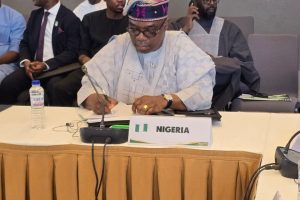
The head of Nigeria’s electoral body has made a candid appeal for help in restoring public confidence, warning that a “palpable” lack of trust threatens the legitimacy of the country’s democracy. Prof. Joash Amupitan, chairman of the Independent National Electoral Commission (INEC), told a gathering of stakeholders in Abuja on Monday that rebuilding the bond between voters and the state is now a matter of urgency.
Speaking at a briefing organised by the National Peace Committee (NPC), Prof. Amupitan admitted that skepticism toward the electoral process has become a major hurdle as the country begins its long road toward the 2027 General Election.” The trust deficit is such that anywhere you go, it’s palpable,” Prof. Amupitan told an audience of political leaders, security chiefs, and diplomats. “If voters will not participate, then whoever emerges [lacks legitimacy]. It is in our own interest that everybody continues to participate. We’ll get it right one day.”
A quest for legitimacy
Nigeria’s recent elections have been marred by historically low voter turnout and allegations of logistical failures. Prof. Amupitan argued that while winning an election provides a legal mandate, it does not always guarantee the moral authority to lead.”Let the process be so transparent that whoever emerges will not only have legality but legitimacy,” he said.
In a move to signal transparency, almost the entire senior leadership of INEC attended the briefing. The chairman insisted the commission is “open to scrutiny,” claiming that they do not shy away from criticism but use it to “process and see how we can improve.”
New safeguards
To address concerns over the integrity of the vote, the chairman highlighted several key areas of reform:
Results Management: New safeguards have been introduced to ensure consistency in how votes are handled.
Voter Register: Efforts are underway to “sanitize” the database to remove duplications and outdated records.
Technology Trials: Ahead of upcoming governorship elections in Ekiti and Osun, INEC plans to conduct mock exercises to stress-test voting technology.
The ‘Peace Accord’ framework
The meeting also saw the presentation of an “Annotated Peace Accord” by the National Peace Committee. The committee, led by former Head of State General Abdulsalami Abubakar (represented by Bishop Matthew Hassan Kukah), has been a stabilizing force in Nigerian politics since 2015. The revised accord aims to provide a stricter framework for political conduct, focusing on mediation and preventing violence before it starts. However, Prof. Amupitan warned that INEC cannot act alone. He called on security agencies to prosecute vote-traders and urged political parties to find their “internal discipline,” noting that the spread of misinformation continues to inflame national tensions.
As Nigeria looks toward 2027, the message from the capital was clear: technology and laws may run an election, but only trust can sustain a democracy



Add Comment