
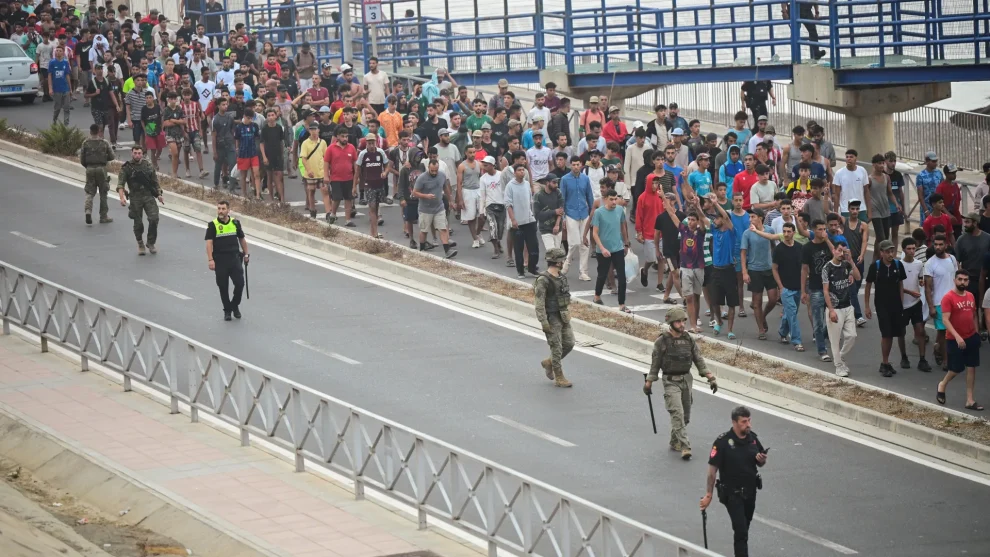

Although relative calm is returning to the Ceuta border, residents in Spain’s North African enclave remain anxious following a massive influx of migrants.
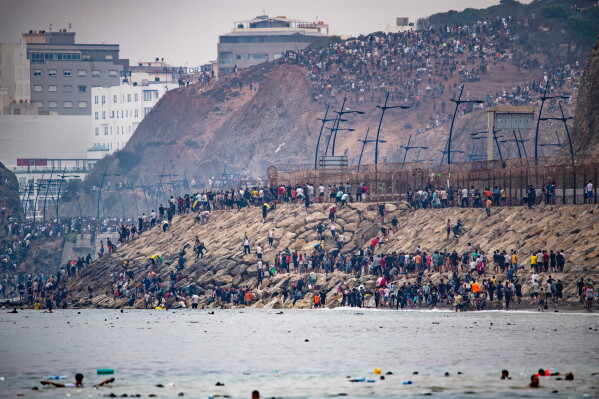
Spanish Interior Minister Fernando Grande-Marlaska stated on Tuesday that roughly 70,000 of the estimated 72,000 migrants who crossed into the territory from Morocco last week have since returned.
However, official estimates on the number of undocumented migrants remaining in Ceuta vary. While Spain’s central government puts the figure at around 2,000, local authorities suggest the total could be between 3,000 and 5,000.
Maritime barriers and sea crossings
To prevent further illegal crossings, Spanish authorities have installed a 500-metre pneumatic barrier in the waters separating Ceuta from Morocco. The floating structure stands up to 70 centimetres above the water and extends a metre below the surface to assist maritime law enforcement.
Officers from Spain’s Guardia Civil at the main border gate reported that most migrants who crossed illegally have since returned to Morocco, helping ease immediate tensions.
Yet for many who made the perilous journey, the future remains uncertain. Abdul Karim, a 23-year-old who swam for over three hours from Morocco last weekend, is currently staying in a temporary facility in the city centre.
“We want to go to mainland Spain to work. It’s hard to find jobs in Morocco,” Karim said. “Swimming here was very difficult. At one point, I thought I was going to drown. Some people just disappeared while trying to swim across.”
Economic impact
In central Ceuta, police patrols remain visible as the city slowly attempts to resume normal life. While some businesses have reopened, many storefronts stay shuttered.
Local officials fear the crisis will have a lasting economic impact on the territory, which depends heavily on cross-border trade, port logistics, and tourism.
Bordering Morocco on the Mediterranean coast near the Strait of Gibraltar, Ceuta’s recent influx marks the most severe border migration crisis Spain has faced in recent years.




Add Comment