

DAKAR, Senegal — Lawmakers from the West African regional bloc ECOWAS have called on member states to ring-fence at least five per cent of their national budgets for renewable energy and rural development to tackle the region’s chronic electricity shortage.
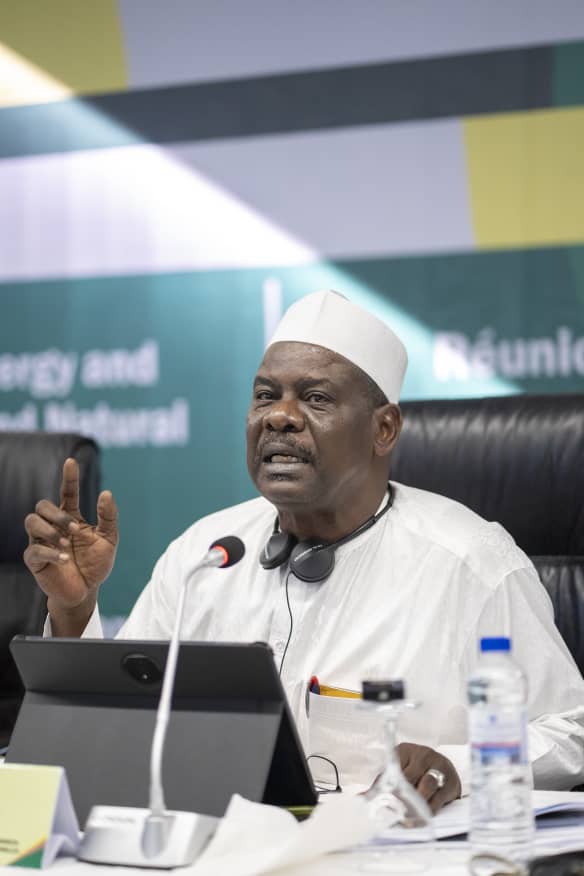
The proposal was put forward by Senator Ali Ndume, Chairman of the ECOWAS Parliament’s Agriculture Committee, at a high-level legislative summit in the Senegalese capital, Dakar.
Regional politicians and energy experts are meeting this week to draw up innovative funding models designed to connect millions of off-grid rural citizens to clean power.
‘Modernising a community for $1m’
According to the committee, dedicating a fixed slice of national budgets to green energy is well within the financial reach of West African governments and would yield massive economic dividends.
“For less than one million dollars, you can modernise a rural community,” Senator Ndume told delegates. “Once that is done, you bring development, improve security, and strengthen agriculture.”
He argued that the investment would stimulate local economies and help slow down the rapid pace of rural-to-urban migration across the bloc. “People will have fewer reasons to leave their communities because development will come to them,” he added.
Over-reliant on imported fossil fuels
The push comes as West Africa grapples with a worsening energy crisis. Diouma Kobor, Director-General of Senegal’s National Agency for Renewable Energy, told the summit that grid instability, unequal access to power, and a dangerous over-dependence on imported fossil fuels are choking regional growth.
Presenting a blueprint based on Senegal’s energy policy, Mr Kobor called for a massive scale-up of solar, wind, and battery storage technologies.
Senegal has set a target to source 40 per cent of its electricity from renewables by 2030, a plan backed by a €2.5bn (£2.1bn) facility under the country’s Just Energy Transition Partnership.
However, Mr Kobor warned that the region must move away from small, isolated energy projects. Instead, he urged the creation of cross-border “smart energy corridors” that link transport, farming, and electricity infrastructure to attract serious private sector cash.
To achieve this, experts are advocating for “blended finance” models—combining government grants and low-cost concessional loans with commercial debt and private equity—to spread financial risk and lower electricity bills for consumers.
The ‘bankability’ hurdle
Despite the clear demand for rural electricity, funding remains a major bottleneck.
Maimouna Sidibe, representing the ECOWAS Bank for Investment and Development (EBID), revealed a stark reality: green energy currently makes up just four per cent of the bank’s total energy portfolio.
“The challenge is not the absence of opportunities, but making projects financeable and bankable,” Ms Sidibe said.
She cited poor project preparation, small project sizes, regulatory red tape, and a lack of financial guarantees as the primary barriers keeping private investors away from rural energy.
In response, EBID is shifting its strategy for 2026–2030 to aggressively back solar mini-grids, off-grid systems, and small hydropower projects to spur rural growth.
A warning on climate cash
As the summit looks to international climate funds to bridge the investment gap, some lawmakers urged caution.
Ahmed Munir, Vice-Chairman of the ECOWAS Infrastructure Committee, warned member states to be aggressive when negotiating with international development partners. He argued that foreign climate finance must lead to genuine technology transfer and local job creation, rather than just importing foreign equipment.
Delegates at the Dakar summit concluded with a joint call for stronger regional cooperation and sustained political will, warning that universal electricity access will remain out of reach without a united West African strategy.

Add Comment