
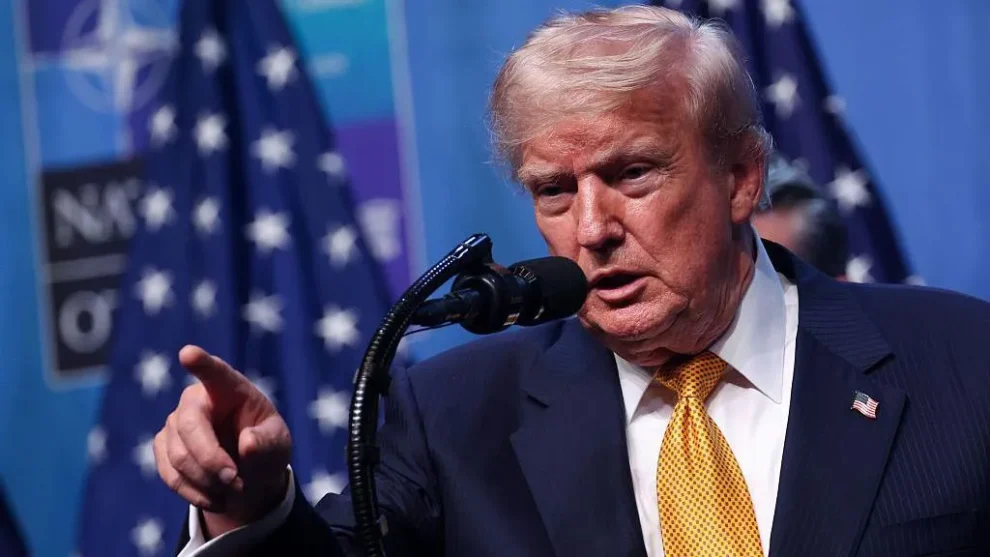

The administration of US President Donald Trump has proposed a $70,000 fee for international students seeking post-graduation employment in the country, in its latest move to curb foreign student enrollment and workforce integration.
Under the proposal announced by the Department of Homeland Security (DHS) on Wednesday, American colleges and universities would be required to pay $70,000 for each international student participating in the Optional Practical Training (OPT) programme, alongside a $30,000 fee for STEM extensions.
The OPT scheme currently allows international graduates to work in jobs directly related to their field of study for up to one year, with students in science, technology, engineering, and mathematics (STEM) eligible for a two-year extension.
Defending the policy, the DHS characterized the fee as a necessary measure to combat fraud and prevent the visa programme from being utilized as a “pipeline for cheap foreign labour.”
Industry and education sectors warn of fallout
The proposal has drawn sharp criticism from higher education leaders and business associations, who warn that the prohibitive costs could devastate international student recruitment and exacerbate technical skill shortages across key American industries.
Fanta Aw, Chief Executive of NAFSA (the Association of International Educators), warned that the move would undermine US competitiveness.
“The OPT programme enables international students to gain practical work experience while helping address labour shortages in high-demand STEM fields,” Ms Aw said. “Driving away the talents, perspectives, and aspirations of international students will only hurt American innovation, economic growth, workforce development, and global leadership.”
The proposal is subject to a 60-day public comment period before DHS can finalize the rule, though legal challenges from academic institutions and corporate groups are expected to delay its implementation.
The measure marks the latest in a series of restrictive policy changes targeting foreign scholars, following earlier administration rules that capped student visa durations at four years and intensified immigration enforcement against international graduates.



Add Comment