
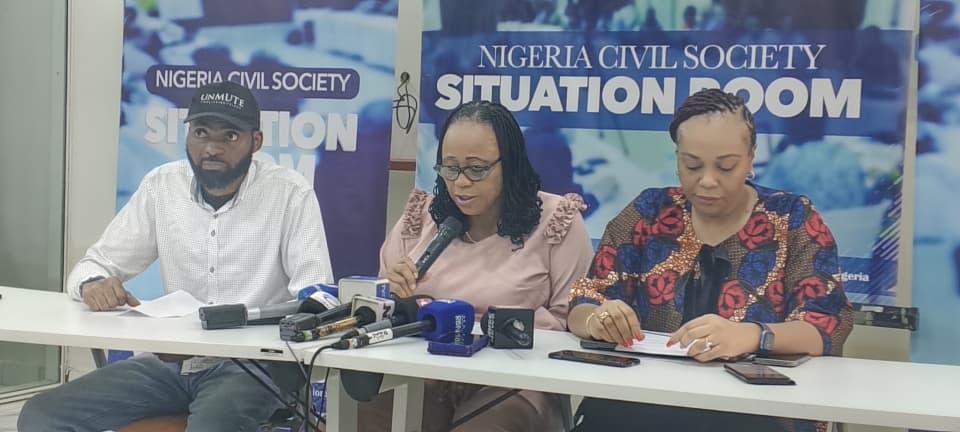

The Nigeria Civil Society Situation Room has called for an urgent review of legal timelines surrounding pre-election disputes, warning that late judicial decisions pose a “systemic risk” to Nigeria’s democratic process ahead of the 2027 general elections.
Presenting the coalition’s final assessment of the Osun State governorship election in Abuja, Mma Odi, co-convener of the Situation Room, highlighted how a court judgement delivered just weeks before polling day triggered widespread logistical delays across the state.
The observation platform emphasized that resolving internal party and nomination disputes within strict timelines must become the top priority for the judiciary, the Independent National Electoral Commission (INEC), and lawmakers.
Court Judgement Sparked Logistical Chain Reaction
Reading from the coalition’s report, Ms. Odi noted that while voters demonstrated commendable patience and orderliness, the electoral umpire was forced into last-minute operations due to a Federal High Court ruling issued on 22 July 2026.
The judgement ordered the late addition of the Social Democratic Party (SDP) candidate to the ballot, compelling INEC to reprint sensitive materials, including ballot papers and result sheets.
This sudden reproduction directly disrupted distribution schedules, leading to delayed poll openings in several locations on election morning.
“The Osun experience exposes a systemic risk,” Ms. Odi stated, reading the official declaration. “Late judicial determinations affecting candidates can disrupt ballot production, logistics, voter education, and the overall electoral timetable.”
She added that pre-election matters must be handled strictly within constitutional and statutory timeframes while ensuring all parties receive a fair hearing.
Technology Delays and Discrepancies
Beyond judicial interruptions, the Situation Room detailed technical friction involving the Bimodal Voter Accreditation System (BVAS).
While acknowledging that technological adoption remains vital for transparency, the report pointed out that facial recognition failures and slow processing times disproportionately affected elderly voters in areas such as Ila, Irepodun, Ayedaade, and Irewole Local Government Areas.
Ms. Odi observed that single-BVAS deployments at high-volume polling units created prolonged queues and voter frustration. However, she noted a positive trajectory in upload speeds to the INEC Result Viewing Portal (IReV), which reached over 98 per cent by the day following the election.
Discreet Vote Buying and Inclusion Gaps
Addressing security and voter conduct, the report commended the peaceful atmosphere maintained by security agencies but raised sharp concerns over ongoing vote buying.
Observational teams documented instances where political agents recorded names on unofficial lists, distributed cash or tags after voters displayed their ballots, and in one case, shared food and drinks that caused disorder near a polling station.
On voter accessibility, while visual posters were widely present for hearing-impaired voters, physical barriers such as gutters and staircases continued to impede persons with disabilities. Observers also noted a widespread absence of Form EC40H, the standard tool used to track voters with disabilities.
Calls for Structural Reform
Concluding the presentation, Ms. Odi outlined key demands from the coalition, which represents over 70 civil society groups:
- Expeditious Dispute Resolution: The National Assembly, judiciary, political parties, and INEC must align to finalize pre-election litigation well before production windows open.
- Enforcement Against Vote Trading: The Economic and Financial Crimes Commission (EFCC) and sister security agencies must intensify joint operations to detect, investigate, and prosecute electoral inducement.
- Public Post-Election Audit: INEC should avoid treating post-election reviews as administrative formalities and instead engage civil society, media, and political parties in a transparent audit covering logistics, BVAS performance, and accessibility.


Add Comment