
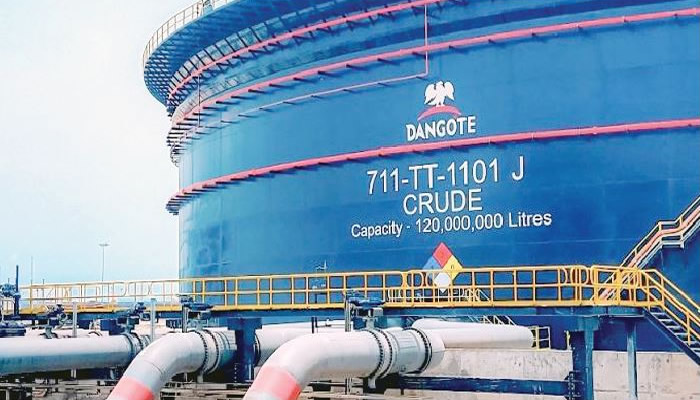

Petroleum product marketers have suspended large-scale fuel loading at the Dangote Petroleum Refinery following a decision by the facility to sell petrol in US dollars, sparking fears of potential fuel tightness across Nigeria.
While petroleum marketers confirmed on Sunday that lifting operations had ground to a halt as they await clarity on a new pricing template, the refinery rejected the claims, insisting that loading operations remain ongoing at its Lekki-based plant.
The standoff has heightened uncertainty across the downstream petroleum sector. Marketers are reportedly wary of purchasing large volumes of petrol at current rates, fearing financial losses if prices drop shortly after.
Marketers adopt cautious approach
Chinedu Ukadike, National Publicity Secretary of the Independent Petroleum Marketers Association of Nigeria (IPMAN), explained that distribution had slowed significantly as marketers navigate market volatility and rising depot costs.
“Marketers are not buying because they are trying to look at the market dynamics,” Mr Ukadike said, noting that existing stock from private depot farms is currently selling between ₦1,250 and ₦1,300 per litre.
He added that the arrival of newly imported petrol and additional crude supplies has left pricing templates in limbo:
- Ex-depot Price Hikes: Private depot owners in Lagos have raised prices to between ₦1,200 and ₦1,250 per litre following the pause at the refinery.
- Station Closures: The Zonal Chairman of IPMAN (Western Zone), Oyewole Akanni, confirmed that several filling stations have temporarily closed after exhausting their stock while waiting to see if prices stabilize.
- No Immediate Scarcity: Despite the closures, IPMAN leadership urged the public to avoid panic buying, maintaining that overall product availability remains intact for now.
Refinery dismisses loading claims
A spokesperson for the Dangote Group dismissed reports of a shutdown as “fake news,” accusing market actors of spreading false information to justify price increases on imported fuel.
“The refinery is loading. Anybody can go there to check,” the official stated, adding that importers are struggling to compete as rising global fuel prices make matching Dangote’s domestic rates increasingly difficult.
Standoff over crude supply and import permits
A senior government official familiar with the negotiations revealed that the dispute extends beyond the dollar-pricing model, pointing to deeper disagreements regarding crude supply allocations and import licensing.
According to the official:
- Import Licences: The refinery is aggrieved that the Federal Government continues to issue import permits to oil marketers despite local refining capacity.
- Naira-for-Crude Limits: Dangote facility management argues it is not receiving sufficient crude allocations in naira from the Nigerian National Petroleum Company Limited (NNPCL), forcing it to make majority purchases in US dollars.
- Free Trade Zone Status: Because the refinery operates within a Free Trade Zone, it retains the legal flexibility to transact in foreign currencies, complicating government intervention.
However, the Federal Government warned against restricting imports, noting that maintaining a single domestic supplier risks creating a monopoly. “This country has been importing petrol for over 35 years… The government cannot allow any single player to hold the country to ransom,” the official said.
Consumer protection agency rejects dollar pricing
The Federal Competition and Consumer Protection Commission (FCCPC) has firmly rejected the proposed dollar template, reiterating that the naira remains the sole legal tender for domestic commercial transactions in Nigeria.
FCCPC Director of Corporate Affairs, Ondaje Ijagwu, also raised concerns that recent declines in international crude oil prices have not translated into cheaper pump prices for Nigerian consumers.
The regulator warned that it is closely monitoring the sector alongside key government stakeholders and will enforce sanctions against any evidence of anti-competitive practices or consumer exploitation.




Add Comment