
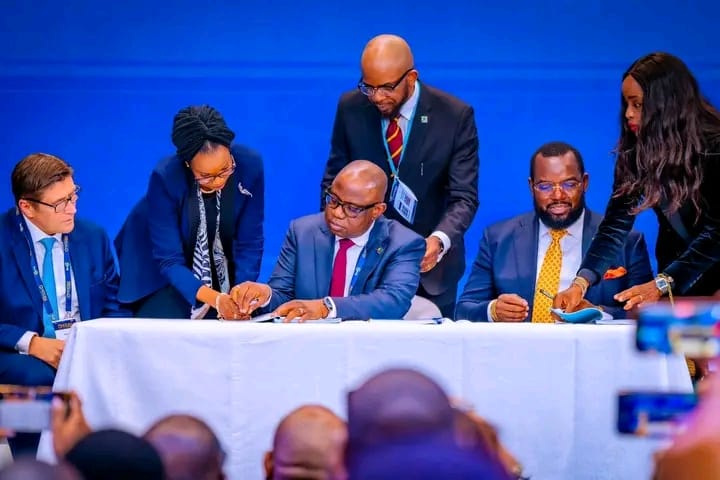

ABUJA, Nigeria — Nigeria’s state oil company has signed a series of major gas supply and transportation agreements aimed at reviving the country’s struggling industrial sector and boosting domestic energy security.
The Nigerian National Petroleum Company Limited (NNPC Ltd) announced the six strategic deals on Tuesday during the NOG Energy Week conference in the capital, Abuja. Among the most significant is a 20-year agreement to supply natural gas to the long-dormant Ajaokuta Steel Company, a multi-billion-dollar Soviet-built project that has failed to produce a single sheet of steel since construction began in the 1970s. Under the new deal, NNPC’s exploration arm will supply up to 50 million standard cubic feet of gas per day to power the steel complex. A separate memorandum of understanding aims to position the steelworks to manufacture raw materials for major regional oil and gas pipelines.
Expanding LNG and Domestic Supply
Nigeria holds Africa’s largest proven gas reserves—estimated at over 200 trillion cubic feet—but has historically struggled to harness them for domestic power and industry due to a lack of infrastructure and chronic underinvestment. The state firm also signed a 15-year “wet gas” sale agreement with UTM FLNG Ltd. The NNPC and Seplat Energy joint venture will supply 200 million standard cubic feet of gas per day to a planned floating liquefied natural gas (FLNG) project. Officials say this guarantees the feedgas required to secure financing ahead of a final investment decision expected by the fourth quarter of 2026.”What we are witnessing today is not just about signing agreements. It is about igniting the engine of Nigeria’s industrialisation,” said Bayo Ojulari, NNPC Ltd’s Group Chief Executive Officer. “Gas is the key… it is the only product that can have that level of industrial impact on Nigeria.
Regulatory Overhaul
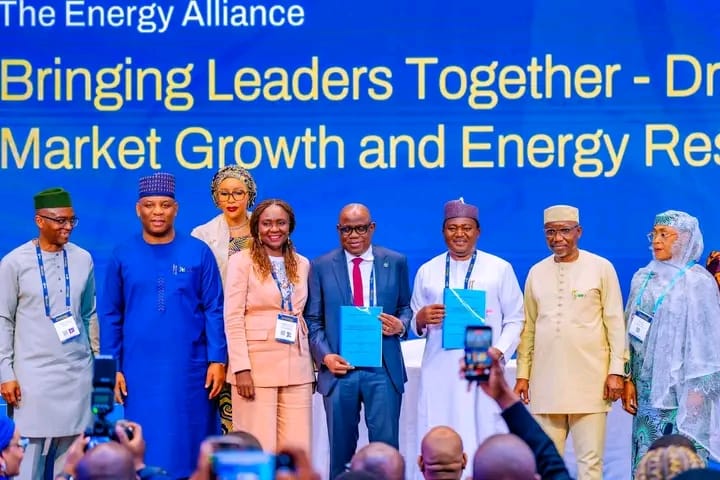
In a bid to modernise the country’s fragmented gas market, the NNPC also transitioned several legacy agreements over to the new Nigerian Gas Transportation Network Code. New commercial pipeline interconnection agreements signed with Chevron Nigeria, AGPC, and NEPL are expected to inject up to 800 million standard cubic feet of gas per day into the domestic grid to supply local power plants and industrial clusters. The signings were witnessed by Nigeria’s junior ministers for oil and gas, alongside senior energy regulators.
President Bola Tinubu’s administration has heavily promoted gas as a transition fuel and a pillar for economic recovery, seeking to curb the country’s reliance on expensive, imported diesel and unstable grid electricity. However, analysts point out that the success of these agreements will ultimately depend on the swift execution of infrastructure projects and maintaining security around vulnerable pipeline networks.



Add Comment