
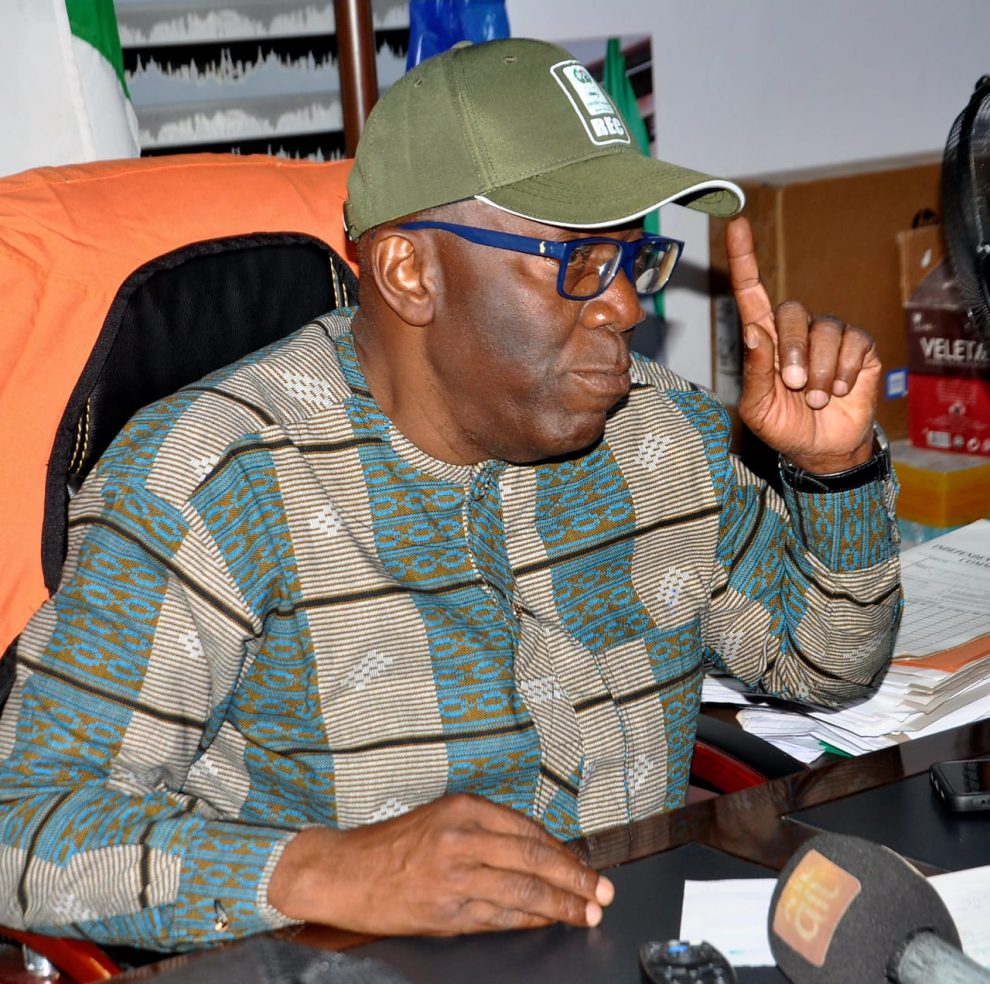

Nigeria’s electoral body says it is fully prepared for the upcoming governorship election in Ekiti State, but has warned that “fake news” and misinformation pose the greatest threat to the vote.
Dr Bunmi Omoseyindemi, the Resident Electoral Commissioner (REC) for the Independent National Electoral Commission (INEC) in the state, said false reports were creating unnecessary panic.
”The deepest challenge is fake news,” Dr Omoseyindemi told journalists on Friday. “False reports create panic and unnecessary fear among the electorate.”
He pointed to exaggerated or unverified reports of violence and kidnappings, warning that such narratives could scare voters away from the polls and undermine trust in the democratic process.
Logistics and security
Despite his concerns over misinformation, the commissioner insisted that logistical preparations for the vote were complete.
Sensitive voting materials have been moved from the Central Bank to local government areas, and thousands of ad-hoc staff are being deployed across the state’s 2,445 polling units.
INEC aims to have voting stations set up by 08:00 local time, with voting scheduled to begin at 08:30.
To avoid the transport delays that have marred previous Nigerian elections, the commission says it has mapped out difficult terrains where motorcycles and tricycles will be needed. Vehicle operators have also been pre-screened by security agencies and promised timely payments.
Addressing safety concerns, Dr Omoseyindemi said the commission was working closely with the police and military through the Inter-Agency Consultative Committee on Election Security (ICCES) to ensure a peaceful environment.
He also praised political parties for keeping the campaign period free of violence and thuggery.
The battle against vote-buying
The commissioner also tackled the persistent issue of vote-buying, calling for a change in the mindset of the electorate.
”People must change their mindset about the electoral process,” he said. “They must not see election periods as opportunities for immediate personal gain.”
While acknowledging that vote-buying remains a challenge, he noted that the responsibility for investigating and prosecuting these crimes lies with Nigeria’s anti-corruption agencies, including the Economic and Financial Crimes Commission (EFCC).
Dr Omoseyindemi urged citizens to trust the system, promising that the commission remains committed to a transparent, free, and fair election.


Add Comment