
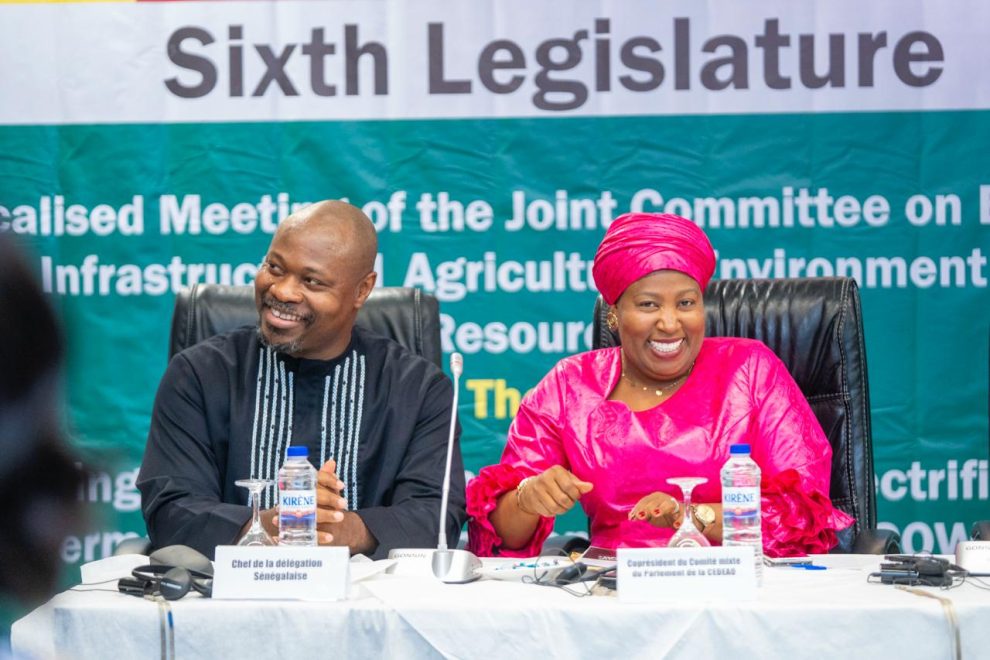

DAKAR, SENEGAL — West African nations must strengthen regional cooperation and pass urgent legislation to expand renewable energy across rural communities, the head of Senegal’s National Assembly has warned.
The call to action was delivered on Monday at the opening of the ECOWAS Parliament’s five-day delocalised joint committee meeting in the Senegalese capital, Dakar.
Speaking on behalf of the parliamentary leader, Babacar Ndiaye—chairman of Senegal’s Committee on Energy and Mineral Resources—warned that a persistent lack of reliable power continues to limit economic growth and widen the gap between urban and rural populations.
He argued that expanding clean energy access is the foundation for industrialization, economic competitiveness, and social progress across the sub-region.
Transforming rural economies
The meeting, themed around the role of parliamentarians in harnessing renewable energy to empower rural economies, brought together regional lawmakers and policy experts to tackle West Africa’s energy crisis.
Mr Ndiaye noted that while millions of West Africans still live without electricity, the region possesses abundant solar, wind, hydro, and biomass resources capable of building a resilient energy future.
“Behind every electrified village are more productive farms, more competitive businesses, better-equipped schools, more efficient health centres and populations regaining hope for a better future,” he said.
He pointed to successful solar projects in Senegal—including installations in Bokhol and Malicounda—alongside renewable initiatives in Cape Verde, Ghana, Niger, and Côte d’Ivoire, as proof that political commitment can accelerate rural development.
Funding crisis threatens regional power grid
The push for a cleaner transition comes amid a severe financial warning for West Africa’s energy architecture.
Mamadou Moustapha Seck, representing Senegal’s Ministry of African Integration and Foreign Affairs, revealed that the West African Power Pool (WAPP)—the body responsible for regional electricity transmission—is facing a serious funding crisis due to declining contributions from member companies.
Mr Seck urged the regional parliamentarians to intervene, warning that the sustainability of cross-border energy cooperation depends heavily on the financial viability of its central institutions.
Despite these challenges, officials maintained that the bloc must stay focused on its target of achieving universal energy access by 2030.
The push for solar solutions
A representative from Senegal’s Ministry of Energy, Petroleum, and Mines echoed the call for decentralised solutions, stating that solar mini-grids and off-grid home systems are the most practical and cost-effective ways to reach remote areas where national grid expansion is too expensive.
Senegal itself has set a target to achieve universal electricity access by 2029 through a mix of grid extension and off-grid solar technology.
However, delegates agreed that unlocking the private sector investment needed to scale up these projects across West Africa will require major regulatory reforms, technology transfer, and harmonized laws across all ECOWAS member states.
The Dakar sessions are scheduled to run until 19 June, with lawmakers expected to issue a final framework of recommendations for regional energy integration.

Add Comment