
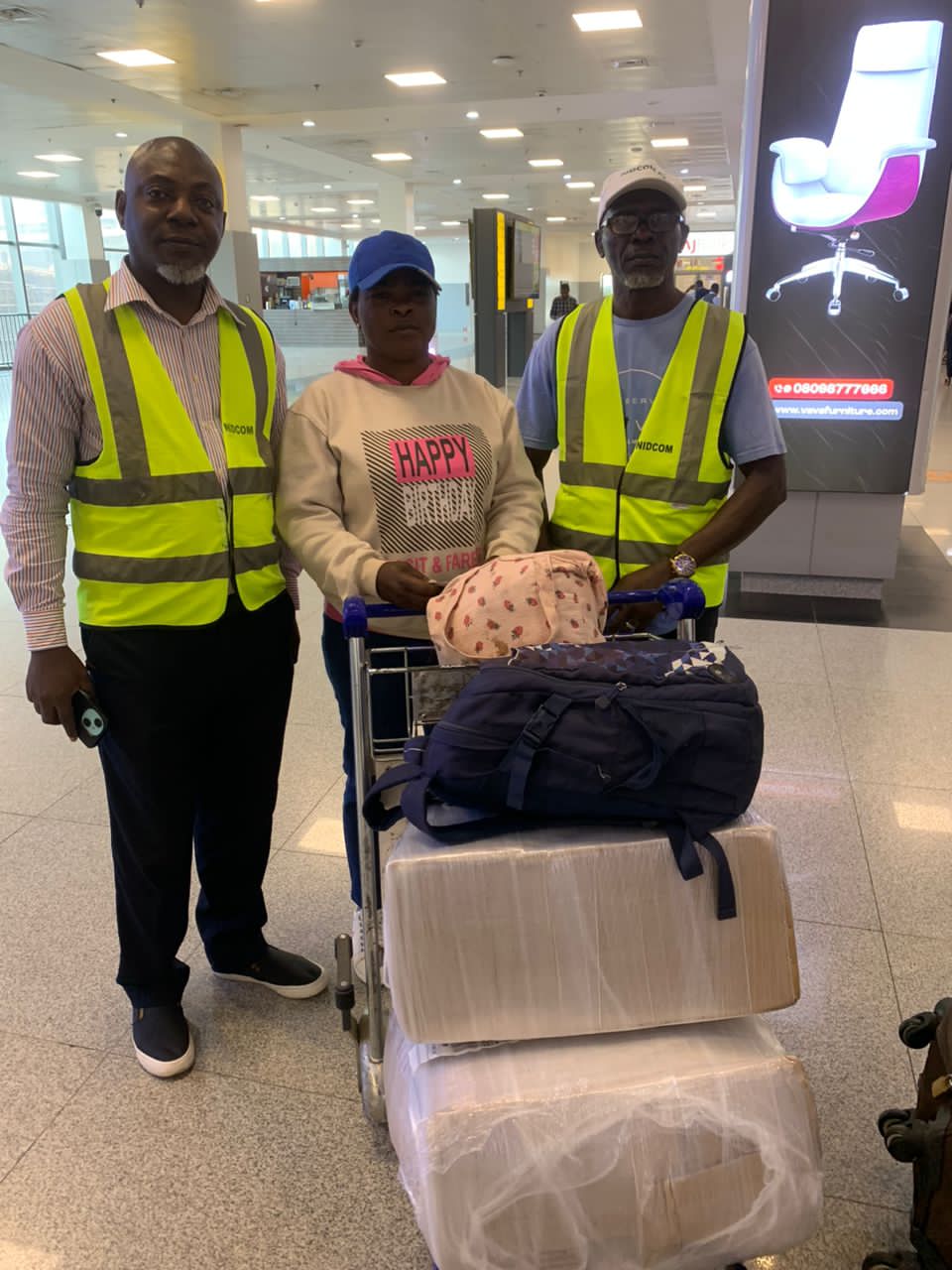

A Nigerian woman has arrived home in Lagos after being rescued from a cycle of labor exploitation and human trafficking in Egypt.
Forty-one-year-old Busola Victoria Alale returned to Nigeria on Wednesday after an anonymous philanthropist stepped in to pay for her repatriation. Her case has reignited a national conversation about the “deceptive promises” of recruitment agents who lure vulnerable citizens into domestic servitude abroad.
Ms. Alale, who previously ran a small business in Ogun State, told officials that her dreams of a better life turned into a nightmare of “inhumane conditions” and financial abuse.
A Cycle of Exhaustion
Recounting her ordeal to the Nigerians in Diaspora Commission (NiDCOM), Ms. Alale described a grueling schedule that left her with almost no time for sleep.
Key Details of the Case:
- Excessive Hours: She reported working from 9:00 AM until 4:00 AM the following day—a 19-hour shift—often serving multiple households within a single 24-hour period.
- Wage Theft: Ms. Alale alleged that the agent who facilitated her travel to Cairo intercepted and kept all her earnings, leaving her with nothing.
- The “Frozen Foods” Factor: Like many victims of trafficking, her journey began after the collapse of her local business, making her an easy target for recruiters promising lucrative foreign currency.
Analysis: The ‘Hidden’ Slavery of Domestic Work
The story of Busola Alale is a sobering blueprint of the “modern slavery” crisis facing thousands of West Africans in North Africa and the Middle East. Traffickers often prey on small business owners whose livelihoods have been eroded by inflation or economic instability.
While NiDCOM and the Nigerian government have intensified their “irregular migration” warnings, the lure of foreign employment remains potent. This case highlights a critical gap in international labor protection: domestic workers are often isolated within private homes, making them “invisible” to local labor laws and vulnerable to agents who function more like slave-holders than recruiters. The fact that a private philanthropist—rather than a formal state fund—had to facilitate her return underscores the logistical and financial hurdles involved in rescuing victims of the “domestic worker” trade.
A Warning to Nigerian Youth
Upon her arrival in Lagos, Ms. Alale urged young Nigerian women to be extremely wary of offers for domestic work abroad. “The promises of a better life turned out to be deceptive,” she said, expressing deep regret over her decision to travel.
The Chairman of NiDCOM, Abike Dabiri-Erewa, praised the rescue but reiterated that Nigerians must verify all job offers through official government channels. The commission also called for the continuous “exposure and arrest” of the traffickers who facilitate these perilous journeys.
Ms. Alale has since been reunited with her family, while authorities say they are looking into the network responsible for her transit to Cairo.



Add Comment