


Nigeria’s road safety authorities have recorded a “landmark” 61% drop in fuel tanker fatalities, with credit given to rigorous digital and physical vehicle audits before they leave petroleum depots.
The Federal Road Safety Corps (FRSC) announced the figures on Thursday, revealing that fatalities involving heavy-duty haulage vehicles fell sharply throughout 2025. The decline is being hailed as an “unprecedented gain” for a country where petrol tanker explosions have historically been a frequent and deadly feature of the national landscape.
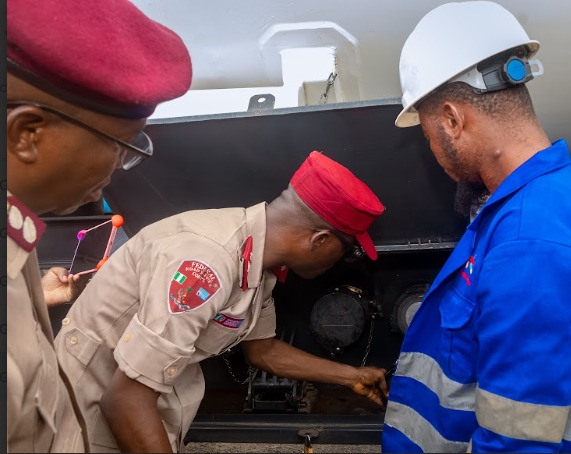
The “Safe-to-Load” programme, which mandates strict safety checks at loading terminals, is now being hailed as the primary driver behind the shift from “impunity to compliance.”
The Anatomy of an Audit
Speaking at a technical training session in Lagos, Corps Marshal Shehu Mohammed noted that the programme has transformed the petroleum haulage sector from a “loose” system into a high-compliance industry.
The data highlights a significant shift in standards:
- Licensing: Compliance with Class G (Specialised) driver licences has risen from a mere 58% to over 99%.
- Vehicle Integrity: Approximately 98% of tankers are now fitted with API-standard leak-proof systems designed to prevent catastrophic spills in the event of an accident.
- Severity Index: Beyond the drop in deaths, the overall severity of crashes has declined by 15%, suggesting that even when accidents occur, they are less likely to end in massive loss of life.
Analysis: Closing the Gantry Gate
For years, the Nigerian highway was a place where “anything goes.” Poorly maintained tankers, often referred to as “moving bombs,” would load fuel at the coast and travel hundreds of kilometres with faulty brakes and leaking valves.
The success of the “Safe-to-Load” initiative lies in its gatekeeper model. By stopping the problem at the depot—the very start of the value chain—the FRSC has effectively de-risked the journey before it begins. However, the Corps Marshal’s warning against “tampering with speed limiters” suggests that while the vehicles are safer, driver behaviour remains a volatile variable.
The challenge now is to sustain these gains as the 2026 election cycle approaches, a period that traditionally sees a surge in road traffic and logistical pressure.
‘The Era of Impunity is Over’
The FRSC has warned that any tanker failing its safety check will be “denied loading without exception.” Furthermore, every crash will now trigger a comprehensive investigation that holds not just the driver but also the vehicle owners and depot operators legally accountable.
“Every avoided crash represents lives saved and national resources preserved,” the Corps Marshal told stakeholders from the Dangote Refinery, NARTO, and NUPENG.
As Nigeria deepens its reliance on technology-driven monitoring systems, the goal remains a “zero-fatality” environment. For a nation where the road has long been a source of anxiety, these 2025 figures offer a rare glimpse of a safer future.




Add Comment