
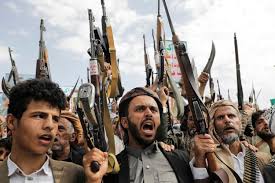

Yemen’s Iran-backed Houthi rebels have launched their first direct missile strike on Israel since the current conflict began, marking a dangerous new phase in the regional crisis.
The group confirmed it fired a barrage of ballistic missiles “targeting sensitive Israeli military sites” on Friday. The Israeli military stated it had successfully intercepted a missile arriving from the direction of Yemen, but the move has fundamentally shifted the geography of the war.
The intervention of the Houthis—who control large swaths of Yemen—now raises the prospect of an expanded, multi-front conflict involving several of the region’s most powerful actors.
US casualties in Saudi Arabia
The escalation is not confined to Israel and Yemen. US media outlets report that at least 12 American soldiers were injured following an Iranian strike on Saudi Arabia’s Prince Sultan Airbase overnight.
Several other Gulf nations have reported fresh missile strikes and interceptions, as the regional security architecture faces its severest test in decades.
In a further deepening of the crisis, Tehran was hit by missile strikes overnight. Iran’s foreign minister claimed on Saturday that Israel had targeted Iranian nuclear sites during an operation on Friday—a move that, if confirmed, would cross a long-standing “red line” in Middle Eastern diplomacy.
The ‘Witkoff’ Mission
As the war enters its second month, the focus is shifting toward an urgent diplomatic off-ramp.
Steve Witkoff, the US Special Envoy appointed by President Donald Trump, has expressed hope that direct meetings with Iranian officials could take place “this week.” The move signals a desperate attempt by Washington to prevent a total regional collapse through back-channel negotiations.
Analysis: A region on the brink
The Houthi entry into the war is a significant strategic blow to efforts to contain the fighting. By launching long-range missiles at Israel, the group has demonstrated that its reach extends far beyond the Red Sea shipping lanes.
For Israel, the reported targeting of Iranian nuclear sites—if verified—suggests a policy of “maximum deterrence,” aimed at crippling Tehran’s strategic assets before a wider war can fully ignite.
However, the injury of US personnel in Saudi Arabia brings Washington directly into the line of fire. President Trump’s administration now faces a delicate balancing act: providing military support to its regional allies while attempting to broker a high-level deal with Tehran to pull the region back from the precipice.




Add Comment