
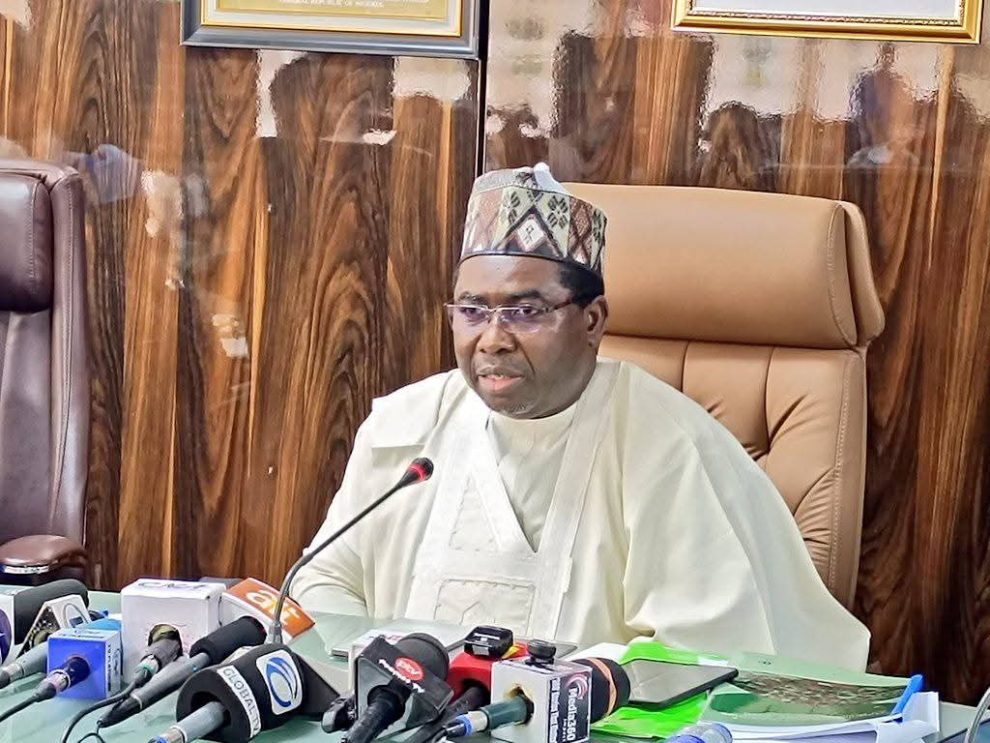

ABUJA – The head of Nigeria’s electoral body has warned that a “sophisticated triad” of digital threats—including AI-driven disinformation and social media volatility—now poses a direct risk to national security ahead of the country’s 2027 general elections.
Speaking at a security alumni lecture in Abuja on Thursday, Professor Joash Amupitan, Chairman of the Independent National Electoral Commission (INEC), said that technological manipulation is increasingly intersecting with physical security challenges like insurgency and communal strife.”This roadmap is no longer just an administrative timeline; it is a security trigger,” Professor Amupitan told an audience of intelligence and defence chiefs. He noted that the recent release of the 2027 election timetable—with presidential polls set for January 16—has effectively put the nation’s security architecture on high alert.
Digital warfare and ‘trust deficits’
Nigeria, Africa’s largest democracy, has long struggled with election-related violence and logistical hurdles. However, Professor Amupitan highlighted a newer, more complex frontier: Foreign Information Manipulation (FIMI) and the weaponisation of artificial intelligence. He argued that these digital threats widen the “trust deficit” between the government and the public. To counter this, he confirmed that INEC is doubling down on its technical safeguards, specifically the Bimodal Voter Accreditation System (BVAS) and an online real-time result viewing portal (IReV).”We are not merely watching the law; we are enforcing its technical safeguards as the ultimate defence against electoral fraud,” he said.
The ‘sobering’ challenge of apathy
Despite a slight improvement in turnout during recent local council polls in the Federal Capital Territory (FCT), the Chairman described national voter apathy as a “sobering challenge” and a latent security risk. Participation in Nigerian elections has plummeted from 53% in 2011 to just 26% in 2023. Professor Amupitan warned that this vacuum is often filled by “non-state actors” seeking to delegitimise the government.
Preparing for 2027
With governorship elections in Ekiti and Osun scheduled for later this year, the Commission is treating these as vital testing grounds for the 2027 general election. Professor Amupitan, a Senior Advocate of Nigeria, stressed that while the law provides the framework for democracy, it is the security agencies that provide the “environment for those laws to breathe.” He called for a shift from reactive policing to “proactive intelligence coordination” to ensure that the sovereign will of the people is not silenced by violence or manipulation.


Add Comment