
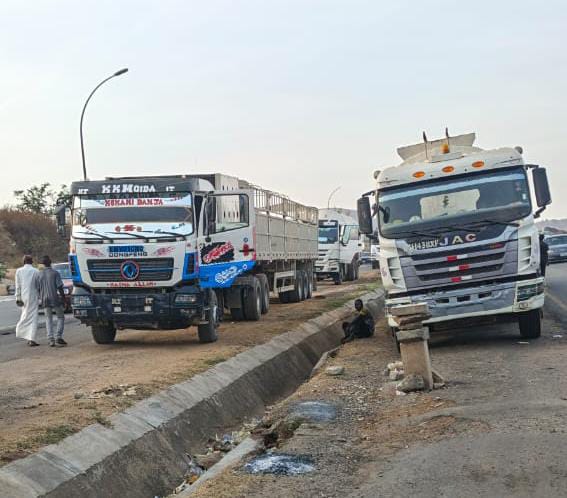

Road safety officials in Nigeria’s capital, Abuja, say a new crackdown on heavy-goods vehicles has led to a dramatic drop in accidents on one of the city’s most notorious stretches of highway.
The Federal Road Safety Corps (FRSC) launched “Operation Safe Kugbo” on 19 March to address the frequent, and often fatal, collisions involving articulated trucks on the steep, busy “outbound corridor” of Kugbo.
Since the start of the exercise, more than 300 trucks and tankers have been restricted from using the route during morning and evening peak hours.
A ‘proactive’ ban
The results have been immediate. On Monday alone, 96 heavy vehicles were intercepted and held back by teams led by the Nyanya Unit Command. Officials confirmed that since the restrictions began, there have been zero recorded crashes involving large vehicles during the restricted windows.
“The restriction is not punitive but a necessary safety measure,” said FRSC spokesperson Felicia Kalu. She added that the move aligns with the Corps’ 2026 strategic goal to significantly reduce road fatalities nationwide.
The Kugbo ‘Death Trap’
For years, the Kugbo axis has had a reputation among Abuja residents as a “death trap.” The combination of a long, descending slope and a high volume of heavy-duty trucks—often suffering from brake failure—has frequently resulted in multi-vehicle pile-ups and significant loss of life.
By barring these “articulated giants” during the hours when smaller commuter cars flood the road, authorities say they have successfully de-risked the corridor.
Analysis: A blueprint for the FCT?
The success of the Kugbo operation is being closely watched by urban planners in the Federal Capital Territory (FCT). For a city designed for a much smaller population, Abuja’s infrastructure is increasingly buckling under the weight of heavy transit traffic moving between the north and south of Nigeria.
The FRSC has hinted that if the “zero-crash” trend continues, similar peak-hour bans could be replicated across other critical “high-risk” corridors in and around the capital.
While truck drivers and fleet operators have been urged to cooperate, the long-term challenge remains: providing alternative routes or dedicated “truck parks” to ensure that the restrictions do not simply push the congestion—and the danger—onto other neighboring roads.




Add Comment