


Segun Ojumu, Abuja
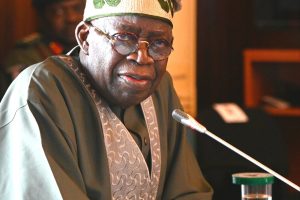
The Chairman of the Independent National Electoral Commission (INEC), Professor Joash Amupitan, SAN, has announced a nationwide “Voter Revalidation Exercise” to sanitize Nigeria’s 93-million-strong voter register before the 2027 General Election.
Speaking at his first quarterly consultative meeting with Civil Society Organisations (CSOs) in Abuja on Wednesday, Prof. Amupitan cited “persistent challenges” including under-age registration, duplicate entries, and the presence of deceased persons on the roll as the primary drivers for the move.
The Chairman, who assumed office late last year, framed the exercise as a necessary “clean-up” to bolster public confidence. “No electoral process can command public confidence without trust in the integrity of its voters’ register,” he told the gathering of observers and activists.
Analysis: A Legal Gray Area?
While the Chairman’s intent to “sanitize” the register appears technically sound, the specific phrasing of a “revalidation exercise” raises significant legal questions under the Electoral Act 2022.
The Statutory Mandate
Under Section 10(1) of the Electoral Act 2022, INEC is mandated to maintain a “National Register of Voters.” Crucially, the law specifies a system of Continuous Voter Registration (CVR).
- The Power to Revise: The Commission has the power to “update” and “revise” the register (Section 10(4)).
- The Revalidation Problem: The Act does not explicitly use the term “revalidation”—a process that often implies a requirement for already-registered voters to take fresh action to remain eligible.
The Legality Gap
Legal experts and CSOs may query whether INEC can legally compel a citizen, who is already validly registered and holds a Permanent Voters Card (PVC), to “revalidate” their status.
- Potential Disenfranchisement: If revalidation becomes a prerequisite for voting in 2027, it could be challenged as an extra-legal hurdle not envisioned by the 1999 Constitution, which grants the right to vote to any citizen aged 18 and above who is “registered.”
- Cleanup vs. Re-registration: While Section 124 of the Act allows for the removal of names (deceased, non-citizens, etc.) through “claims and objections,” a blanket nationwide revalidation might be seen as an attempt to introduce a “periodic” registration system through the back door, bypassing the “continuous” system prescribed by law.
Busy Calendar Ahead
Beyond the 2027 roadmap, the INEC Chairman detailed a grueling schedule for 2026:
- February 21: FCT Area Council Elections (1.6m voters, 2,822 polling units).
- February 21: Bye-elections in Rivers and Kano States.
- June 20: Ekiti State Governorship Election.
- August 8: Osun State Governorship Election.
Prof. Amupitan also revealed that 171 associations have applied to become political parties. While many failed the constitutional litmus test, he hinted that “successful association(s) will soon be announced.”
The “Apathy” Malaise
The Chairman ended with a plea to CSOs to help combat “rising voter apathy,” a trend that has plagued recent off-cycle polls. He urged stakeholders to focus on voter education and gender inclusion, while warning political actors to steer clear of “hate speech and vote buying” as the 2027 race begins to heat up.


Add Comment