
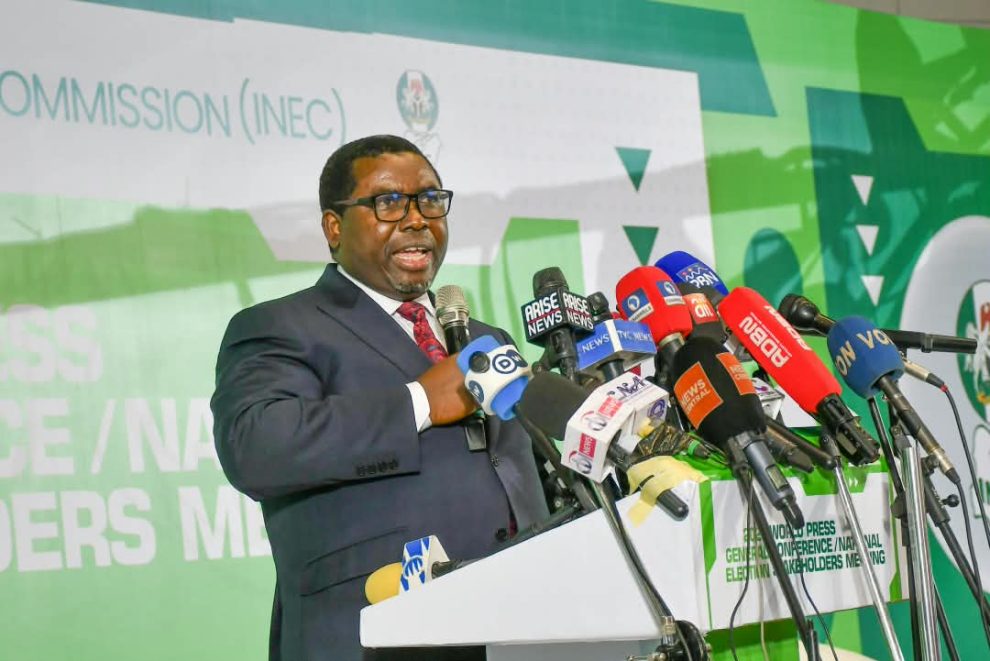

With exactly 100 days to the first ballot of the 2027 General Election, the Chairman of the Independent National Electoral Commission (INEC), Professor Joash Amupitan, SAN, has declared that the Commission has transitioned from planning to full operational execution. Speaking at a World Press Conference and National Stakeholders’ Meeting in Abuja on Tuesday, October 6, 2026, Prof. Amupitan announced that the final voter register now stands at 103 million registered voters and pledged that the upcoming polls will serve as a global benchmark for transparency and integrity.
Addressing an audience of security chiefs, diplomatic corps, political leaders, and media executives, the INEC Chairman confirmed that nine out of the 14 statutory milestones established in the election timetable have been successfully executed. He noted that recent off-cycle elections—including governorship polls in Anambra, Ekiti, and Osun—passed rigorous electoral integrity benchmarks and served as key testing grounds for early staff deployment, agile logistics, and intelligence-led security.
“This 100-day milestone is not just a countdown; it is a call to action,” Prof. Amupitan stated. “We reassure the nation and the international community of our total commitment to neutrality, operational excellence, and the sacred integrity of the ballot box.”
Key Operational Highlights from the INEC Address
- Voter Register Statistics: Following three phases of Continuous Voter Registration (CVR) that added 10.7 million new voters, the National Register of Voters stands at 103,431,213. Lagos (7.48m) and Kano (6.57m) lead the states by total voters, while youth (18–34) and middle-aged citizens (35–49) account for over 70% of the electorate. Public display of the register for claims and objections runs from October 9 to 15, 2026, alongside the distribution of Permanent Voter Cards (PVCs) at Local Government Centres.
- Tech Upgrades & AI Audit: INEC has acquired 57,000 new Bimodal Voter Accreditation System (BVAS) devices, bringing software hardening, battery optimization, and cryptographic protections to the eEC8A uploading system on the IReV portal. A newly established Artificial Intelligence Division within the ICT Department will deploy automated AI auditing tools under human oversight to detect database anomalies and counter cyber intrusions or deepfake fabrications.
- Massive Ad-Hoc Deployment: The Commission will deploy 707,384 ad-hoc personnel for the Presidential and National Assembly elections on January 16, 2027, and an equal number for the Governorship and State Assembly elections on February 6, 2027. The bulk of this 1.41 million-strong workforce will be drawn from the National Youth Service Corps (NYSC), supported by tertiary institution students and public servants.
- Logistics & Procurement: To cover 176,846 polling units across 8,838 Registration Areas, INEC has renewed its MoUs with transport unions (NURTW, RTEAN, MWUN) to mobilize over 100,000 vehicles and 4,000 boats. Sensitive materials will arrive at Local Government Area hubs 72 hours before voting, ensuring deployment to Super RACs by 4:00 PM on election eve for prompt 7:30 AM poll openings.
- Candidate Nominations & Judicial Rulings: Out of 22 registered political parties, 18 sponsored 36 candidates for the presidential/vice-presidential race, while 21 parties fielded 1,313 Senatorial and 3,547 House of Representatives candidates. Prof. Amupitan confirmed receipt of the Supreme Court’s certified true copy of INEC v. Zenith Labour Party (delivered September 24, 2026), affirming the constitutionality of Section 77(5)–(7) of the Electoral Act 2026 and upholding the Commission’s timetable.
- Inclusivity & Health Protocol: The election register captures 232,658 Persons with Disabilities (PWDs). INEC is procuring Braille ballot guides, EC30 PWD posters, and magnifying glasses and deploying certified sign language interpreters to all State Collation Centres. First aid kits, hand sanitizers, and BVAS cleaning agents will also be distributed nationwide.
Security Operations and EU Alignment
Reinforcing the Chairman’s operational roadmap, security agencies and international partners at the Abuja conference pledged unified support to secure election corridors and protect voters.
Speaking on behalf of Inspector-General of Police Olatunji Disu, Assistant Inspector-General (AIG) Alinyenu Idu of the Police Mobile Force outlined ongoing clearance operations in Kogi, Niger, Benue, and Taraba states aimed at eliminating security threats before voting day.
“We have been able to regulate our actions to moderate election activities, starting from pre-election activities, where we try to activate both operational and tactical assets… to ensure that the opportunity to participate in electing their leaders does not turn into beds of violence,” AIG Idu said. He confirmed that police deployment strategies focus on securing voters, polling units, movement channels, and collation centers, with a comprehensive operational security review scheduled for release by late December.
Echoing calls for peace and electoral integrity, European Union Ambassador to Nigeria, Gautier Mignot, described managing the upcoming polls as a “Herculean task” requiring national solidarity and institutional backing for INEC.
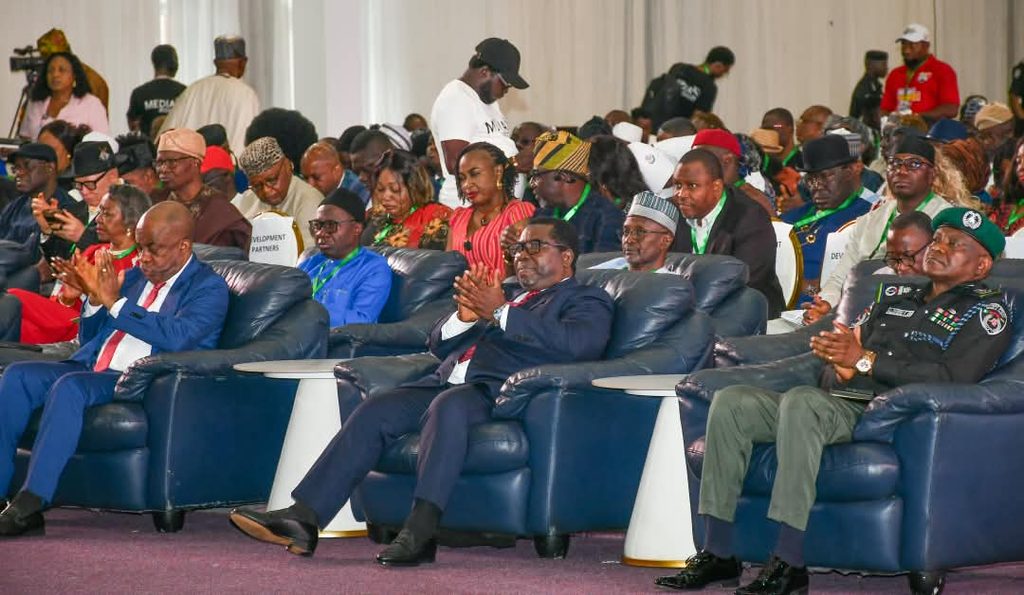
“The elections to take place in January and February next year are a key moment to reaffirm the strength of Nigeria’s democracy and to provide the future leaders and representatives of the Nigerian people with the necessary popular legitimacy,” Ambassador Mignot stated.
Acknowledging the frontline election workers, Ambassador Mignot noted that INEC “will be represented on the day of the election by hundreds of thousands or more, mostly young Nigerian citizens, who will be deployed on the field to ensure the successful conduct of the ballots. They deserve our respect and our support.”
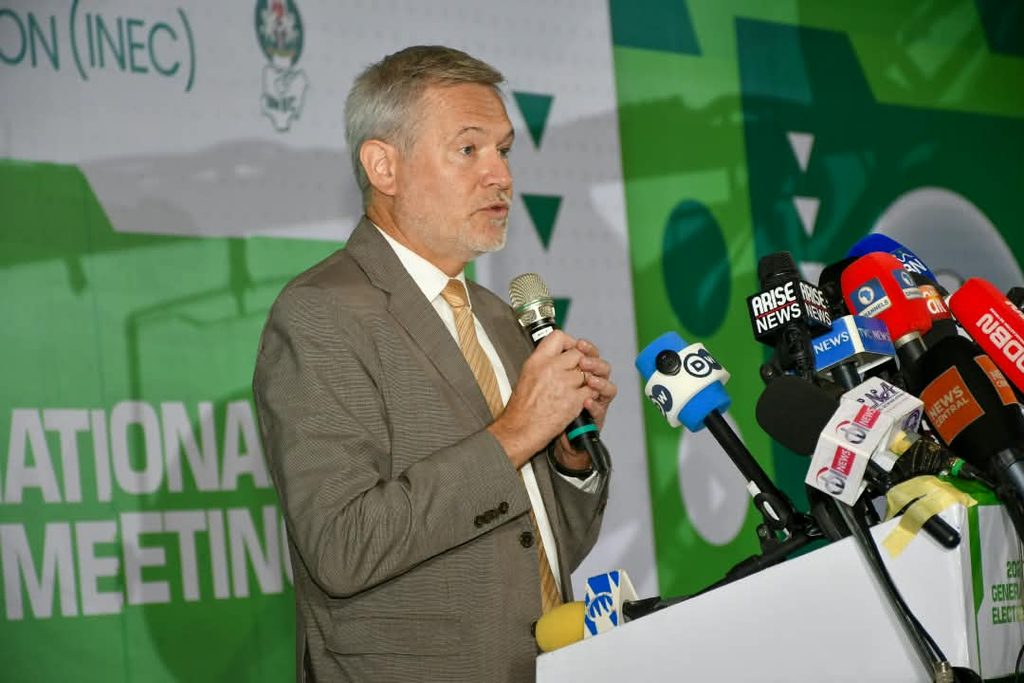
The EU diplomat confirmed the deployment of a specialized technical electoral mission to monitor campaign activities, polling logistics, and post-election collation. Calling on political actors to reject hate speech and vote-buying, Mignot emphasized that “freedom and acceptance of peaceful expression is the right alternative and antidote to political violence,” reaffirming the EU’s commitment as a non-partisan democratic partner.




Add Comment