
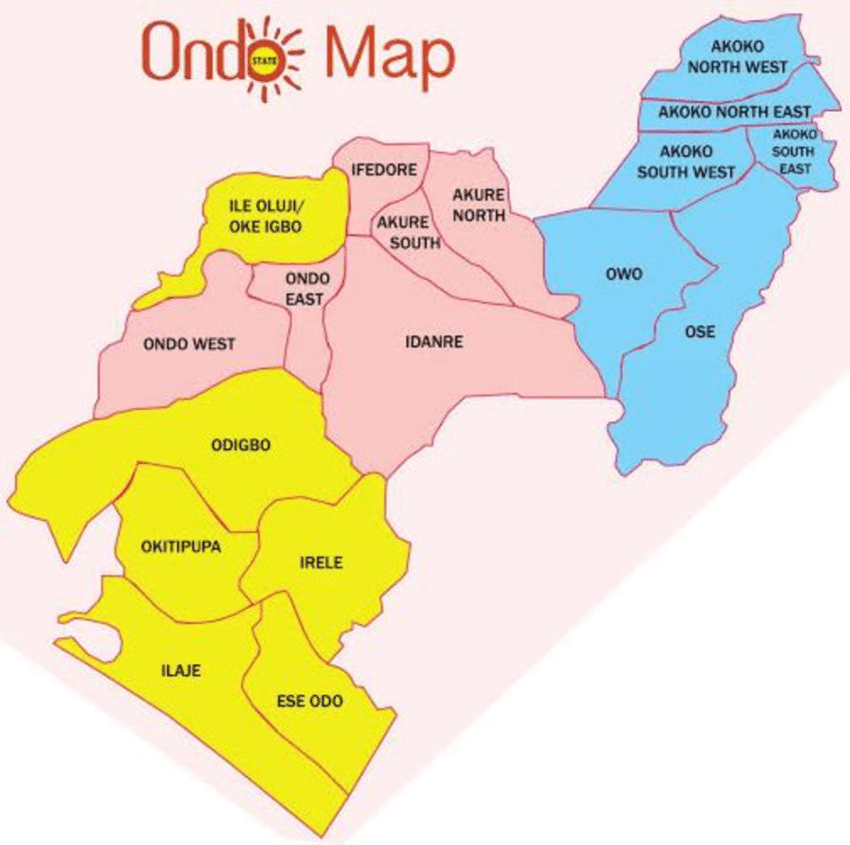

Every political seat in Nigeria comes with two papers, but only one is ever shown to the people. The first is the oath of office, sworn before cameras. The second is invisible, more powerful, and more dangerous: a carte blanche. It is the unwritten license that tells an elected man, “You are now above the law. Do as you like.” For too long in Ondo South, from the turbulent waters of Ilaje to the fertile plains of Okitipupa, from Ikale to Irele, from Ese-Odo to Odigbo and Ile-Oluji, and from my own home in Araromi-Obu, that second paper has been more powerful than the will of the people.
This carte blanche is not given at Eagle Square or at the Senate chambers. It is inherited. The day you enter Nigerian politics, the system schools you. The party elders in Akure, the Abuja caucus, the contractors hanging around the corridors—all whisper the same lesson: “Due process is for the poor.” Suddenly, budget defence becomes a bazaar, oversight becomes a negotiation, and the money meant for our fishermen in Ayetoro, our oil palm farmers in Okitipupa, our cocoa farmers in Araromi-Obu, and our market women in Ore becomes a national cake to be shared among a few.
This is why our politics has stopped being about ideas. It is now a ruthless scramble for the carte blanche. An election is no longer a contest of vision; it is an auction for the key to the treasury. Campaigns are investments expecting returns. Godfathers are shareholders demanding dividends. And while manifestos promise to revive the Okitipupa Oil Palm Company, to stop sea incursion in Awoye and Gbagira, to fix the death-trap Ore-Okitipupa-Igbokoda-Araromi-Obu road, the real manifesto is never printed: “Let me enter first; the people can wait.”
This putrid pool is where even good men drown. I have seen bright young leaders from Igodan-Lisa, from Igbotako, from Mahin and Araromi-Obu, enter with fire in their eyes, talking about jobs for our graduates and hospitals for our mothers. But to keep the party ticket, they must settle the structure. To get one bill passed, they must settle the committee. To keep their ward boys in Ajagba and Ode-Aye loyal, they must settle the streets. Every settlement ties another stone around their necks until the altruistic dream is abandoned and self-preservation becomes the only ideology left.
Let us be honest: in Nigeria, corruption is not just greed; it is a tax. It is the compulsory levy you pay to remain politically alive. If you refuse to pay it, the system declares you unfit. They will call you too holy, too rigid, and too inexperienced. Your constituency projects for Ilaje and Ese-Odo will vanish from the national budget. Your name will be erased from relevant committees. And your own people, conditioned by years of neglect, will ask, “But what has this our senator even brought home?” The system does not punish the looter; it punishes the man who refuses to loot.
That is why altruistic ends never survive in office. The man who went to Abuja to fight for coastal protection for Ilaje ends up fighting for pipeline security contracts for his friends. The man who went to fight for quality education in Odigbo and Ile-Oluji ends up fighting for his second term. Governance is reduced to December rice, to okada and sewing machines that cannot create an economy. Our greatness is mortgaged for tokenism.
And we, the people of Ondo South, have been forced to lower our dignity. From Araromi to Atijere, from Araromi-Obu to Oke-Oyinbo to Igbokoda, we no longer ask, “What is your legislative agenda?” We ask, “What will you drop for us today?” Town halls have become wailing grounds. The Senator’s office has become a charity counter for burial levies and JAMB forms. When we accept crumbs, we license our leaders to keep baking only crumbs. This is the most painful consequence of the carte blanche.
But history shows us that this carte blanche can be torn. It will not be torn by preaching. It will be torn by a new political contract. A contract that says every kobo for OSOPADEC and NDDC meant for Ondo South will be published. That every constituency project from Irele to Oke-Igbo, from Odigbo to Araromi-Obu, will be tracked by our own youth, not by Abuja consultants. That the cost of election must be reduced so that a good man from a poor home in Ese-Odo or Araromi-Obu can contest without having to sell his soul to repay election debts. Until public office stops being the most profitable business in Nigeria, it will never attract true patriots.
There are already glimpses of that new order. Leaders who rejected the second paper. Who chose transparency over largesse? Who showed that you can say no to the settlement culture and still survive? They are few; they are fought, they are called stubborn, but they prove that integrity is possible. That is the model Ondo South needs now, not another career politician seeking a retirement home in the Senate, but a disruptor who sees the Senate seat not as carte blanche but as a sacred mandate.
That is why 2027 is not just another election for us. It is a referendum on impunity. For Ondo South, it is time to declare that no Senator has limitless freedom. Our mandate is conditional; our trust is not a blank cheque. We must revoke the second paper and restore power to the people who own it, from the fishermen in Ugbo to the farmers in Araromi-Obu and Odigbo. Until we do, our glory will remain a poster on the wall. But when we do, then truly, ỌJỌ OGO WA TI DE will cease to be a slogan in Okitipupa and become a reality in every creek and every farmstead in Ondo South.
Prince Feyisayo Oluwadamilare Ijifusi (Apálárá) writes from Araromi-Obu, Odigbo LGA



Add Comment