
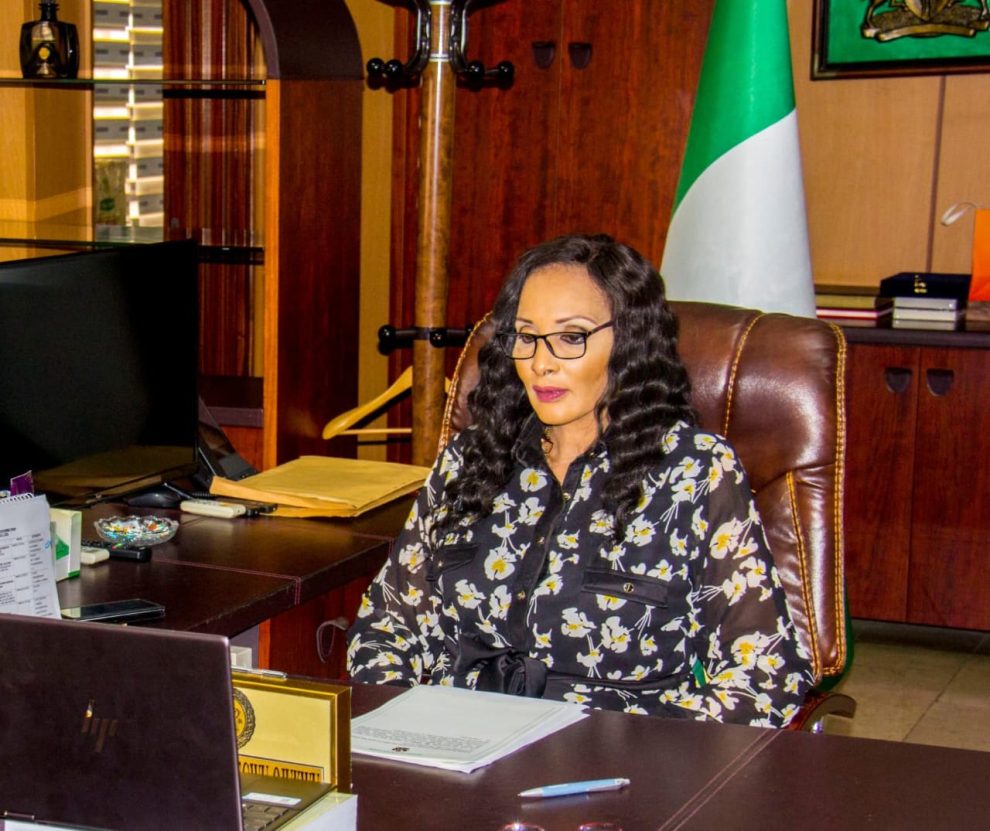

African nations must take decisive action against illicit financial flows that are fuelling a rising wave of terrorism and violent extremism across the continent, Nigeria’s foreign minister has warned.
Ambassador Bianca Odumegwu-Ojukwu made the call on Tuesday during a virtual ministerial meeting of the African Union Peace and Security Council.
She cautioned that terrorist groups are acquiring increasingly sophisticated commercial technologies, including drones, while funding their operations through illicit mining, ransom payments, and global financial networks.
Illicit flows fueling violence
Addressing the regional body, Ms Odumegwu-Ojukwu identified access to illicit finance as a primary driver of insecurity across Africa.
“It facilitates the recruitment of youths and the procurement of lethal weapons by terrorist groups,” she said. “We call on the Council to stress the need for stronger international cooperation in preventing, tracing, recovering, and returning proceeds of illicit financial flows from safe havens to countries of origin.”
She also noted that extremist violence in West Africa has been used by military leaders to justify unconstitutional coups, undermining democratically elected governments.
Drones and digital threats
The minister highlighted a shift in how non-state armed groups operate, warning that conventional military tactics alone are no longer enough to counter their reach.
Key threats highlighted by Nigeria include:
- Advanced Tech: Terrorist networks deploying commercially available drones and digital platforms.
- Funding Chains: Unhindered access to cash through illegal mining and kidnapping for ransom.
- Arms Proliferation: Arms manufacturers in partner nations failing to prevent dual-use technologies from reaching insurgent groups.
Ms Odumegwu-Ojukwu called on international partners to enforce zero tolerance for arms trafficking and disrupt the supply chains providing weapons to non-state actors.
Regional cooperation and non-kinetic strategy
Detailing Nigeria’s domestic strategy, the minister outlined a dual approach combining military operations with social interventions.
She pointed to targeted efforts to degrade groups such as Boko Haram and ISWAP, alongside deradicalization initiatives, youth empowerment schemes, and intelligence-sharing partnerships through the Multinational Joint Task Force (MNJTF).
The AU meeting was chaired by Uganda’s Acting Foreign Minister, Haruna Kasolo, who serves as President of the Peace and Security Council for July.



Add Comment