
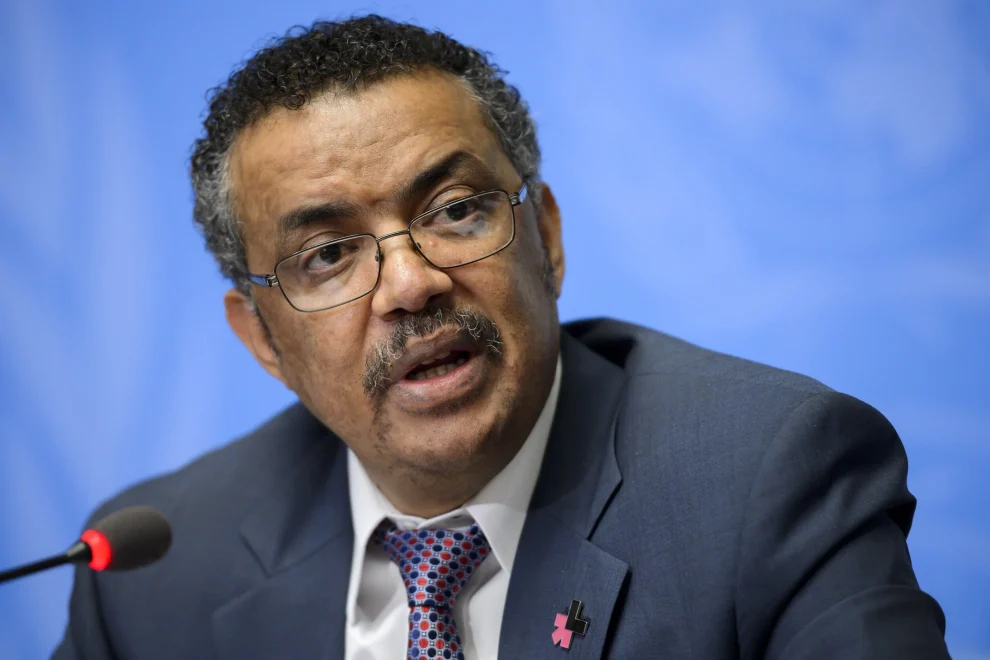

BUNIA, Democratic Republic of Congo — The Director-General of the World Health Organization (WHO), Dr. Tedros Ghebreyesus, has officially opened a major new Ebola treatment centre in the eastern Congolese city of Bunia.
The provincial capital of Ituri has become the epicentre of a rapidly moving outbreak driven by a rare strain of the virus. Despite better-organised medical facilities and an influx of international aid, transmission rates continue to outpace the initial emergency response.
Dr. Tedros celebrated the first five recorded recoveries from the deadly hemorrhagic virus during his speech at the launch on Sunday, highlighting the tenacity of patients.
Early Care is Key to Survival
The Bundibugyo strain of Ebola, for which there is presently no approved vaccine or targeted treatment, is the cause of the current outbreak. But the head of the WHO stressed that a patient’s chances of survival are significantly increased when they are placed in isolation and receive supportive medical care early on.
“I think four people will be discharged today. And there was one that was discharged the day before yesterday, I think. So people can recover,” Dr. Tedros said. “Of course, we’re working on vaccines and treatments, but that doesn’t mean that people cannot recover from Ebola.”
He stated that the initial recoveries send a “strong message” to the public, demonstrating that the new facility in Bunia will effectively assist infected individuals in their recovery.
Inside the New Treatment Hub
The newly commissioned medical facility is designed to scale up the region’s intensive care capabilities significantly:
- Capacity: Built to accommodate 100 beds eventually, with 45 beds fully operational and available for immediate admissions.
- Equipment: Outfitted with state-of-the-art medical hardware tailored for high-dependency and intensive care monitoring.
- Personnel: The Democratic Republic of Congo’s central government is deploying a specialized medical team to staff the site, including intensive care specialists from the capital, Kinshasa, alongside a local team of government partners.
- Catchment: The hub is mandated to isolate and treat all confirmed and suspected Ebola patients from within Bunia and its surrounding communities.
The Role of the Community
Dr. Tedros reiterated that clinical infrastructure alone cannot halt the virus, stating that the local population remains the ultimate shield against further transmission.
“Every citizen should care, and everyone should take care of himself or herself, and take care of each other as well,” he urged, calling for total community cooperation to bring the outbreak to an end as quickly as possible.

Add Comment