
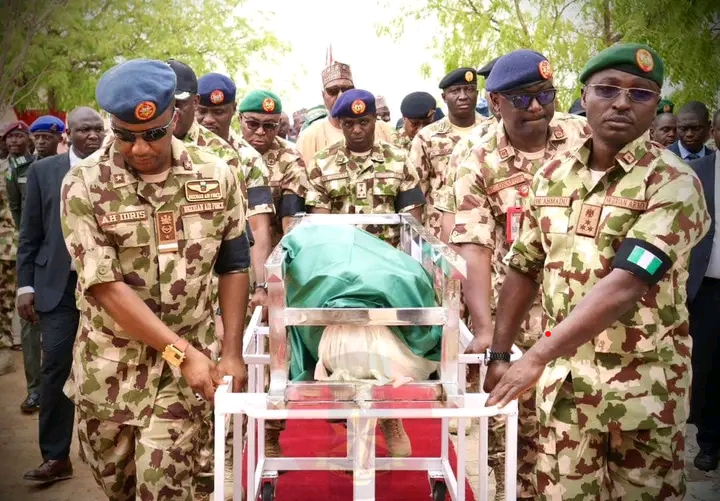

Nigeria has held a state funeral with full military honours for one of its top commanders, as a surge in insurgent violence continues to rattle the country’s northeast.
Brigadier General Oseni Braimah, along with Captain Ismail and several other soldiers, was laid to rest on Wednesday at the Maimalari Cantonment Cemetery in Maiduguri. The officers were killed during simultaneous assaults by suspected Boko Haram and Islamic State West Africa Province (ISWAP) fighters on April 9 in Benisheikh—a strategic town on the vital highway linking Maiduguri and Damaturu.
The internment, attended by the Minister of Defence and the Chief of Army Staff, comes amid reports of fresh clashes and a controversial military crackdown in civilian areas.
A ‘Supreme Price’
Military officials described the burial ceremony as “emotionally charged,” highlighting the rising toll on the army’s top brass. Governor Babagana Zulum of Borno State joined senior military leaders in paying tribute to the fallen men, describing them as patriots who stood firm in the face of “extreme danger.”
The Latest Security Developments:
- Askira Uba Ambush: On the same day as the funeral, four more soldiers from the 115 Task Force Battalion were reportedly killed in a fierce hour-long gun battle with insurgents armed with “superior ammunition.”
- Monguno Allegations: In a separate incident, troops allegedly torched houses in the Charlie 2 community of Monguno. The action was reportedly a response to an IED ambush on Sunday that killed Commanding Officer Lt. Col. A. Mohammed and six others, with the military accusing locals of “collaborating” with the attackers.
- Repelled Attacks: Despite the losses, the Army says its troops successfully repelled a fresh assault by suspected terrorists on Wednesday afternoon.
Analysis: A War of Attrition
The death of a Brigadier General and a Lieutenant Colonel within a single week marks a significant blow to the Nigerian military’s command structure in Borno. While the army frequently reports “neutralising” terrorists, these high-profile funerals underscore a sophisticated and persistent threat from insurgents who are increasingly using improvised explosive devices (IEDs) and heavy weaponry to target senior officers.
The reported burning of houses in Monguno also highlights the deepening “trust deficit” between the military and the local population. While higher authorities have reportedly intervened to halt the operation in favour of dialogue, the incident reflects the intense pressure on ground troops who often view local communities as logistics hubs for the enemy.
Police ‘Clearance’ in Benue
As the military struggles in the northeast, the crisis is also stretching thin the police force in the Middle Belt. In Benue State, Police Commissioner Ifeanyi Emenari has launched a “clearance operation” following recent herder-farmer violence.
The Commissioner issued a stern warning that anyone involved in cattle rustling or providing support to bandits would be treated as a “collaborator” in terrorism. The move follows the death of a mobile police officer over the weekend, adding to a week of significant losses for Nigeria’s security agencies.
A Nation in Mourning
For the families gathered in Maiduguri, the citations read at the graveside were a reminder of what the military calls the “heavy price” paid daily to safeguard Nigeria’s unity. However, with 23 states now under high-risk travel advisories and major highways remaining targets for ambush, the government faces increasing pressure to move beyond “solemn ceremonies” and toward a strategy that can stem the tide of casualties.


Add Comment