
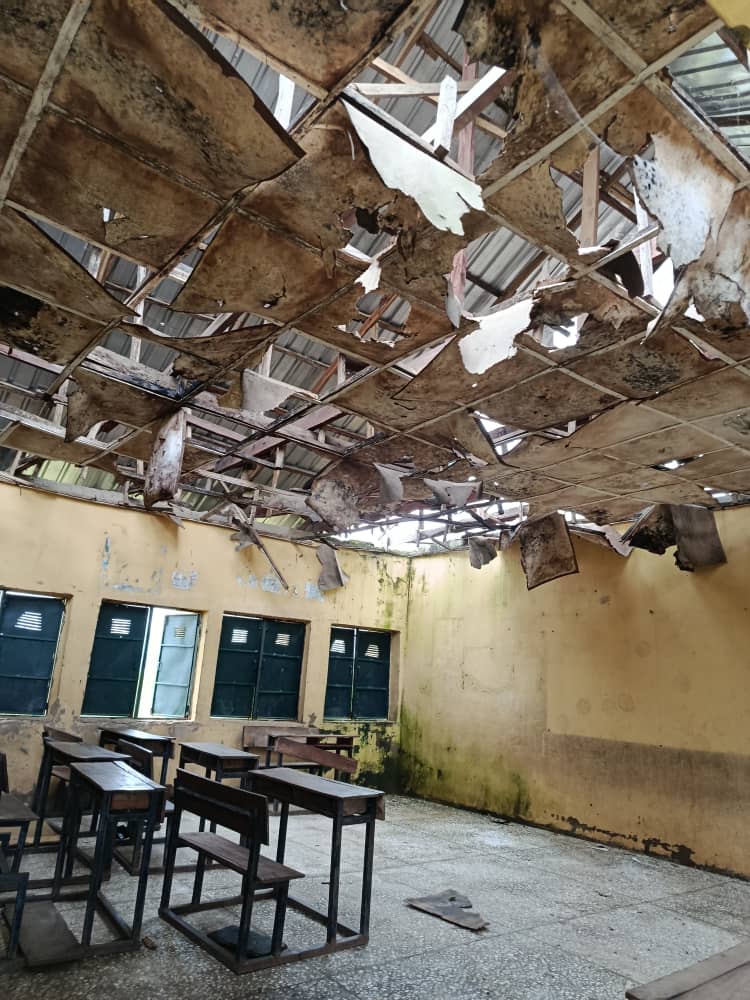

Children in rural communities on the outskirts of Nigeria’s capital city are being forced to study on bare concrete floors inside roofless classrooms, according to a report by a local civic rights organization.
The Grassroots Center for Rights & Civic Orientation (GRACO) released photographs and video evidence on Wednesday showing public primary schools in the Federal Capital Territory (FCT) falling into severe disrepair, leaving young pupils exposed to the elements.
At LEA Primary School in Makanima — located along the main airport road in the Abuja Municipal Area Council (AMAC) — violent weather has stripped away entire sections of roofing. Rain-stained ceiling boards hang precariously over damaged classrooms, while rafters remain open to the sky.
A similar crisis has been documented in Kigbe, a community within the Kwali Area Council, where primary school pupils in uniform sit on bare floors or wooden planks due to a complete absence of desks and chairs.”It is unacceptable that in spite of the huge quantum of resources said to be available to governments… schools in communities like Kigbe and Makanima will be suffering this level of neglect,” said Armsfree Ajanaku, Executive Director of GRACO. Under Nigeria’s Universal Basic Education (UBE) Act of 2004, state governments are legally mandated to provide free, compulsory primary and junior secondary education for every child.
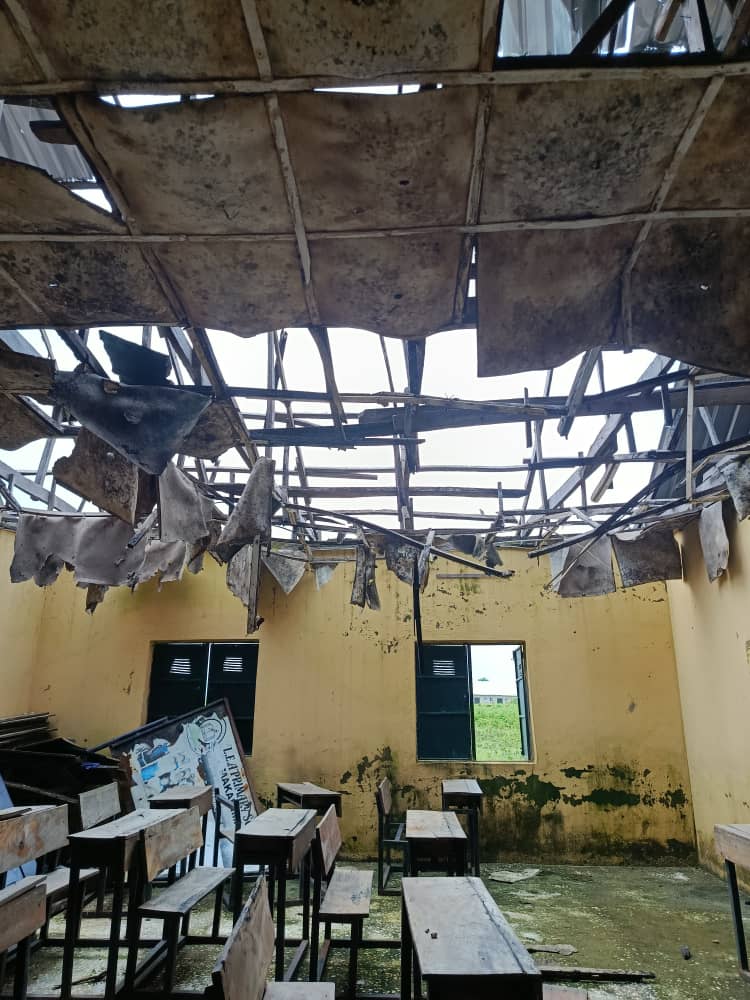
However, rights activists say rural communities are being routinely overlooked despite recent allocations. In February 2024, the FCT Administration announced a ₦30.9 billion ($18.6 million) fund to rehabilitate public schools across the territory, acknowledging that facilities in outlying districts like Kwali, Abaji, Gwagwalada, and Kuje were severely overstretched by growing enrollment. GRACO is now demanding a comprehensive, transparent public audit of all primary schools across Abuja’s six area councils to determine how those funds were deployed and identify unsafe structures.”Thousands of children cannot wait while different tiers of government debate and deflect responsibility over who should act,” Ajanaku said, urging both local council leaders and the central FCT Administration to intervene immediately.
The calls for reform come as political parties begin early campaigning across Nigeria ahead of the 2027 general elections, with advocacy groups urging citizens to hold candidates accountable for basic public infrastructure.
Local government officials from the AMAC and Kwali area councils have not yet publicly responded to the report.



Add Comment