
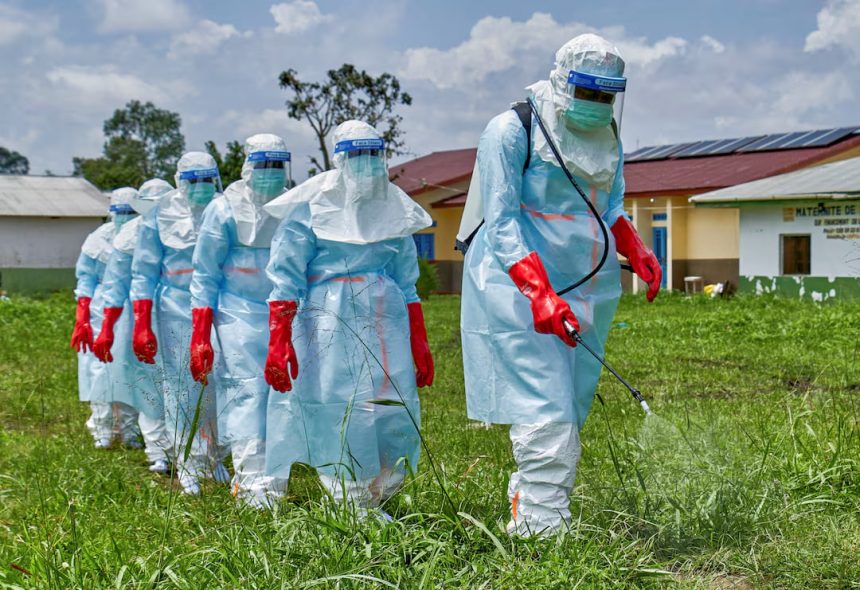

The Federal Government of Nigeria has instructed hospitals nationwide to set up isolation units and strengthen infection prevention measures, while warning that 15 states have yet to finalize their emergency response plans following a confirmed Ebola case in Abuja.
Speaking at a public briefing and a meeting of the National Economic Council (NEC) on Thursday, the Coordinating Minister of Health and Social Welfare, Professor Muhammad Pate, urged lagging state authorities to immediately accelerate their operational preparations.
Prof Pate confirmed that 21 states have already updated their contingency response plans with the Nigeria Centre for Disease Control and Prevention (NCDC) but warned that national readiness relies on complete subnational compliance.
Private facilities urged to step up surveillance
The health minister placed particular emphasis on the role of private health providers, noting that the index patient—a woman who had returned from Uganda—initially sought treatment at a private clinic in Abuja before being isolated.
“We have notified all our hospitals to make room for bed capacity, isolation, and prepare their health workers,” Prof Pate said, stressing that frontline medical staff remain highly vulnerable without strict adherence to protective protocols.
Health authorities confirmed that the strain identified in the index case is the Bundibugyo ebolavirus, which is distinct from the Zaire ebolavirus responsible for the 2014–2016 West African epidemic. The government has enlisted genomic specialists from Redeemer’s University to assist the NCDC with viral sequencing.
To manage public communication and prevent widespread panic, Minister of Information Mohammed Idris has directed state media agencies and the National Orientation Agency (NOA) to launch grassroots awareness campaigns in local languages.
Economic Council endorses 90-day reform plan
At the same NEC meeting, chaired virtually by Vice President Kashim Shettima, the council formally endorsed a 90-day economic action plan presented by Finance Minister Taiwo Oyedele to consolidate federal economic reforms.
The policy prioritizes reducing the cost of living, harmonizing taxes, and accelerating high-impact infrastructure initiatives, alongside tracking the utilization of funds saved from the removal of fuel subsidies.
The council also reviewed national reports on livestock development and urged state governors to conduct post-campaign reviews to sustain polio eradication efforts in security-compromised areas.


Add Comment