
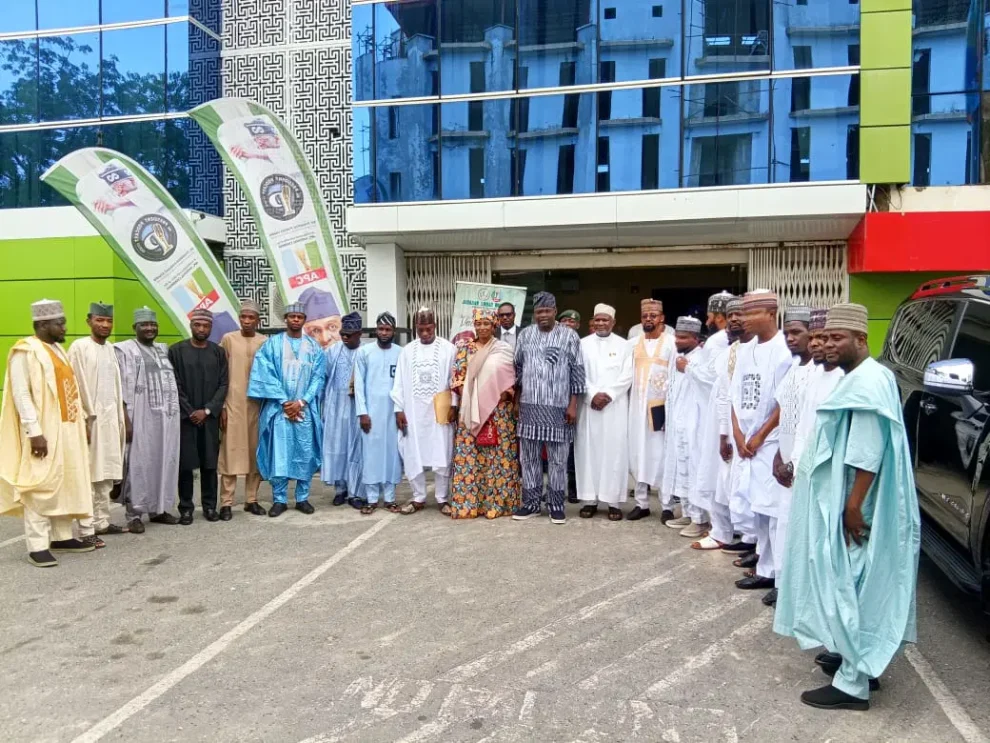

The National Chairman of the ruling All Progressives Congress (APC), Professor Nentawe Yilwatda, has warned that any attempt by opposition parties to reintroduce fuel subsidies would devastate northern Nigeria’s economy and halt critical infrastructure development across the region.
Speaking on Monday at the APC national headquarters in Abuja, Professor Yilwatda addressed opposition campaign promises broadcast on local Hausa-language radio stations, arguing that reintroducing subsidies would drain public revenues required for major capital projects.
The APC chairman made the remarks while formally receiving a delegation of assembly candidates from the opposition African Democratic Congress (ADC) in Zamfara State, led by Mohammed Hassan and Aslam Aliyu, who publicly withdrew from their respective races to align with the governing party ahead of the 2027 general elections.
Countering allegations that President Bola Tinubu’s administration had neglected the northern region, Professor Yilwatda pointed to ongoing federal infrastructure investments, including major highway developments, gas pipeline projects, and targeted agricultural support schemes.
Highlighting the administration’s performance, Professor Yilwatda raised several key arguments:
- Infrastructure and Budget Priorities: Reintroducing fuel subsidies, he argued, would starve the federal government of funds needed to complete key transport routes—such as the 400-kilometre Abuja–Kano dual carriageway and the 500-kilometre Kano–Maiduguri corridor—alongside regional roads connecting Jos, Kwara, Sokoto, and Kebbi.
- Fiscal Stability for Northern States: He recalled that prior to recent economic reforms, a significant number of northern state governments struggled to pay civil service salaries and gratuities, maintaining that current revenue-sharing structures have restored financial solvency.
- Social Investments and Gas Initiatives: The chairman noted that northern states represent a primary beneficiary base for federal social interventions, including student loans, compressed natural gas (CNG) transport schemes, and expanded fertilizer production tied to regional gas expansion.
- Political Inclusivity: Drawing contrasts between the president and leading opposition figures, Professor Yilwatda praised President Tinubu’s political record in Lagos for appointing cabinet officials and local administrators from diverse regional and religious backgrounds.
Welcoming the former opposition candidates into the party, Professor Yilwatda instructed the new members to finalize their registration at the ward level and focus their mobilization efforts directly at polling unit levels ahead of upcoming political contests.


Add Comment