
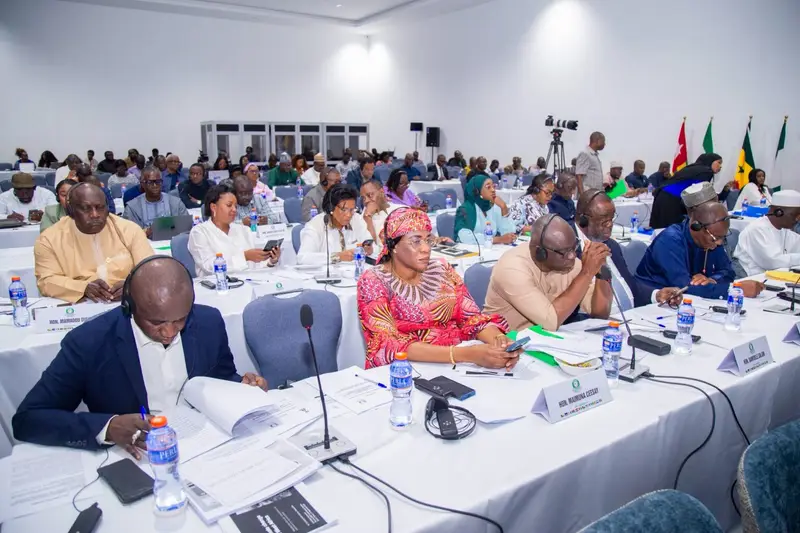

ACCRA — Rising temperatures and shifting weather patterns across West Africa are no longer just environmental concerns—they are directly triggering violent conflict, mass displacement, and economic hardship across the region, parliamentarians have warned.
Speaking at the Economic Community of West African States (ECOWAS) Parliamentary Seminar in Accra, Ghana, lawmakers cautioned that growing competition over dwindling natural resources is straining communities to breaking point. As water sources dry up and fertile land shrinks, traditional farming and pastoral communities are being forced into direct competition. The resulting friction has fueled violent farmer-herder conflicts, displaced millions, and deepened poverty.Resource pressure fueling conflictIn a country presentation delivered at the summit, Nigerian delegates highlighted how population growth and climate variability have combined to intensify tensions over land and water.”In Nigeria, internal displacement has been linked to armed conflict, communal violence, farmer-herder conflict, banditry, terrorism, flooding and other disasters,” the submission noted.Citing International Organization for Migration (IOM) data, the report stated that more than 2.2 million people remain internally displaced in Nigeria’s North-East, with an additional 1.3 million displaced across the North-Central and North-West regions.Delegates stressed that clashes between farmers and herders extend beyond simple land disputes. They are complicated by organized crime, banditry, and a systemic failure in local conflict resolution mechanisms.
A regional challenge demands regional solutions
Other member states shared similar strains on their infrastructure and security.
Togo: Lawmakers outlined a new 2026–2030 national plan to manage cross-border livestock movement (transhumance). The initiative updates a framework first established in 1995 to address modern challenges, including climate pressures and security crises.
The Gambia: Representatives highlighted the P2P2RS Phase II initiative, which supports small-scale producers and herders across 19 districts through climate-smart agriculture, irrigation, and local mediation over grazing routes.
Cabo Verde: Officials emphasized the critical threat of severe water scarcity, illustrating how environmental pressures directly trigger economic migration and local instability.
Moving beyond emergency aidParliamentarians at the seminar agreed that military action and short-term humanitarian relief are insufficient to resolve the root causes of the crisis. Instead, delegates called for long-term investments in early-warning systems, climate adaptation, clear land governance, and sustainable livelihoods.
Lawmakers were urged to use their legislative powers to embed climate resilience and conflict prevention into national budgets and legal frameworks before crises escalate. Because climate shocks, river basins, and pastoral migration routes cross national borders, delegates concluded that an isolated national approach will fail. Addresssing the crisis will require synchronized regional strategy, cross-border intelligence sharing, and unified policy action across West Africa.



Add Comment