

By Olayemi Esan
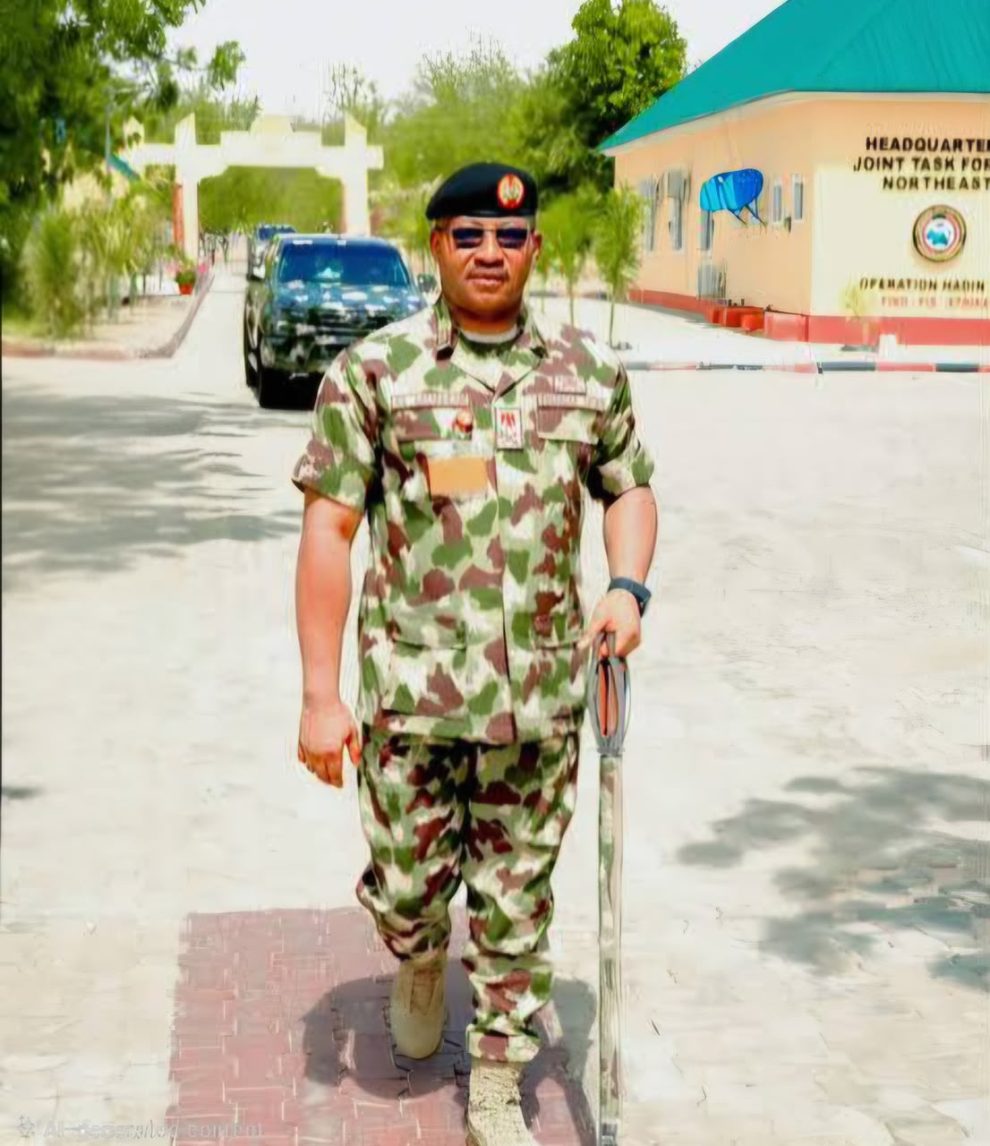
The outgoing Theatre Commander of the Joint Task Force North-East, Operation Hadin Kai, Major General Abubakar Abdulsalam, has left the North-East theatre with a major operational scorecard, having overseen intensified military pressure that resulted in the neutralization of more than 1,200 Boko Haram and ISWAP fighters, the arrest of 758 logistics collaborators, and the interception of over ₦350 million allegedly linked to terrorist financiers.
Abdulsalam disclosed the figures on Tuesday in Maiduguri, Borno State, during his farewell briefing, where he reviewed the operational achievements recorded since he assumed command of Operation Hadin Kai in April 2025.
His tenure, which coincided with sustained military operations against insurgent groups across the North-East, also witnessed the recovery of more than 500 weapons, 25,000 rounds of ammunition, and the destruction of over 300 improvised explosive devices.
The figures paint a picture of a command that placed considerable pressure not only on fighters on the battlefield but also on the financial, logistics, and operational networks sustaining the insurgency.
Terrorist Leadership, Logistics Networks Targeted
One of the most significant elements of Abdulsalam’s tenure was the degradation of the terrorist command structure.
According to the outgoing commander, troops under Operation Hadin Kai eliminated more than 216 high-value terrorist commanders, striking at the leadership structure of Boko Haram and ISWAP and weakening the groups’ ability to coordinate attacks and sustain operations.
The arrest of 758 logistics collaborators further demonstrated the broader focus of the military campaign.
Rather than concentrating solely on armed fighters, troops targeted the networks that provide terrorists with food, weapons, ammunition, funds, and other logistical support needed to maintain their operations.
The interception of more than ₦350 million allegedly linked to terrorist financiers added another dimension to the campaign, as the military moved against the financial channels supporting insurgent activities.
Over 1,200 Terrorists Neutralised
At the centre of the operational campaign was sustained kinetic pressure against Boko Haram and ISWAP positions.
Abdulsalam said troops neutralized more than 1,200 insurgents during his tenure, representing a significant blow to the manpower available to the terrorist groups.
The recovery of more than 500 weapons and 25,000 rounds of ammunition also denied the insurgents equipment and firepower that could otherwise have been deployed against military formations and civilian communities.
Troops equally destroyed more than 300 IEDs, removing a major threat from roads, communities and military supply routes.
The destruction of the explosives was particularly significant in a theatre where improvised explosive devices have historically been used by insurgents to attack troops, restrict movement and intimidate civilian populations.
From Battlefield Pressure to Insurgent Surrenders
Abdulsalam’s tenure also recorded what he described as a significant increase in the surrender of insurgents.
He attributed the development to the combination of sustained military pressure and non-kinetic measures designed to encourage fighters to abandon the insurgency.
The approach effectively placed insurgents under pressure from two directions: military operations against their positions and leadership, alongside efforts aimed at persuading fighters to abandon the terrorist groups.
The increased surrender of insurgents therefore became another measure of the pressure exerted on Boko Haram and ISWAP during the period.
From Counter-Insurgency to Community Recovery
Perhaps the most visible measure of the military gains was the return of displaced Nigerians to communities previously affected by insurgency.
Abdulsalam said military operations helped more than 7,000 displaced families return to their communities, while over 3,000 Nigerians were repatriated from Cameroon.
Across parts of the region, schools, markets, and major supply routes that had previously been disrupted by insurgent violence also reopened.
The development represented a shift from simply fighting terrorists to creating conditions in which normal economic and social activities could resume.
For communities that had endured years of displacement and disruption, the reopening of schools and markets and the restoration of movement along key routes provided tangible signs of improving security conditions.
Winning the War Beyond the Battlefield
Abdulsalam’s record suggests that the campaign under his leadership was fought on several fronts.
On the battlefield, troops pursued and neutralized terrorists. Against the insurgents’ support structure, security forces arrested logistics collaborators and intercepted funds. Against terrorist leadership, more than 216 high-value commanders were eliminated.
At the same time, the command pursued measures aimed at encouraging insurgents to surrender, while military operations helped create conditions for displaced families to return home.
The cumulative effect was an operational strategy aimed not merely at defeating individual fighters but at progressively weakening the insurgency’s manpower, leadership, logistics, finances, and ability to operate freely.
A Command Transition After Major Gains
Abdulsalam’s farewell briefing came days after a major Nigerian Army reshuffle in which he was redeployed from the North-East theatre.
He has been succeeded by Major General Ibrahim Ayodele Ajose as Theatre Commander, Operation Hadin Kai, following redeployments approved by the Chief of Army Staff, Lieutenant General Waidi Shaibu.
The change of command comes at a critical stage of the counter-insurgency campaign, with the military expected to consolidate the gains recorded against Boko Haram and ISWAP while sustaining pressure on remaining terrorist networks.
Abdulsalam, in his farewell remarks, expressed appreciation to President Bola Tinubu, the Chief of Defence Staff, General Olufemi Oluyede, the Chief of Army Staff, Lieutenant General Waidi Shaibu, and the Borno State Government for their support.
He said the provision of additional troops, equipment and combat enablers contributed significantly to the operational gains recorded during his tenure.
A Legacy of Sustained Pressure
As Major General Abdulsalam exits Operation Hadin Kai, his tenure will be remembered for a period of sustained pressure against Boko Haram and ISWAP, marked by high-value terrorist commanders killed, fighters neutralised, logistics networks disrupted, weapons and ammunition recovered, terrorist finances intercepted, and communities gradually reclaimed.
The more than 1,200 terrorists neutralized, 216 high-value commanders eliminated, 758 logistics collaborators arrested, over ₦350 million in suspected terrorist-linked funds intercepted, more than 500 weapons recovered, and over 300 IEDs destroyed provide the central figures of his final operational scorecard.
But perhaps the clearest measure of the campaign’s wider impact lies beyond the battlefield: more than 7,000 displaced families returning home, over 3,000 Nigerians repatriated from Cameroon, and the reopening of schools, markets, and major supply routes.
For the outgoing Theatre Commander, those developments reflect the broader objective of the war—not simply defeating terrorists, but restoring the security conditions communities need to live, trade, travel, and rebuild their lives.



Add Comment