
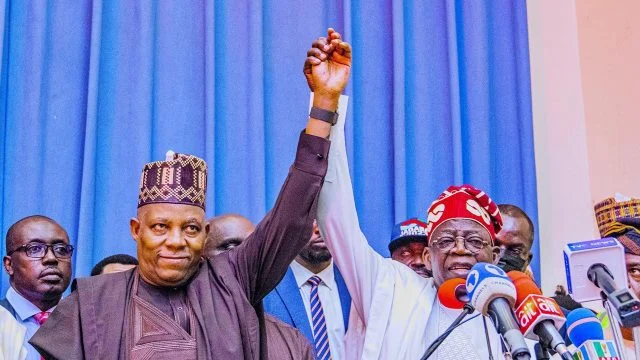

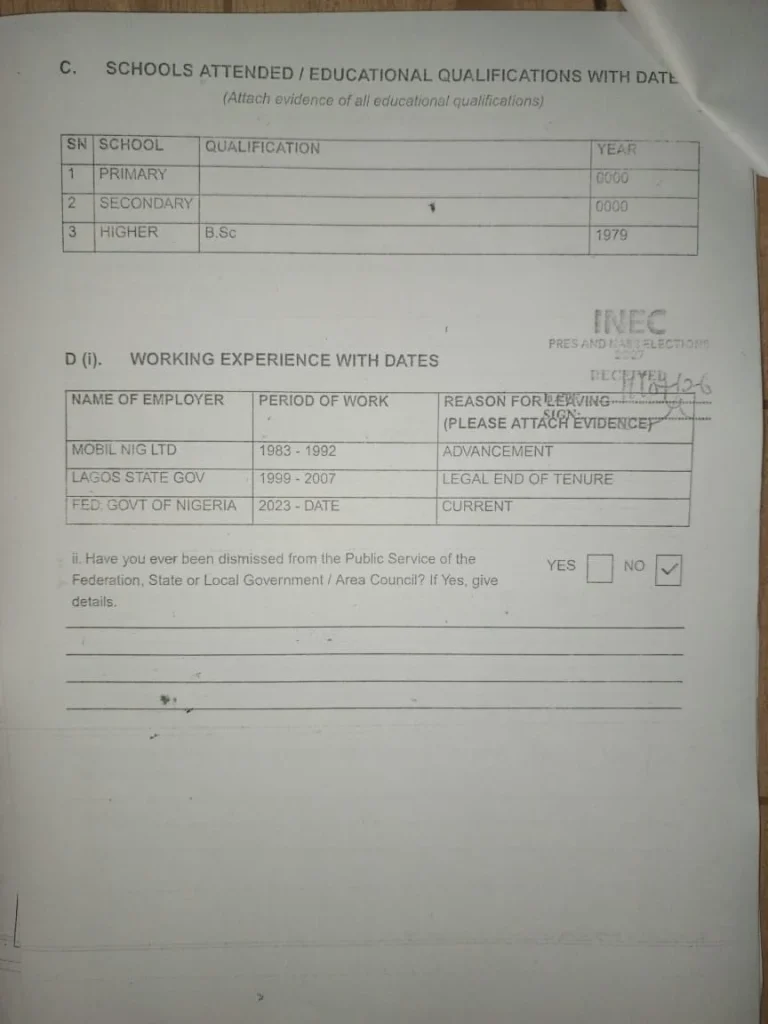
Nigeria’s electoral commission has published the personal particulars and academic credentials of presidential candidates for the 2027 general election, revealing that President Bola Tinubu entered “0000” for the years he attended primary and secondary school.
The public display of Form EC9 by the Independent National Electoral Commission (INEC)—a statutory requirement under the Electoral Act 2026—shows that Tinubu listed only his university qualification, a Bachelor of Science degree awarded with honours by Chicago State University in 1979.
By contrast, the credentials submitted for Vice President Kashim Shettima trace a complete educational trajectory, detailing his primary school leaving certificate from 1978, West African Examinations Council (WAEC) secondary results from 1983, and degrees from the University of Maiduguri and University of Ibadan.
Legal and political implications
The decision to leave primary and secondary school dates as “0000” reopens intense scrutiny around the President’s personal records, raising significant political and legal questions ahead of the 2027 campaign:
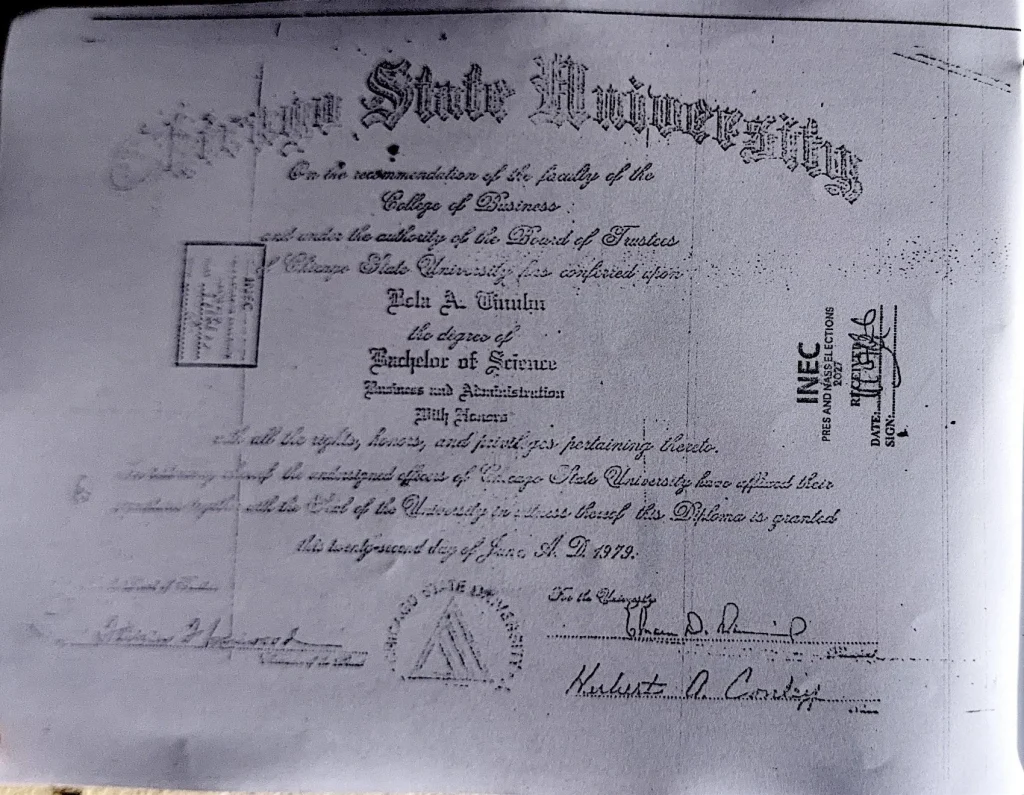
- Constitutional Compliance: The Nigerian Constitution sets the minimum educational qualification to contest the presidency at a school certificate level or its equivalent. By presenting a verified university degree, Tinubu satisfies the constitutional baseline, but omitting foundational schooling invites fresh debate over whether candidates should disclose a complete, verifiable record.
- Public Transparency & Identity Questions: Leaving basic schooling records blank fuels persistent claims from political opponents regarding identity verification and background consistency. Critics question why a sitting president would decline to document early academic institutions that ordinary citizens are routinely required to show.
- Potential Legal Challenges: Under Section 29(3) of the Electoral Act, publishing candidate particulars provides a legal avenue for citizens, opposition parties, and civil society to inspect documents and challenge false declarations in court. Opposition legal teams are expected to examine whether the omission constitutes a deliberate withholding of information or a technical filing tactic to prevent legal vulnerability.
INEC emphasized that displaying candidate affidavits is designed to ensure maximum transparency, allowing the public to request certified true copies and pursue legal redress where necessary as political campaigns prepare to officially open.



Add Comment