
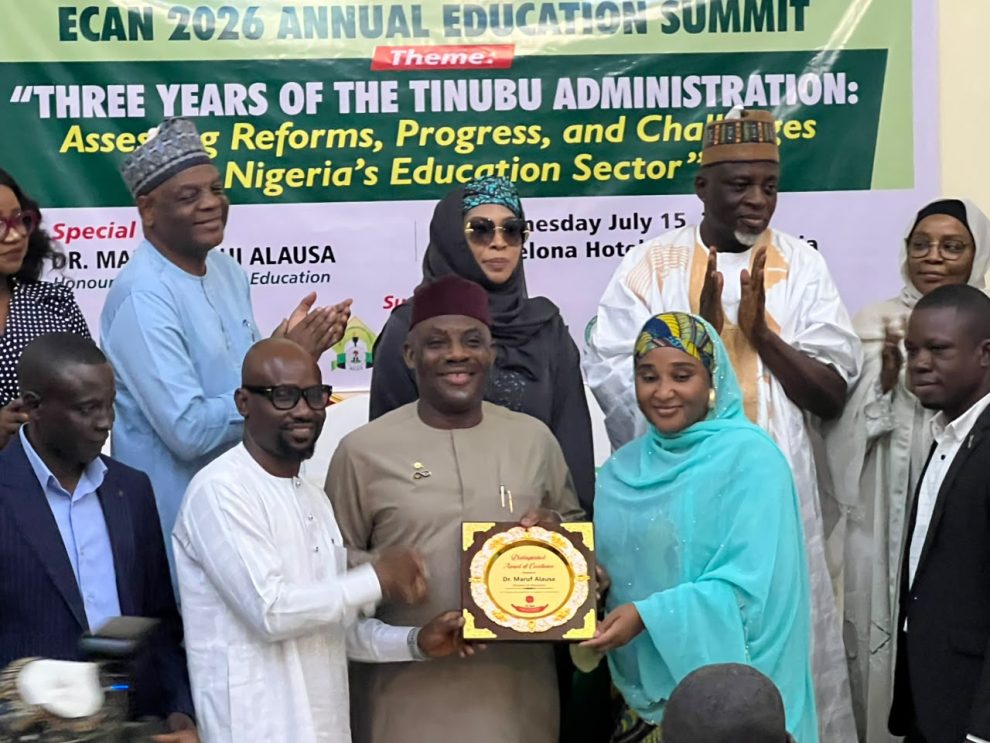

Nigeria is facing a major education crisis, with four out of five children dropping out of school before reaching secondary level, the country’s education minister has warned.Speaking at an annual education summit in the capital, Abuja, Tunji Alausa said the primary challenge facing Africa’s most populous nation is not getting children into classrooms, but keeping them there.
The Secondary School Bottleneck
According to government figures, while nearly 25 million pupils are enrolled in primary schools across Nigeria, only about five million transition to junior secondary school.”That means about 20 million children dropped off,” Dr Alausa told the audience of policymakers and journalists. “Where are those children? That is a big problem.” The minister attributed this massive drop-off to a severe infrastructure bottleneck:Nigeria has approximately 90,000 primary schools. It has only 16,000 junior secondary schools.This creates an unsustainable ratio of nearly eight primary schools to every one secondary school.
While the government claims to have returned over one million out-of-school children to classrooms over the last two years, Dr. Alausa admitted that existing data is outdated. The Ministry of Education is currently partnering with the National Bureau of Statistics (NBS) to conduct a comprehensive nationwide household survey.
Flying Blind Without Data
To combat these systemic failures, the minister urged the public and the media to use the newly launched Nigeria Education Data Infrastructure Management System (NEDIMS). The public portal provides localized data on teacher-to-student ratios, classroom availability, and regional infrastructure. Dr. Alausa challenged journalists to move away from “routine event coverage” and use this data to hold state governors and local council chairmen directly accountable.”If you don’t use data, it is like you are flying blind. Without data, you cannot do anything,” Dr. Alausa said. “We want you to go to the website and use that data to challenge authorities.”
Areas of Progress
Despite the steep challenges in primary and secondary education, the minister highlighted key achievements under President Bola Tinubu’s administration:
End to University Strikes: Nigeria’s higher education sector—historically plagued by prolonged academic strikes—has recorded three consecutive years of uninterrupted academic calendars, which the minister attributed to improved negotiations with the Academic Staff Union of Universities (ASUU).
Rising Global Rankings: Twenty-four Nigerian universities are now ranked among the world’s top 1,000 institutions, up from 21.
Public Sector Resurgence: Public universities have reclaimed the top four spots in national rankings, displacing private institutions which had previously dominated the top tier.
The Minister of State for Education, Professor Suwaiba Ahmad, echoed the need for sustained reform, calling education “the foundation upon which we build a productive economy and reduce poverty.”
Meanwhile, Aisha Garba, Executive Secretary of the Universal Basic Education Commission (UBEC), reaffirmed the government’s commitment to ensuring that “no child is left behind, regardless of background or location.”
Earlier, Chuks Ukwuatu, chairman of the Education Correspondents Association of Nigeria (ECAN), said the summit was designed to scrutinise the progress and pitfalls of President Tinubu’s education reforms. He warned that the sector still faced severe headwinds, highlighting chronic underfunding, decaying infrastructure, poor teacher training, and falling learning standards alongside the rising number of out-of-school children.
The event concluded with awards presented to education officials for their reform efforts, followed by technical briefings from the country’s university and admissions regulators, the NUC and JAMB.

Add Comment