
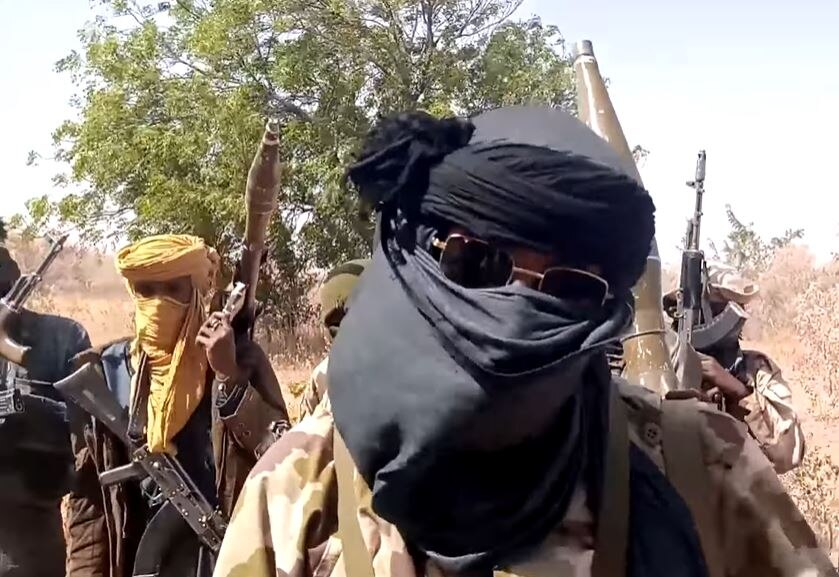

WASHINGTON — The United States has imposed sanctions on a Nigerian national and three local currency exchange bureaus, accusing them of acting as financial pipelines for the Islamic State (IS) group.
The restrictions are part of a coordinated global crackdown targeting three individuals and six entities across Europe, the Middle East, and West Africa.
US authorities accuse the network of enabling the militant group to move operational funds across international borders.
State Department spokesperson Thomas Pigott said the sanctions expose a financial web stretching from France and Syria to Türkiye and Nigeria.
The Nigerian connection
US officials named the sanctioned Nigerian national as Mukhtar Adamu Muhammad, 35, alleging that his business operations served as direct conduits for terrorist financing in West Africa.
Three Nigerian currency trading firms—known locally as Bureaux de Change—were blacklisted for their links to Muhammad’s network:
- Generation Currency Bureau de Change Limited (Lagos)
- Nine to Nine Exchange Bureau de Change Limited (Lagos)
- Manhattan Bureau de Change Limited (Kano)
The asset freeze also targeted a France-based facilitator accused of distributing explosive-making guides to IS sympathisers, and a Syria-based operative who allegedly used cryptocurrency to move funds into the US and other countries.
Counter-terrorism partnerships
The US government reiterated its security partnership with Nigeria, pointing to a joint military operation on 16 May 2026 that resulted in the death of Abu-Bilal al-Minuki, identified as the second-in-command within the regional IS hierarchy.
“We will continue to use every diplomatic and legal tool available to hold ISIS and its supporters accountable — wherever they operate and however they move money,” Mr. Pigott said.
The sanctions, issued under US anti-terrorism laws, freeze any American assets held by the designated individuals and businesses and broadly bar US citizens and financial institutions from dealing with them.



Add Comment