
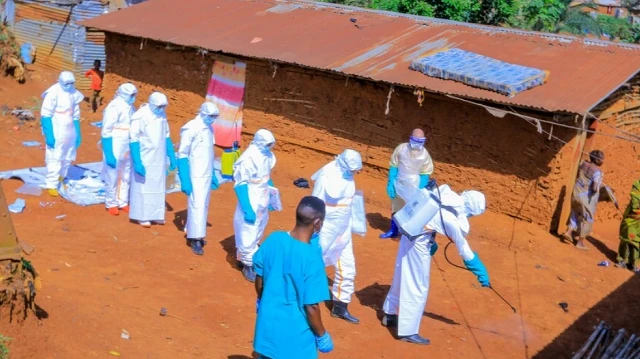

BUNIA, Democratic Republic of Congo — Uganda has ordered the immediate closure of its border with the Democratic Republic of Congo (DRC) as a rapid surge in cases of a rare strain of the Ebola virus threatens to trigger a wider regional health crisis.
The cross-border shutdown followed confirmation that several Ugandan healthcare workers contracted the virus after being exposed to infected Congolese patients.
The outbreak is being driven by the highly lethal Bundibugyo strain of the virus, for which there is currently no approved vaccine or specific medical treatment. According to the Africa Centres for Disease Control and Prevention (Africa CDC), the situation on the ground is escalating quickly, with at least 1,077 suspected cases and 246 deaths reported since the official declaration of the outbreak on 15 May.
Signs of Hope Amid the Deficit
Despite the lack of an official cure, frontline medical teams in the eastern Congolese city of Bunia have reported their first major clinical success.
Dr Richard Kitengé announced that the first confirmed Ebola patient under his care has fully recovered and been discharged. The recovery was achieved without any specific antiviral treatment, relying instead on rigorous, supportive therapeutic care tailored to the patient’s daily clinical progress.
“The same applies to the other patients who will recover, because there are many patients who are making excellent progress and will be discharged within 48 to 72 hours,” Dr. Kitengé said.
To better protect medical personnel fighting the outbreak, Dr Kitengé is currently supervising the construction of a specialized, high-security clinic funded by the World Food Programme (WFP), designed specifically to treat infected healthcare workers.
The Race for a Vaccine
The global scientific community is moving rapidly to close the therapeutic gap. Speaking during an online briefing on Thursday, Africa CDC chief Jean Kaseya pledged that a viable vaccine and treatment framework would be delivered within months.
“What we can tell you for sure, by the end of this year, 2026, Africa CDC will make sure that we have a vaccine and medicine against Bundibugyo,” Dr Kaseya told reporters, adding that African leaders are actively committing technical and strategic investments to fund the rollout.
The vaccine hunt has drawn international interest:
- The Russian Candidate: Moscow’s Ministry of Health has reached out to African authorities, claiming to have a developed vaccine ready.
- The Technical Hurdle: Africa CDC officials noted the Russian formula initially targets the more common Zaire strain of Ebola.
- Next Steps: Urgent technical consultations are scheduled with Russia’s Gamaleya National Research Centre to assess whether the vaccine provides cross-protective efficacy against the Bundibugyo strain.
Deepening Regional Containment
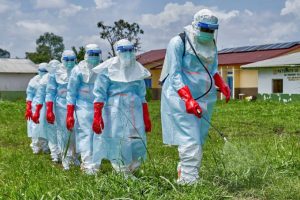
The current containment effort is heavily reliant on tracing the virus through a dense network of local communities. The DRC Health Ministry confirmed that while 101 cases have been definitively validated, epidemiologists are actively tracking and monitoring more than 3,000 potential contacts to halt further transmission.
The rapid spread has provoked international alarm. While the World Health Organization’s (WHO) current verified tally sits slightly lower at 10 confirmed and 223 suspected deaths, the trajectory has caused neighbouring states to review their border security.
Dr Kitengé, however, urged calm, insisting that local medical teams possess the institutional memory required to defeat the virus. “Today, we can draw on the expertise we have built through more than ten epidemics to help contain the current outbreak,” he stated, emphasizing that robust supportive care remains an effective tool.


Add Comment