


TYRE, Lebanon — The Israeli military has launched a major wave of fresh airstrikes across southern Lebanon, targeting what it termed Hezbollah infrastructure, following a sweeping evacuation order that has placed the region’s fragile ceasefire on the brink of total collapse.
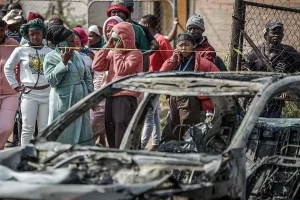
Two separate rounds of Israeli strikes battered the major coastal city of Tyre on Thursday morning, triggering building fires and sending dust-covered crowds fleeing into the streets. The bombardment swiftly followed an expansive directive from the Israel Defense Forces (IDF) ordering residents to immediately evacuate roughly 300 towns and villages south of the Zahrani River.
The new evacuation order is the largest issued since the temporary ceasefire took effect on 17 April 2026, encompassing approximately 14% of Lebanese territory. With hundreds of thousands of people displaced, humanitarian groups warn that nearby safe-haven cities can no longer absorb the influx of fleeing families.
A “Perilous Tipping Point”
The rapid escalation has triggered a severe humanitarian crisis across the south. Agnes Dhur, the head of the International Committee of the Red Cross (ICRC) delegation in Lebanon, warned that the situation is rapidly “nearing a perilous tipping point” and creating conditions that are entirely untenable for civilians.
Aid workers reported that the coastal city of Sidon is entirely overwhelmed, prompting officials to urge displaced families to seek refuge further east in the Beqaa Valley and Mount Lebanon.
The panic was palpable on the ground in Tyre, a city many residents had previously vowed never to abandon. “People packed up their stuff. Everyone is scared,” one resident, whose home and business were destroyed in previous rounds of fighting, told the BBC.
Ground Operations “Deepened”
The latest military push follows an announcement by Israeli Prime Minister Benjamin Netanyahu that the military is actively expanding and “deepening” its ground operations in Lebanon.
The decision was triggered by a series of sophisticated Hezbollah drone attacks targeting both Israeli occupation troops in southern Lebanon and civilian populations in northern Israel. The IDF accused the militant group of repeated ceasefire violations, vowing to act “with extreme force” to neutralise the threat.
Conversely, Lebanese officials have pointed to the relentless Israeli airstrikes as flagrant violations of the temporary truce, which has already been extended twice since last month. On the ground, the conflict has intensified significantly:
- Point-Blank Clashes: Hezbollah confirmed its fighters engaged Israeli infantry units at “point-blank range” on Wednesday in the town of Zawtar al-Sharqiyeh.
- Expanding Battlefields: Crucially, the site of the clash lies north of the Litani River, placing it entirely outside of Israel’s self-declared “buffer zone”.
- Rising Casualties: State media reported a separate wave of strikes across the eastern Bekaa Valley, following an Israeli strike on Tuesday that killed at least 15 people in Burj al-Shamali.
The Regional Blueprint
Lebanon was formally pulled into the wider regional conflict on 2 March 2026, when Hezbollah launched a massive rocket barrage into Israel in retaliation for a targeted Israeli strike that killed Iran’s Supreme Leader. Israel responded with a devastating aerial campaign and a subsequent ground invasion.
According to the Lebanese Health Ministry, at least 3,213 people have been killed in Lebanon since the war began, though official figures do not distinguish between civilians and combatants. Israel reports that 23 of its soldiers and four civilians have died over the same period.
The sudden breakdown of the truce threatens to completely derail delicate, multi-party diplomatic talks aimed at ending the broader war between the US, Israel, and Iran. While Tehran insists that any final peace deal must comprehensively include Lebanon, Israel maintains it retains the absolute right to militarily combat the threat on its northern border.



Add Comment