
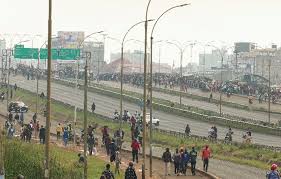

NAIROBI, Kenya — Public transport operators in Kenya have suspended a crippling nationwide strike over soaring fuel prices to allow for emergency talks with the government, following two days of violent clashes that left at least four people dead.
The breakthrough on Tuesday afternoon came after the strike brought the capital, Nairobi, and other major commercial hubs to a virtual standstill, forcing thousands of commuters to walk for hours to reach their destinations.
The Federation of Public Transport Sector warned that the suspension is temporary and that drivers will withdraw their vehicles again next week if the government fails to offer deep cuts to energy tariffs.
A Fragile Truce
The deal to stop the demonstrations was brokered by Interior Minister Kipchumba Murkomen after a busy morning of talks with the union leaders.
“We have had a breakthrough not because we are satisfied, but we want to give negotiations a chance,” said Edwin Mukabane, the national chairman of the transport federation. “If this is not taken seriously within the seven days, the strike will be back on.”
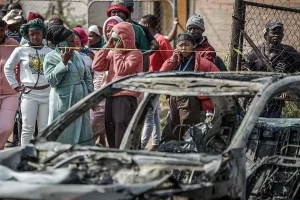
The atmosphere in Nairobi remained tense on Tuesday, with riot police patrolling empty main roads where schools and businesses had shut their doors. While a sense of normality gradually returned to the coastal city of Mombasa later in the day, human rights groups expressed fury over the state’s heavy-handed response to Monday’s opening rallies.
According to official figures:
- Four people were killed during the initial clashes.
- 30 others sustained serious injuries.
- More than 700 protesters were arrested nationwide, with the Directorate of Criminal Investigations swiftly arraigning hundreds in court.
Independent advocacy groups, including Vocal Africa and the state-funded Kenya National Commission on Human Rights (KNCHR), have condemned what they termed “the use of lethal force by law enforcement” and urged the police to exercise immediate restraint.
The Shadow of Global Conflict
The unrest was triggered by a record spike in local fuel prices, driven by severe geopolitical supply shocks. Like many East African nations, Kenya is heavily dependent on fuel imports from the Gulf, which were severely disrupted following the outbreak of the US-Israel war with Iran on 28 February.
Although a ceasefire has since been declared in the Middle East, global oil markets remain highly volatile because the strategic Strait of Hormuz—a maritime chokepoint through which a fifth of the world’s oil supply passes—remains physically blocked.
Energy Minister Opiyo Wandayi announced an immediate 10-shilling cut in the price of diesel, which had soared to an unprecedented 242 shillings ($1.80; £1.40) per litre, in a bid to avert the strike on Monday. Petrol was kept at 214 shillings a gallon.
Demands for Deeper Cuts
The government’s initial 10-shilling concession was flatly rejected by transport workers as inadequate, prompting Tuesday’s second wave of strikes.
Vans and bus operators are demanding a sweeping reduction of up to 46 shillings per litre to restore fuel pricing to pre-war levels. Though the government halved the value-added tax (VAT) on fuel from 16% to 8% last month, unions argue the measure has been completely swallowed up by inflation.
Following the suspension of the strike, Mr. Wandayi thanked the transport operators for returning to the negotiating table, promising that the Ruto administration would remain “sensitive to the plight of petroleum consumers” during the high-level fiscal reviews scheduled over the coming days.


Add Comment