
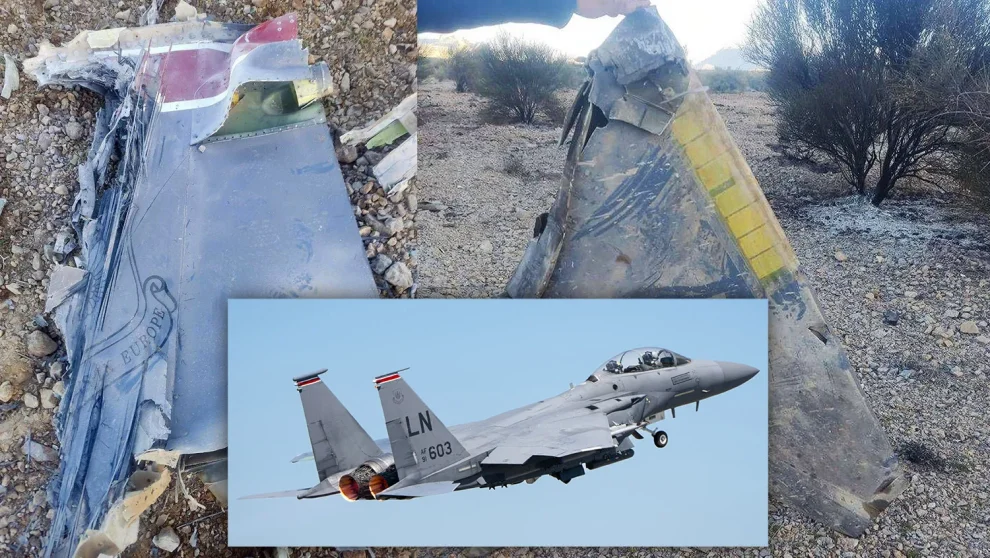

A US fighter pilot has been rescued deep inside Iranian territory following the downing of an F-15 aircraft, in what is being described as one of the most “harrowing and dangerous” combat search-and-rescue missions in decades.
The rescue, if confirmed, marks a rare success for elite US Air Force units operating under fire. However, the mission is far from over. According to the BBC’s US partner, CBS News, a massive search operation remains active for a second missing crew member, with the clock ticking as Iranian forces also converge on the crash site.
Verified video emerging from southern Iran’s Khuzestan province appears to show US military helicopters and at least one refuelling aircraft circling the rugged terrain—a signature of a Combat Search and Rescue (CSAR) operation.
The ‘Swiss Army Knives’ of the Air Force
CSAR missions are considered the most complex operations in modern warfare. Unlike standard rescue efforts, these take place in “contested” or hostile environments where the rescuers are as much at risk as the rescued.
The mission in Iran involves the Air Force’s elite Pararescue Jumpers, or “PJs.” A former commander told CBS News that an operation of this scale would typically involve:
- Tactical Teams: At least 24 pararescuemen scouring the area in Black Hawk helicopters.
- Medical Combatants: Personnel trained as both elite commandos and advanced paramedics, capable of performing battlefield surgery.
- Aerial Shield: A fleet of strike aircraft and refuellers providing a protective “bubble” over the search zone.
“Harrowing and massively dangerous is an understatement,” the former commander said. “They are known as the Swiss Army knives of the Air Force.”
Analysis: A Race Against the Clock
In the world of combat rescue, the first few hours are known as the “Golden Window.” Jonathan Hackett, a former US Marine Corps specialist, told the BBC that teams must work backwards from the last known location of the aircraft, fanning out across difficult terrain.
“The priority is finding signs of life,” Hackett explained. He suggested this may be a “non-standard assisted recovery,” where US forces potentially activate pre-existing “contingency plans” with indigenous groups on the ground to help hide or move the pilot.
A Legacy of ‘No Man Left Behind’
The motto of the pararescuemen—“These Things We Do, That Others May Live”—is a central pillar of US military doctrine. This latest mission joins a storied history of high-stakes recoveries:
- Vietnam: The “Bat 21” mission, which shaped modern CSAR tactics after the loss of multiple aircraft.
- Bosnia & Serbia: The famous 1990s rescues of pilots Scott O’Grady and the pilot of a downed F-117 stealth fighter.
- Afghanistan: The 2005 recovery of a Navy SEAL, immortalised in the film Lone Survivor.
The Diplomatic Fallout
The $1.5tn US defence budget recently proposed by the White House includes significant funding for the Golden Dome missile shield and naval expansion. Still, the ongoing war in Iran is already costing an additional $200bn.
As US helicopters continue to operate over Khuzestan, the stakes could not be higher. For the Pentagon, the successful recovery of the second crew member is not just a humanitarian necessity—it is a vital requirement to maintain morale as the conflict enters a more volatile phase.




Add Comment