
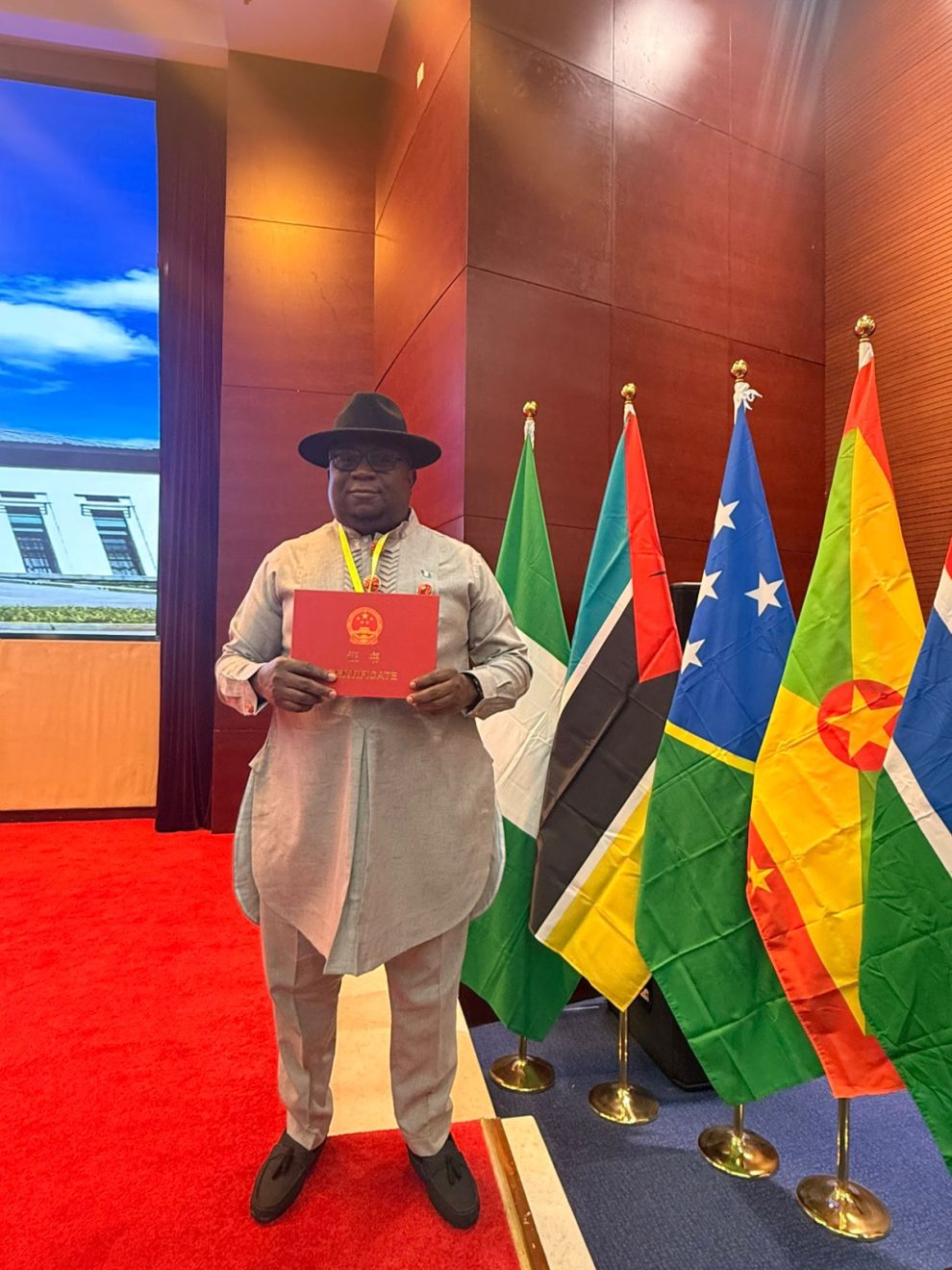

Nigeria’s Ministry of Foreign Affairs has described China’s rapid modernization as a “clarion call” for Sub-Saharan Africa, signaling a desire to pivot toward Beijing’s model of state-led industrialization.
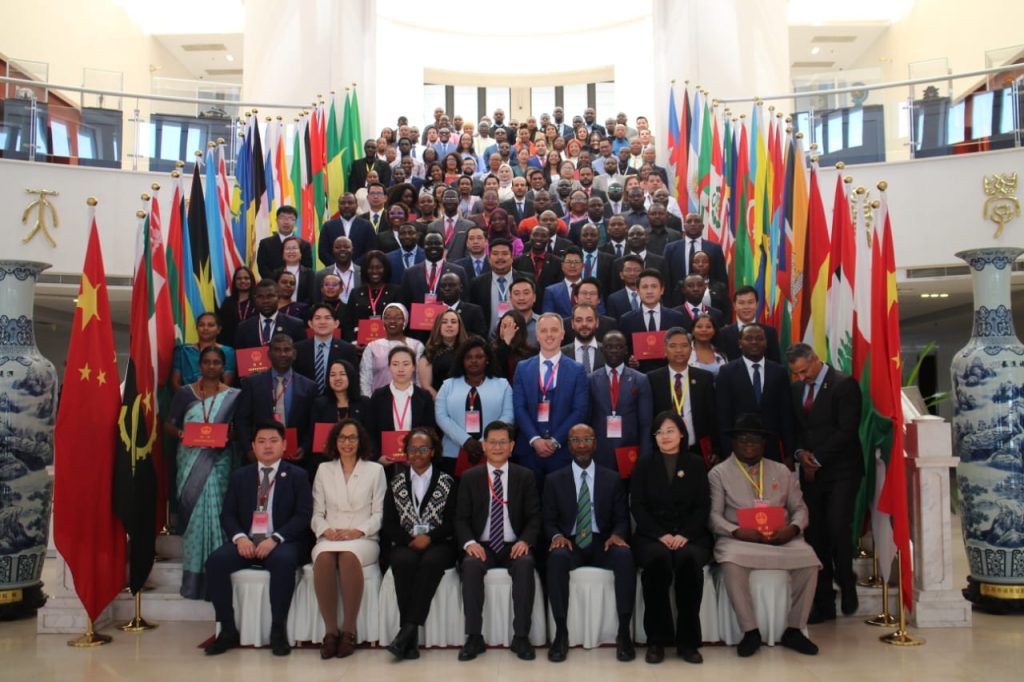
Speaking at a high-level closing ceremony in Beijing on Wednesday, Nigerian spokesperson Kimiebi Imomotimi Ebienfa told an audience of 130 international delegates that the lessons learned from China’s “Smart Facilities” and industrial parks must now be translated into domestic policy across Africa.
The two-week seminar, hosted by the Academy of International Business Officials (AIBO), is part of China’s broader Global Development Initiative (GDI)—a multibillion-dollar soft-power framework designed to bind developing nations closer to Beijing through capacity building and infrastructure.
From the ‘Great Wall’ to ‘Smart Cities’
The Nigerian delegation, alongside representatives from nine other nations across Asia, Oceania, and Latin America, conducted an intensive tour of China’s industrial heartlands. Key highlights included:
- The Suzhou Industrial Park (SIP): A flagship example of state-of-the-art infrastructure powered by clean energy.
- Technological Innovation: Exposure to automated manufacturing and “smart” supply chains that have turned China into the “world’s production headquarters.”
- Policy Frameworks: Deep dives into how China utilized its “demographic advantage” to transition from a rural economy to a global superpower.
Analysis: A Shift in the ‘Development Narrative’
For decades, African nations looked to Western-backed models of liberalisation. However, Mr Ebienfa’s remarks suggest a growing appetite for the “China Way”—a model that prioritizes “people-oriented National Development Plans” and heavy state investment in resources.
“For us in Sub-Saharan Africa, this is a call to deliberately influence decision-making,” Mr Ebienfa stated. He argued that Africa must now learn how to “consciously evolve modalities” to utilize its own “teeming youthful population” and abundant natural resources, much as China did in the late 20th century.
The ‘Ambassadors’ of Beijing
The 130 participants have been designated as “Ambassadors of the Chinese Industrialization success story.” This branding is a victory for Beijing’s diplomacy, ensuring that mid-level and senior officials returning to their home countries are equipped with a pro-China developmental vocabulary.
While Western critics often warn of “debt-trap diplomacy,” the Nigerian perspective remains firmly focused on the tangible. By thanking the Chinese government for “funding various capital-intensive and landmark projects” in Nigeria, the Ministry of Foreign Affairs is reinforcing a partnership that has already transformed Nigeria’s railways, ports, and telecommunications.



Add Comment