
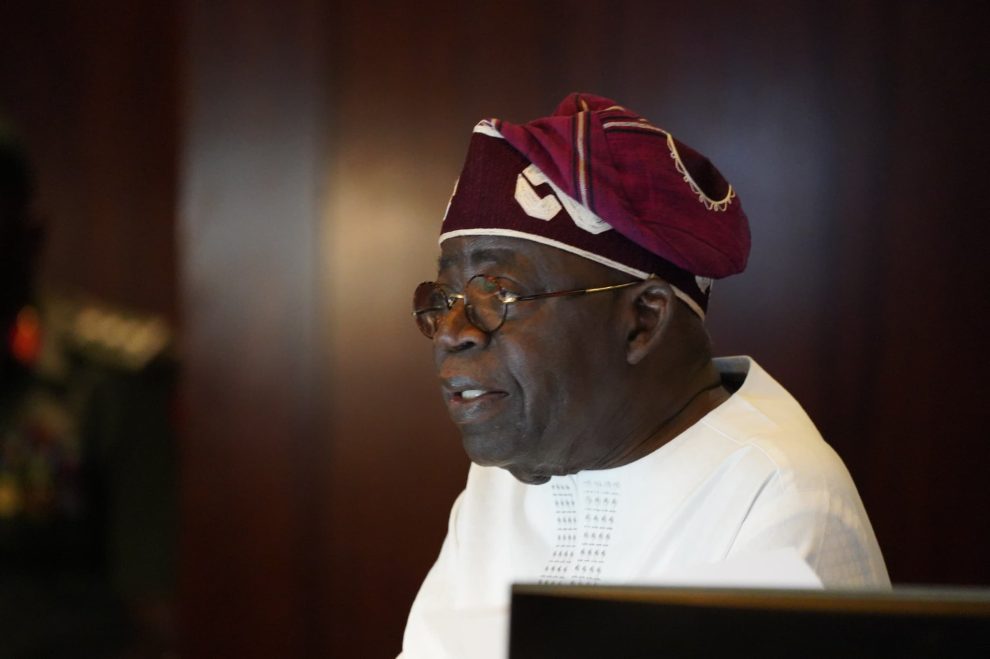

ABUJA, Nigeria — President Bola Tinubu has issued a defiant pledge to eradicate terrorism and banditry, labeling the insecurity plaguing Africa’s largest economy as “foreign” to the nation’s culture.
Speaking at the opening of the Second National Economic Council (NEC) Conference in Abuja on Monday, the President described the persistent violence in the country’s north and middle-belt as an “unacceptable” hindrance to economic prosperity.”I promise you here that I’ll play my part,” Mr. Tinubu told a gathering of state governors and international development partners. “We will overcome this… It’s not part of our culture.”The President’s address served as the keynote for the launch of the Renewed Hope National Development Plan 2026–2030, a blueprint designed to shift Nigeria from fiscal volatility toward sustainable, private-sector-led growth.
Economic Gains and ‘Sleepless Nights’
While acknowledging the “sleepless nights” caused by security threats, the President pointed to what he termed significant victories in economic reform. He specifically praised the Central Bank’s monetary policies for “restoring confidence” and stabilizing the Naira, noting that state governments are now receiving higher and more predictable federal allocations.
The new five-year plan focuses on:
Mechanized Agriculture: The rollout of seven “zones of mechanization” to bolster food security.
Diversification: A pivot toward livestock, ranching, and dairy farming to end perennial farmer-herder conflicts.
Infrastructure: Prioritizing digital connectivity, irrigation, and power.
Analysis: A Race Against the Clock
President Tinubu’s rhetoric at the NEC conference reflects a leader well aware that his economic legacy is tethered to the nation’s security map. By describing terrorism as “foreign,” the President is attempting to galvanize a sense of national unity, yet the domestic roots of banditry—often fueled by poverty and local grievances—remain a complex challenge.
The “Bottom-Up” Gamble
The 2026–2030 Development Plan places a heavy burden on subnational governments. By increasing federal allocations to states, Tinubu has removed a frequent excuse for local inaction. However, the success of “inclusive growth” will depend on whether these funds reach the “Ward Development” level or vanish into the administrative ether of state capitals.
The Security-Economy Nexus
The President correctly identified insecurity as an “economic hindrance.” Without safe corridors for the promised “mechanized agriculture,” the 2026–2030 plan risks becoming another set of ambitious targets on paper. The commendation of governors in Borno and Kaduna—frontline states in the conflict—suggests the administration is leaning heavily on regional partnerships to create “security bubbles” for economic activity.
Global Eyes on the CBN
The nod to Governor Yemi Cardoso’s “world-recognized” reforms is a signal to foreign investors. After years of unorthodox currency management, the administration is desperate to project an image of orthodox fiscal discipline. For the international community, the question remains: can Nigeria maintain these tough reforms if the “Renewed Hope” does not translate into lower food prices for the average citizen by the end of 2026?



Add Comment