
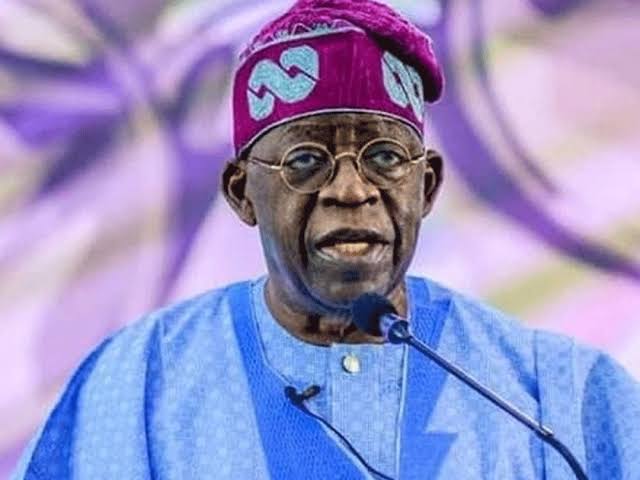

Abuja, Nigeria – President Bola Tinubu has called on Nigerians to remain patient with his administration’s economic reforms, assuring the nation that “the toughest days are behind us.” In his message marking the 2025 Eid-el-Kabir celebration on Thursday, President Tinubu acknowledged the challenges faced but asserted that reforms were beginning to yield positive results.
“We may not yet be where we aspire to be, but I urge all Nigerians not to lose hope. Let us hold on to our faith and persevere,” Tinubu stated, noting that “key economic indicators now moving in a positive direction.” He stressed that the ultimate goal of these reforms is to “transform lives and set Nigeria firmly on the path to sustainable development,” while admitting there are “no quick fixes.”
The President also appealed for prayers for the armed forces and security personnel, who he said are risking their lives daily to ensure national security. Reflecting on Eid-el-Kabir, a major Islamic festival commemorating Prophet Ibrahim’s devotion, Tinubu urged Muslims and all Nigerians to embrace the values of sacrifice, selflessness, and compassion.
Messages from Other Leaders
Similar calls for unity and prayer came from other prominent figures. Former Vice President Atiku Abubakar urged those in leadership to demonstrate compassion, while the Speaker of the House of Representatives, Tajudeen Abbas, currently on Hajj in Saudi Arabia, implored Muslims to embody the spirit of sacrifice.
Several state governors also issued messages. Ogun State Governor Dapo Abiodun highlighted selflessness and compassion, urging adherence to safety protocols during festivities. Ekiti State Governor Biodun Oyebanji stressed love and brotherhood, seeking collective efforts for state development. Katsina State Governor Mallam Dikko Umar Radda emphasized faith and unity, praying for peace and an end to insecurity, as well as for abundant rains for farmers. Bauchi State Governor Bala Mohammed called for reflection on Prophet Ibrahim’s virtues, while Gombe State Governor Muhammadu Yahaya appealed to Muslims to embrace obedience and tolerance. In Oyo State, Governor Seyi Makinde urged prayers for the state, Nigeria, and its leaders.
Security and Travel Preparations
Ahead of the celebrations, Nigeria’s Inspector-General of Police (IGP), Kayode Egbetokun, ordered immediate nationwide deployment of patrol teams and intensified security operations. Police commands across states, including Katsina, Plateau, Borno, Gombe, Benue, Yobe, Kebbi, Edo, Kogi, and Kano, confirmed robust security measures, deploying personnel to prayer grounds, recreational centres, and public spaces. Some states, like Plateau, also announced temporary bans on commercial tricycles and motorcycles on Sallah Day to enhance security.
However, the festive period was also marked by security incidents in Yobe State. An armed attack on the Buni Gari community in Gujba Local Government Area was repelled by the military, but a resident was killed by a stray bullet. Separately, a commercial bus hit a road-planted improvised explosive device (IED) along the Buratai-Buni Gari route, resulting in three deaths and nine injuries. Authorities advised caution on affected routes.
Heavy traffic was reported on major highways across the country on Thursday as thousands travelled for the celebration. Routes like Mararaba-Abuja road and sections of the Abuja-Kaduna highway experienced significant congestion. The Federal Road Safety Corps (FRSC) acknowledged the challenges, confirming personnel deployments to manage the situation, including the Corps Marshal directly coordinating efforts on the Kaduna road.
Economic Impact and Market Conditions
The festive season saw mixed market conditions. Ram sellers in states like Jigawa reported low patronage, with potential buyers lamenting exorbitant prices. Prices ranged from N180,000 (approx. $120 USD) to N980,000 (approx. $650 USD), with camels and bulls exceeding N1 million. Dealers attributed the high costs to factors including Niger Republic’s ban on livestock exports to Nigeria and the broader impact of the 2023 fuel subsidy removal, which has exacerbated hardship and inflation. An Islamic cleric in Dutse clarified that animal slaughter on Eid al-Kabir is a “Sunnah” (recommended practice) rather than compulsory, citing Quranic verses emphasizing piety over meat or blood.
Conversely, in Kano, residents experienced stable prices for staple food items. Traders there attributed this to early supply arrangements and reduced transportation bottlenecks, providing some relief to shoppers.
Amidst the preparations, political figures also made donations. Deputy Speaker Benjamin Kalu provided rams, rice, and other food items to the Muslim community in Abia State, urging them to spread love. In Ogun State, lawmaker Olumide Osoba distributed N40 million to 800 constituents, while Senator Sunday Karimi of Kogi West Senatorial District gifted 25 cows and 150 rams along with cash. These gestures aimed to alleviate economic burdens and foster community spirit during the celebration.


Add Comment