
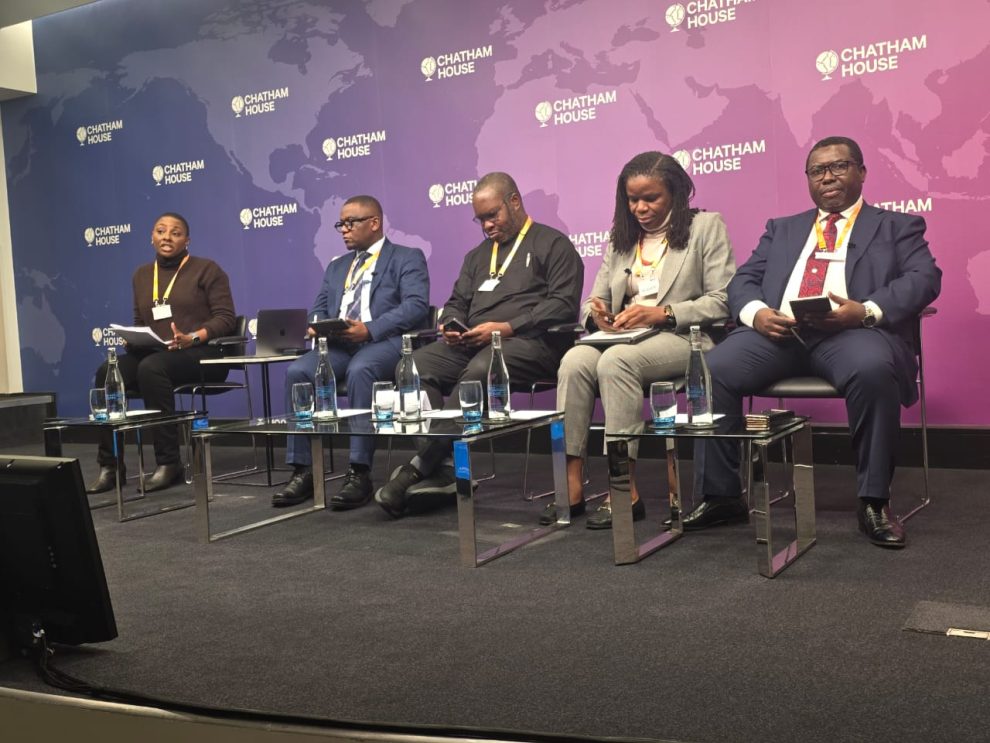

LONDON — Nigeria’s Independent National Electoral Commission (INEC) will conduct a nationwide mock accreditation and voting exercise on 28 November 2026 to stress-test upgraded election technology ahead of next year’s general elections, Commission Chairman Professor Joash Amupitan has announced.
Speaking on Thursday at a Chatham House dialogue in London convened in partnership with the Kimpact Development Initiative (KDI), Prof. Amupitan urged Nigerians to trust the commission’s readiness to deliver credible polls, citing operational reforms executed across recent off-cycle governorship elections in Anambra, Ekiti, and Osun states.
Acknowledging that technical glitches during the 2023 presidential election inflicted a severe trust deficit on the electoral body, Amupitan noted that subsequent off-cycle contests served as testing grounds—reducing result declaration timelines in historically protracted states like Anambra and Osun to within 24 hours of voting.
Technical safeguards for IReV and BVAS hardware
Outlining INEC’s operational blueprint for the January 2027 presidential vote, Prof. Amupitan revealed that a post-2023 audit traced Nigeria’s most acute electoral disputes to result manipulation at collation centres rather than polling units.
To prevent discrepancies between polling unit figures and final tallies, the commission has introduced automated validation protocols alongside hardware upgrades:
- Automated IReV Validation: New technical safeguards will automatically block polling unit results containing mathematical errors or signs of over-voting from being uploaded to the INEC Result Viewing Portal (IReV), ensuring that only verified figures appear online.
- Reduced BVAS Workload: Rather than overhauling its core technology close to the election, INEC has procured additional Bimodal Voter Accreditation System (BVAS) machines and lowered the maximum voter allocation per device from 1,250 to 850 to eliminate accreditation delays.
- Climate-Controlled Storage: To prevent battery and hardware failures caused by extreme heat, the commission is constructing climate-controlled storage facilities across all 36 states and the Federal Capital Territory.
“The moment a result appears on IReV, citizens can trust what they see,” Amupitan said. “By eliminating inconsistencies at the source, collation will become a transparent formality.”
Funding assurances and neutrality pledge
On election financing, the INEC chief confirmed that while a substantial portion of the 2027 operational budget has been disbursed, the commission expects the release of outstanding funds—earmarked primarily for the recruitment and welfare of ad hoc staff—before the end of November.
Addressing questions regarding his personal impartiality, Prof. Amupitan dismissed social media claims linking his telephone number to an active X (formerly Twitter) account, noting that an independent forensic audit had been submitted to the Department of State Services (DSS) and the Inspector-General of Police for investigation.
He also rejected suggestions that his previous legal work as a Senior Advocate of Nigeria could compromise his independence, affirming that his sole allegiance remains to the Nigerian Constitution and the Electoral Act.
Nigeria’s Presidential and National Assembly elections are scheduled to hold on 16 January 2027, followed by Governorship and State House of Assembly polls on 6 February 2027.

Add Comment