
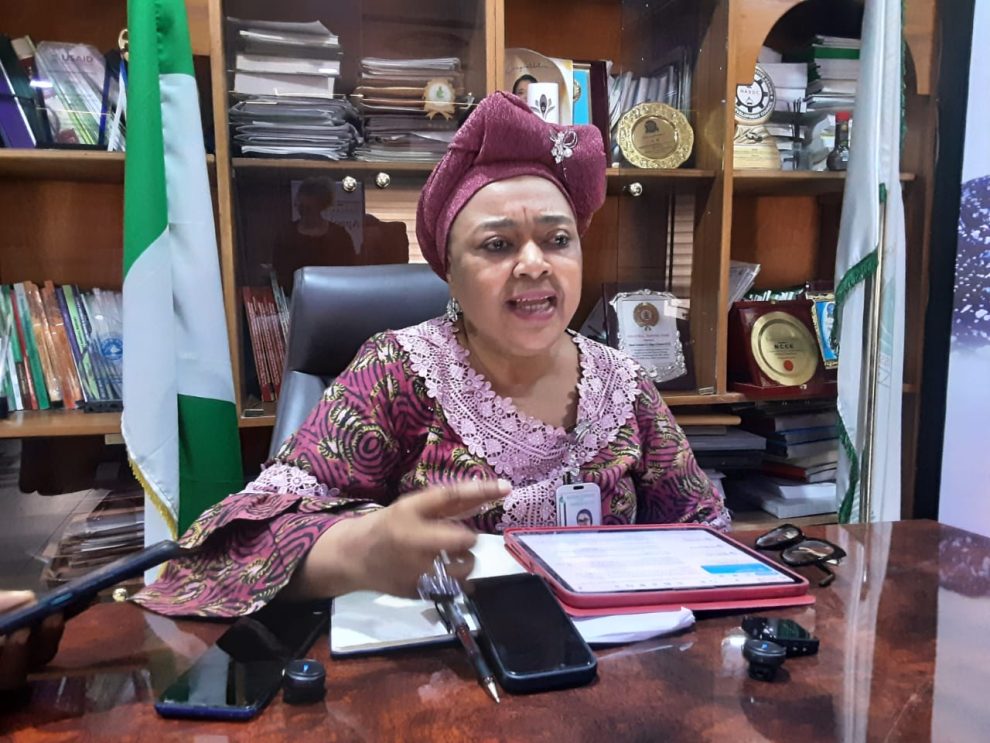

ABUJA — The Executive Secretary of the National Commission for Colleges of Education (NCCE), Dr. Angela Ajala, has urged the Federal Government and education stakeholders to place teacher training at the center of Nigeria’s national development strategy, warning that the country cannot build a competitive workforce without reforming its education colleges.
Speaking during an interactive session with the Association of Corporate Online Editors (ACOE) in Abuja on Tuesday, Dr. Ajala stressed that the quality of a nation’s professionals directly reflects the caliber of its educators.
“Nigeria cannot build a world-class education system with second-class attention to teacher education,” she told editors. “Teacher education must be the priority at the front burner of anything Nigeria wants to do. If you miss it with teacher education, you miss it with Nigeria.”
Dual mandate and modernized curriculum
Outlining structural reforms aimed at reversing declining enrollment and raising the professional status of teaching, Dr. Ajala highlighted the rollout of the “dual mandate” policy—signed into law by President Bola Tinubu in 2023—which empowers Colleges of Education to award both the Nigeria Certificate in Education (NCE) and Bachelor of Education (B.Ed.) degrees.
Under the commission’s 2026–2031 strategic plan, the NCCE aims to onboard at least 80 per cent of Colleges of Education into the dual-award framework by 2031.
Key pillars of the curriculum overhaul include:
- Practical Emphasis: A newly adopted competency-based curriculum allocates 70 per cent of instruction to practical classroom training and 30 per cent to theoretical coursework.
- Digital & Tech Integration: Course modules have been expanded to incorporate Artificial Intelligence (AI), robotics, data analytics, cybersecurity, and coding.
- Vocational Certification: The five-year combined programme (three years for NCE and two years for a degree) now integrates mandatory vocational and entrepreneurial certifications to boost graduate employability.
International partnerships and oversight
Acknowledging that federal budgetary allocations alone cannot sustain wide-scale institutional transformation, Dr. Ajala confirmed that the commission is leveraging technical support from international partners, including the European Union, UNESCO, the British Council, and the University of Oxford, with discussions underway with the University of Cambridge.
To ensure accountability across colleges nationwide, the NCCE has established an internal Reform Delivery Unit to issue quarterly progress assessments, alongside a centralized digital monitoring dashboard to track academic standards and institutional compliance.




Add Comment