
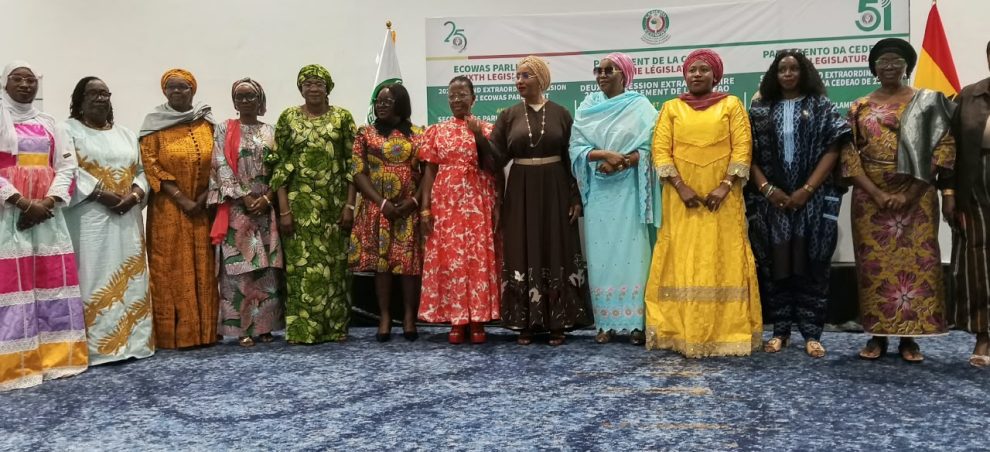

ACCRA, GHANA — Female parliamentarians and business leaders across West Africa are calling on women entrepreneurs to expand into regional and international markets, leveraging digital technology and specialized skills to drive the region’s economic growth. The push was made at an executive masterclass hosted in Accra by the Female Parliamentarians’ Association of the Economic Community of West African States (ECOFEPA). Titled “Advancing Women’s Participation in Global Trade for Political Readiness and Export Opportunities in the ECOWAS Region,” the event focused on bridging the gap between small-scale female entrepreneurship and high-level economic leadership.
From participants to trade drivers
Delivering the welcome address on behalf of ECOFEPA’s president, First Vice-President Zainab Gimba declared that women must transition from basic participants in local economies to major drivers of cross-border investment and innovation.”We must move beyond conversations about empowering women to creating the knowledge systems, networks, and opportunities that enable women to compete successfully in local, regional, and international markets,” Gimba said. She noted that persistent systemic barriers—such as restricted access to capital, lack of market intelligence, missing tech infrastructure, and underrepresentation in governance—continue to trap women-led enterprises in the informal sector. Gimba also drew a direct link between financial independence and political representation.”We need women who are not only prepared to enter the marketplace but also prepared to sit at the tables where decisions about trade, investment, finance, industry, and regional integration are made,” she added, emphasizing that business success equips women with the confidence and networks needed for public leadership.
Harnessing regional trade frameworksAddressing the session on behalf of Ghana’s Minister for Gender, Children, and Social Protection, legal adviser Nnali Bennis-Wallace highlighted that while women already drive food security and commerce across West Africa, structural hurdles keep their businesses small. Bennis-Wallace urged women to capitalize on emerging continental trade agreements, such as the African Continental Free Trade Area (AfCFTA), to scale up operations beyond national borders.She highlighted Ghana’s recently launched National Gender Policy (2025–2034) as a blueprint for gender-responsive economic development and called for stronger collaboration among financial institutions, development partners, and lawmakers.
To compete internationally, delegates agreed that female entrepreneurs must be supported with practical training in product packaging, international certification, customs compliance, and digital commerce.



Add Comment