

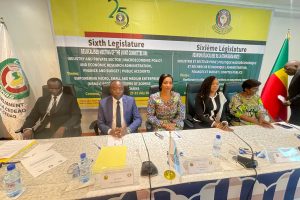
Experts at the Second Extraordinary Session of the ECOWAS Parliament in Accra, Ghana, have warned that rising temperatures, severe droughts, and coastal erosion are accelerating population displacement and heightening security risks across West Africa.
The warning came during parliamentary discussions on the theme: Climate change as a driver of environmental degradation, population displacement, and rising insecurity in the ECOWAS region.

Opening the session on Ghana’s Founder’s Day, the Speaker of the ECOWAS Parliament, Hadja Mémounatou Ibrahima, led delegates in observing a minute of silence in memory of Ghana’s first president, Dr. Kwame Nkrumah, urging lawmakers to embrace his vision of African unity to confront the climate crisis.
Addressing parliamentarians, Dr. Derek Sarfo-Yiadom from Ghana’s Environmental Protection Authority warned that average regional temperatures have risen between 1C and 3C since 1970. He noted that changing weather patterns and extreme heat directly impact farming, energy grids, and transport infrastructure, warning that environmental stresses are increasingly driving conflict and mass migration.

Key expert recommendations presented to regional lawmakers include:
- Climate Finance & Policy Alignment: Raoul Kouame, Principal Officer for Climate Change at the ECOWAS Commission, urged member states to address institutional fragmentation and harmonise regional standards under the Paris Agreement to better access global climate funds.
- Transboundary Cooperation: Dr. Abdou Ali of the Permanent Inter-State Committee for Drought Control in the Sahel (CILSS) stressed that climate risks ignore national borders, calling for real-time cross-border data sharing, unified disaster response, and climate-resilient agriculture.
- Adaptation Investments: Experts called for expanded climate-risk mapping, flood-proof urban zoning, and early-warning systems designed to reach low-income and coastal communities directly.
ECOWAS parliamentarians are currently debating the expert recommendations to develop actionable regional policy frameworks.



Add Comment