
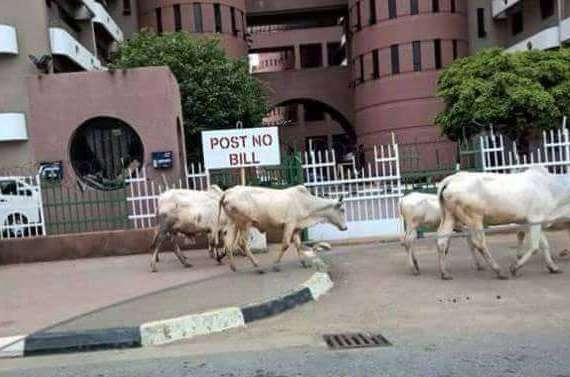

ABUJA, Nigeria — The Minister of the Federal Capital Territory (FCT), Nyesom Wike, has publicly taken responsibility for the persistent presence of roaming cattle on the major roads and highways of Nigeria’s capital city.
Speaking during a monthly media briefing in Abuja on Monday, 1 June 2026, the minister expressed regret over the failure to clear livestock from the city centre, describing the situation as a continuing concern despite wider efforts to modernise the capital.
“I apologise that up till now there are cows still roaming the streets of Abuja; I take responsibility,” Mr. Wike told reporters, adding that the administration remains firmly committed to finding a lasting solution to the problem.
A Long-Standing Safety Concern
The presence of cattle grazing along pavements and crossing busy multi-lane expressways has been a recurring and controversial issue in Abuja for years.
Residents and motorists have frequently raised concerns about the significant safety hazards posed by the livestock to traffic, as well as the negative impact on the visual appeal of the master-planned capital.
While previous administrations have attempted to enforce bans and establish dedicated grazing reserves outside the city, enforcement has remained inconsistent.
Month-Long Project Launches to Mark Anniversary
Beyond the cattle controversy, the minister used the briefing to highlight a major infrastructure drive taking place across the territory, which he claimed is already transforming lives under President Bola Tinubu’s administration.
To mark the administration’s third year in office, the FCT Administration (FCTA) is preparing for a marathon series of project commissionings alongside President Tinubu.
“To celebrate Mr President’s three years in office, the FCTA will commission projects for the next 31 days commencing June 8, 2026,” Wike announced.
According to the minister, these initiatives cover several critical sectors, including:
- Satellite Town Expansion: Shifting development focus away from the affluent city centre to build roads and public utilities in all six Area Councils.
- Security Through Infrastructure: Constructing vital link roads that officials say have already improved access and strengthened security in vulnerable rural communities.
- Public Utilities & Welfare: Advancing widespread water supply projects and constructing new housing units for public officials.
Minister Wike insisted that the tangible impact of these ongoing structural policies is now being felt directly by ordinary Abuja residents, promising that the momentum of governance would be sustained across the territory.



Add Comment