
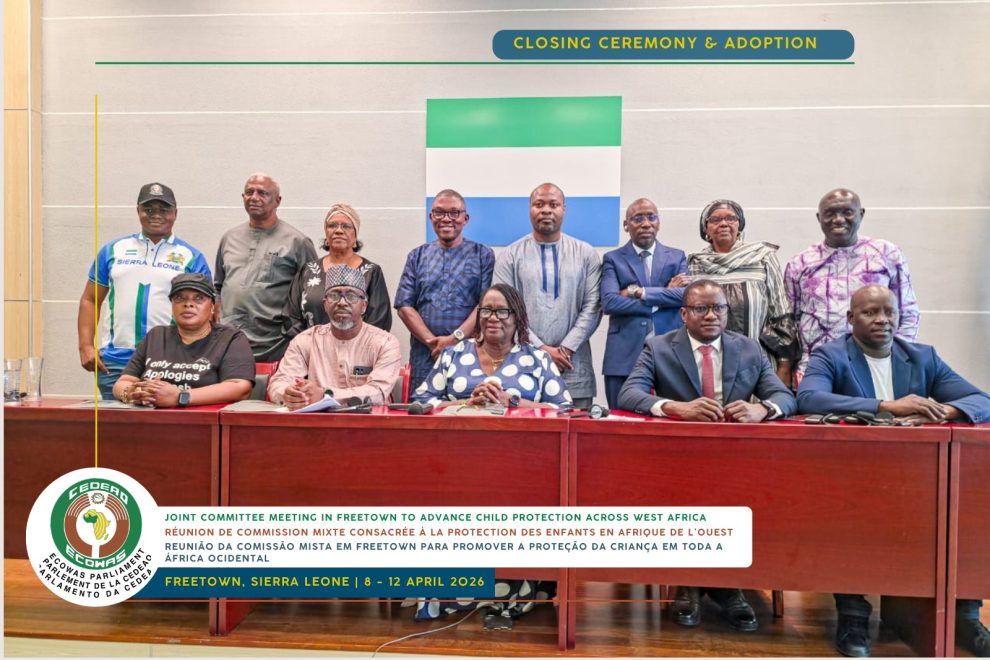

A powerful coalition of West African lawmakers has adopted a series of emergency measures aimed at dismantling the networks of child exploitation and providing a legal “safety net” for thousands of children living on the streets.
Meeting in the Sierra Leonean capital, Freetown, a joint committee of the ECOWAS Parliament concluded five days of intensive deliberations on Friday. The session brought together experts in legal affairs, gender, and security to address a crisis that lawmakers described as both a “moral obligation” and a “strategic investment” in the region’s stability.
The meeting marks a significant shift in regional policy, moving away from purely national responses toward a harmonized, cross-border framework to protect children “on the move.”
From Policy to Protection
While West Africa has long had various child rights frameworks on paper, the Freetown summit focused on the “implementation gap”—the failure of member states to fund and enforce existing laws.
The committee has now called for the immediate operationalization of “well-funded” national strategies. Central to this new approach is a “trauma-informed” protection system, ensuring that children are treated as victims in need of care rather than as lawbreakers.
Key Action Points Adopted in Freetown:
- Cross-Border Referrals: Establishing a regional system to track and protect children who cross national boundaries.
- Legal Identity: Prioritizing birth registration and documentation to ensure street children are no longer “invisible” to the state.
- Child-Friendly Justice: Developing protocols for safe repatriation and reintegration into family units.
- Data Harmonization: Strengthening the ECOWAS Child Rights Information Management System (ECRIMS) to track interventions across the 15-member bloc.
Analysis: A Regional ‘Safety Net’
For the millions of children navigating the urban centers of West Africa, the “street situation” is often a consequence of deep-seated poverty and a lack of social protection. By calling for expanded family support systems and poverty reduction measures, the ECOWAS Parliament is finally acknowledging that child exploitation cannot be solved by policing alone.
The real test, however, lies in the proposed parliamentary resolution. If adopted by the full plenary, it would allow regional lawmakers to monitor how individual member states—such as Nigeria, Ghana, and Senegal—are performing against their child protection targets. In a region where children are often trafficked across borders for labor or exploited in the illicit drug trade, this “synchronized” approach is the first real attempt to close the cracks in the system.
A ‘Strategic Investment’
The Joint Committee, representing the 97-seat representative assembly, underscored that the vulnerability of children is a direct threat to the region’s development.
Field visits conducted during the week highlighted critical shortages in vocational training and psychosocial support for rescued children. Lawmakers noted that without a “legal identity,” a child in the street is effectively barred from the very education and healthcare that could facilitate their reintegration into society.
As the delegates prepare to return to the headquarters in Abuja, the message from Freetown is clear: West Africa can no longer afford to leave its children to the mercy of the streets.

Add Comment