
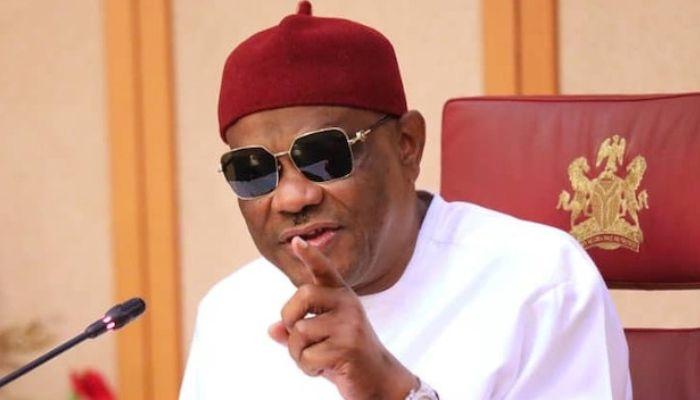

The office of Nigeria’s Federal Capital Territory Minister, Nyesom Wike, has moved to de-escalate a growing row after the high-profile politician suggested he would “shoot” a well-known television presenter.
During a live media briefing in Abuja on Friday, Mr. Wike expressed fury at Seun Okinbaloye, a veteran anchor for Channels Television, following a broadcast discussing Nigeria’s shift towards a one-party state. The minister told an audience of journalists that he was so angered by the anchor’s remarks that he would have “shot” him through the television screen.
The comments triggered an immediate storm on social media, with rights activists and press freedom groups condemning the language as a “serious threat” to independent journalism.
‘Hyperbolic, not Hostile’
In a statement released on Saturday, the minister’s spokesperson, Lere Olayinka, insisted the remark was “purely hyperbolic” and lacked any intent of physical harm.
“The minister never meant that he would shoot Seun Okinbaloye,” the statement read. “They even spoke on the phone today, and he understood what the minister meant.”
According to the administration, Mr. Wike’s frustration stemmed from what he perceived as a breach of journalistic neutrality. The minister argued that Mr. Okinbaloye had “descended into the political arena” by expressing a personal opinion on the de-recognition of the African Democratic Congress (ADC) by electoral authorities, rather than remaining a detached interviewer.
A ‘Laughter’ Defence
The minister’s office points to the atmosphere of the briefing as evidence that the comment was not a threat. Officials noted that the journalists in attendance—including the head of Channels TV’s Abuja office—laughed at the clarification during the live programme.
“It becomes a clear hatchet job for any individual to pick the statement out of context,” Mr. Olayinka added, urging the public to disregard “political weaponization” of the outburst.
Analysis: The ‘Abacha’ Comparison
Despite the White House-style “damage control” from Wike’s team, the rhetoric has touched a nerve in a country with a fragile history of press freedom. Prominent activist Rinu Oduala questioned whether even the associates of former military ruler Sani Abacha had ever made such aggressive public declarations against the media.
The incident highlights a deepening tension between the ruling All Progressives Congress (APC) and the “fourth estate.” While the minister maintains he was simply defending the standards of objective reporting, critics argue that such language from a powerful state official creates a “chilling effect” on political discourse.
The ADC Factor
The root of the anger lies in the ongoing leadership crisis within the ADC. With the Independent National Electoral Commission (INEC) moving to de-recognize certain factions of the party, the debate over whether Nigeria is drifting toward a one-party system has become a flashpoint for the 2027 election cycle.
For Mr. Wike, a man known for his blunt and often confrontational oratory, this latest “hyperbole” may have been intended as a sharp critique of media bias. However, in the eyes of the International Federation of Journalists, it remains a stark reminder of the risks faced by those who challenge the political status quo on national television.


Add Comment