
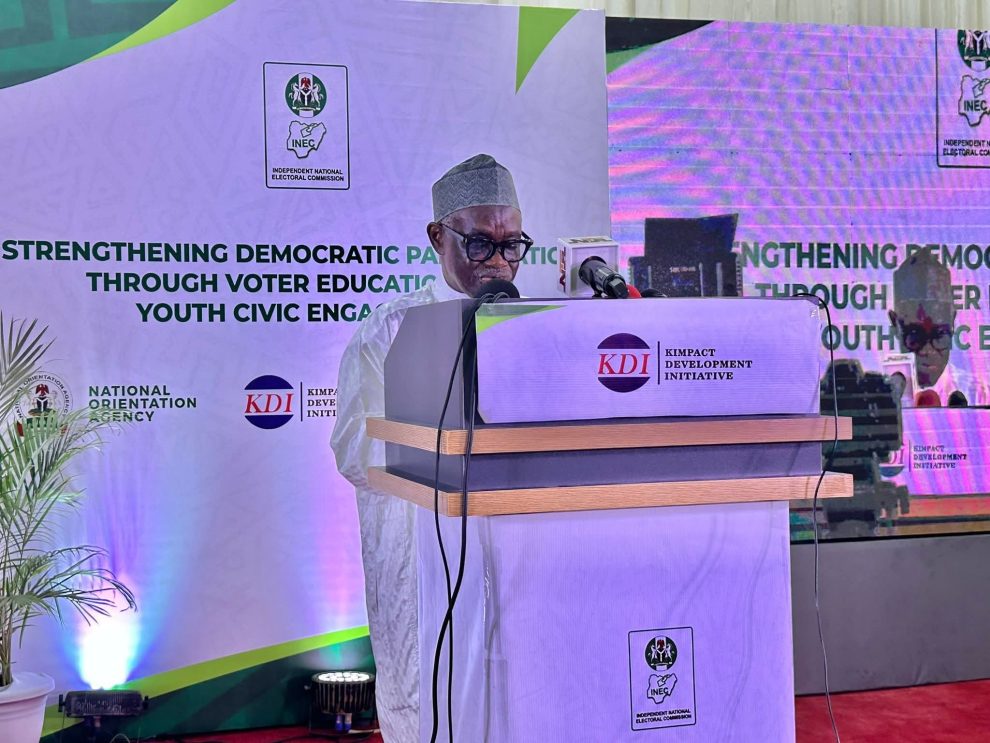

ABUJA — Nigeria has launched a high-stakes campaign to save its democracy from a “retreat” caused by record-low voter turnout, as the continent’s largest democracy begins its long climb toward the 2027 general elections.
At a high-level summit in the capital, Abuja, the Independent National Electoral Commission (INEC) unveiled a suite of new voter education manuals. The move is a direct response to a worrying trend: while Nigeria’s population booms, the number of people actually showing up to vote is plummeting.
A Democracy in ‘Retreat’
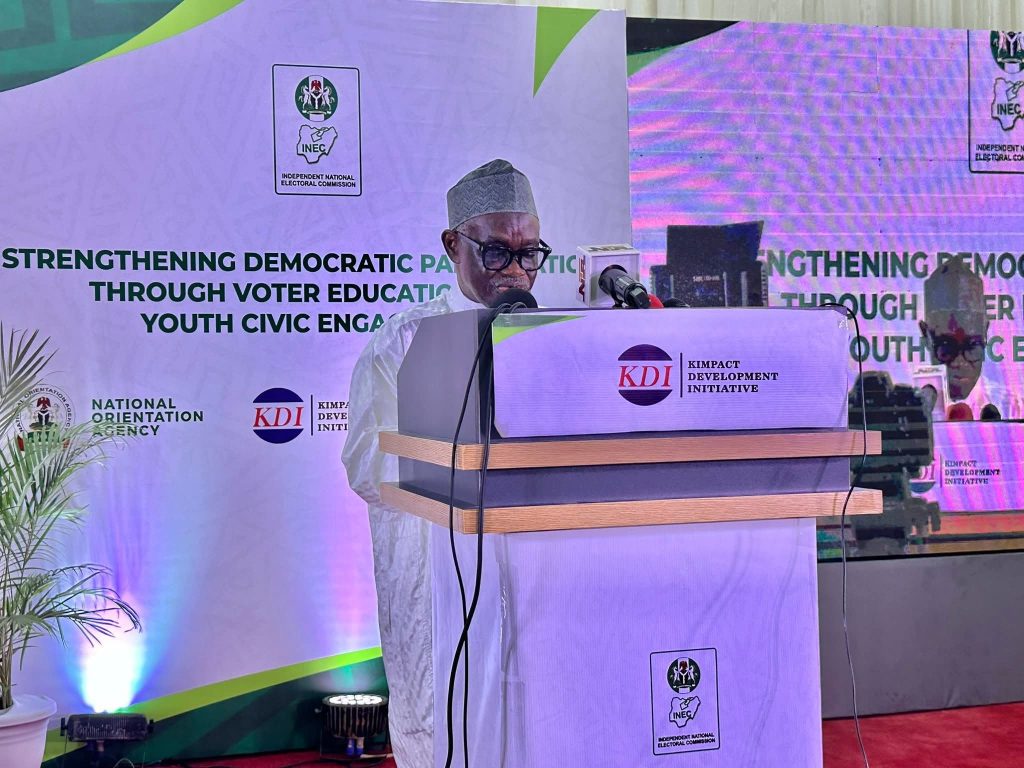
The statistics paint a sobering picture of civic exhaustion. Since the return to civilian rule in 1999, engagement has withered. According to INEC officials, participation has crashed from a high of over 60% in 2003 to less than 30% in recent cycles.”An indifferent electorate is a democracy in retreat,” warned the Chairman of INEC Professor Joash Amupitan in a keynote delivered by National Commissioner Mohammed Haruna.
The commission’s data suggests a “widening participation gap” where a small minority is now deciding the leadership for a nation of over 220 million people.
Tech vs. Trust
The 2027 polls will be governed by the Electoral Act 2026, a legislative framework designed to bulletproof the process using technology. The new manuals place heavy emphasis on:
The BVAS (Bimodal Voter Accreditation System): Ensuring one person, one vote through facial and fingerprint recognition.
Electronic Transmission: Reducing the “human factor” in result collation.
Campaign Finance: Stricter tracking of “big money” in politics.
However, officials admit that gadgets cannot fix a lack of faith. Bukola Idowu, Team Leader of the Kimpact Development Initiative (KDI), which co-developed the manuals, noted that the decline in turnout is a “signal of deeper issues of trust.”
The Youth Factor
With a median age of roughly 18, Nigeria’s future lies with its youth, yet many feel disconnected from a political class they view as out of touch. In a strategic pivot, the government is now weaponizing the National Youth Service Corps (NYSC)—a mandatory year of service for graduates—to act as frontline “democracy ambassadors.”
These young Nigerians will take the new civic manuals into markets, schools, and religious institutions to drive peer-to-peer engagement. Dr. Matthew Ayibakuro of the UK’s Foreign, Commonwealth and Development Office (FCDO) underscored the international stakes, noting that the 2027 outcome depends on “continuous civic awareness,” not just what happens on election day.
As the 11-module manual hits the streets, the message from Abuja is clear: the technology is ready, the laws are updated, but the “strongest defence” against a failing system remains a voter who actually shows up.




Add Comment